

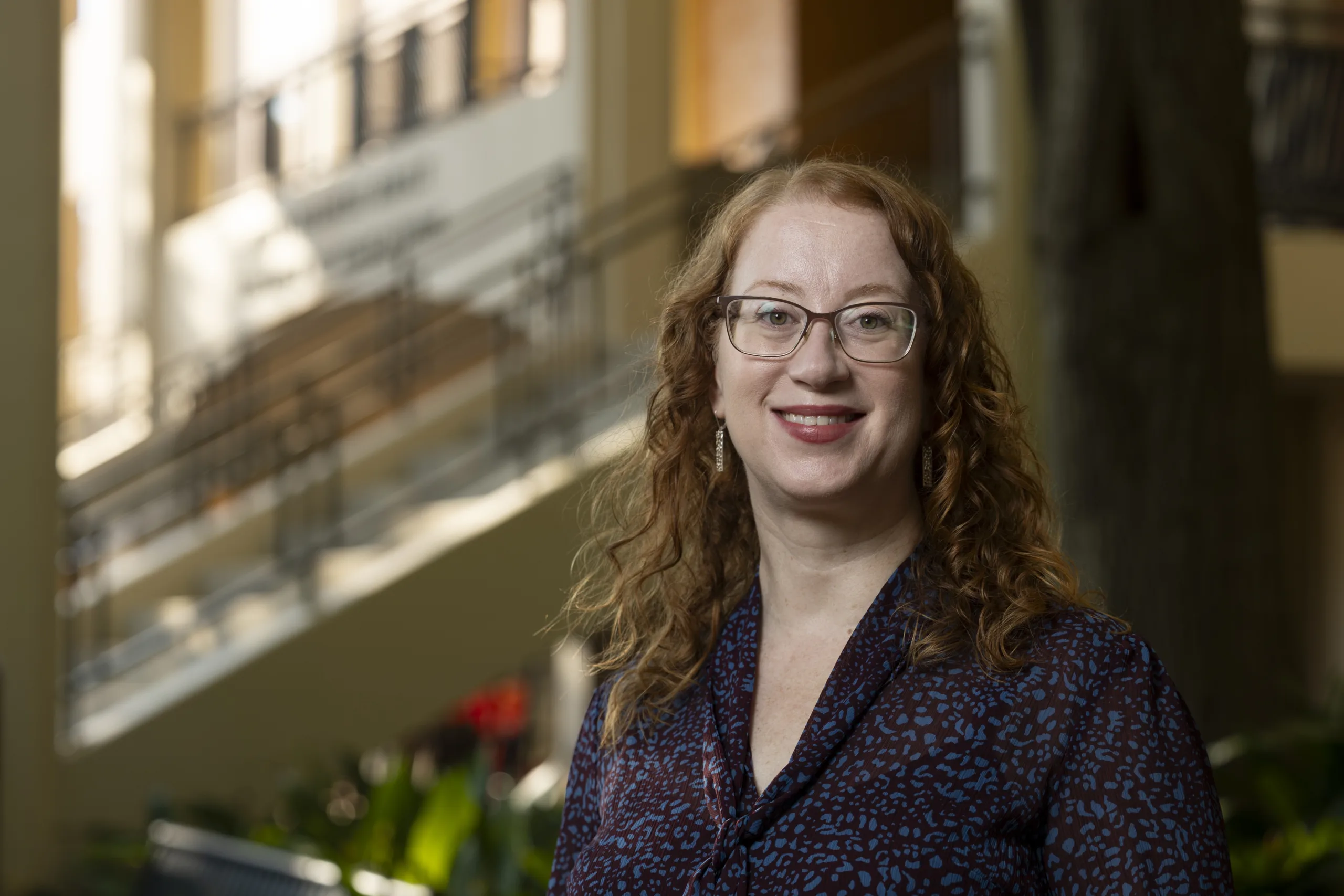
As a clinic director and a clinical professor, T.J. Ragan sees both sides of the equation.
A Double Dawg of the University of Georgia’s communication sciences and disorders program, she teaches clinical methods and practicum courses to graduate students in the Mary Frances Early College of Education while leading a team of seven speech-language pathologists and two audiologists at the UGA Speech and Hearing Clinic.
“We’re a university training clinic, so we’re training our graduate students, and our students are getting a hands-on learning experience while they’re here,” Ragan said. “But at the same time, because our students are in classes and they’re learning the most recent research and the most up-to-date, evidence-based practice, that really means that patients who come to the UGA Speech and Hearing Clinic are getting the most innovative evidence-based practices there are.”
A first-generation college graduate, Ragan was inspired to pursue speech-language pathology at a young age after seeing a friend’s sister receive speech therapy for speech delays related to hearing loss. At age 16, she learned more about the field from a mentor whose friend worked as a speech-language pathologist at a school, which solidified her choice.
“I didn’t even know at the time that SLPs could work in hospitals, or could work in nursing homes, or could work in home health. I had always thought SLPs worked in a school, and I was like, ‘Yeah, this is great,’” she said. “Then when I came to UGA and learned more about the profession, it’s so much more than that.”
After graduating with her master’s degree in 2002, Ragan worked in private practice, nonprofit and school settings in Massachusetts, North Carolina, California and her home state of Georgia. Her career came full circle when she joined the College of Education faculty in 2020, where she supervises aspiring speech-language pathologists and draws on her experience coaching caregivers, families and teachers about how to best support patients’ speech, feeding, language and literacy skills.
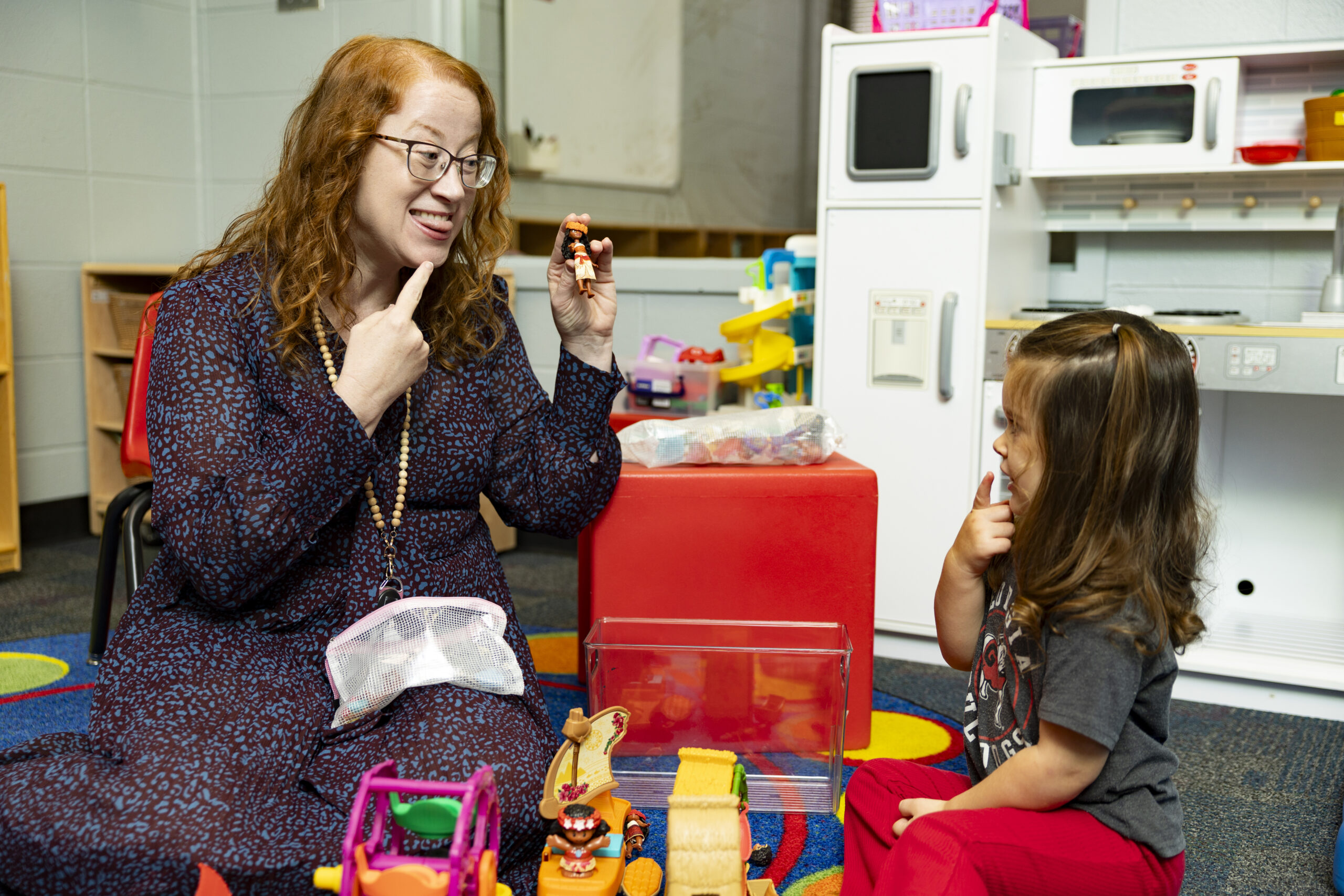
Founded in 1953, the Speech and Hearing Clinic serves children and adults from across the state and offers an array of evaluation and treatment services related to speech sound production, voice, augmentative and alternative communication, autism, literacy, aphasia, hearing health, Parkinson’s Disease and feeding/swallowing.
The clinic provides direct therapy, seminars, groups and camps for patients and their families, as well as support groups for clients and caregivers. Its outreach extends beyond the walls of Aderhold Hall, too, with Ragan and clinic staff often tabling at community health fairs and local events in Athens to increase awareness of speech, swallowing and hearing health issues.
In her dual roles at UGA, Ragan draws on her previous experiences to guide her work with students and patients alike.
As a faculty member, she emphasizes the importance of collaboration to students through a monthly interprofessional education meeting, where they can compare similarities and differences between roles with students and faculty in other related disciplines — including kinesiology, dietetics, school psychology, special education and social work — and hear their perspectives on working with similar clients.
As a clinician, Ragan treats speech and language as a foundation for not only speaking and hearing, but also for lifelong literacy.
“Our whole department integrates the idea that language is a building block for later literacy, and that literacy is a building block for future success in life, into the work we do,” she said. “So, these are really foundational, important skills that we’re teaching.”