

The Creative Teaching Awards are presented annually on behalf of the Office of Instruction to faculty who have demonstrated exceptional creativity in using either an innovative technology or pedagogy that extends learning beyond the traditional classroom or for their creative course design or implementation of subject matter that improves student learning outcomes in their courses.
Andrew P. Owsiak, Josiah Meigs Distinguished Teaching Professor, Department of International Affairs, School of Public and International Affairs

Andrew P. Owsiak earned the Creative Teaching Award for his work in INTL 3200: Introduction to International Relations and INTL 6010: Research Methods in International Policy. By replacing lectures with “laboratory-like” exercises, Owsiak bridged the gap between academic theory and the professional skills required to compete with top-tier policy schools.
In his Introduction to International Relations course, students participated in a UN Security Council game involving the 1994 Rwandan Genocide. By assuming historical roles, they navigated complex concepts while honing skills in negotiation, public speaking and policy writing.
In his Research Methods course, students collaborated with the U.S. State Department, moving beyond theoretical research to produce real-world deliverables on topics like maritime conflict and democratic backsliding. These findings were briefed to State Department officials, providing students with professional exposure. By shifting from passive learning to active application, Owsiak ensured his students didn’t just study international relations — they practiced it.
Kun Yao, Senior Lecturer, School of Electrical and Computer Engineering College of Engineering
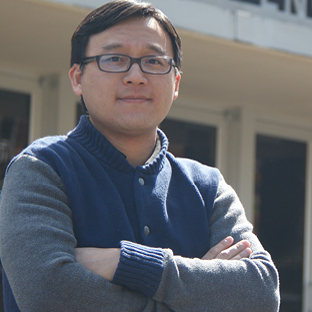
Kun Yao received the Creative Teaching Award for his redesign of ECSE 2170: Fundamentals of Circuit Analysis and ELEE 3270: Electronics I. Rather than having students analyze circuits based on instructor examples, he had students create their own original, randomized circuits that met specified functional and analytical constraints. Several times throughout the semester, students were asked to design and submit original circuit diagrams aligned with concepts covered during lectures. They were encouraged to analyze their designs in small groups or in online discussion platforms.
This innovation shifted students from passive analysis to active design, enhancing their understanding of circuit concepts and exposing misconceptions often hidden in traditional homework and exams, allowing for targeted feedback and timely instructional adjustments. Yao’s approach is flexible and has been successfully implemented in courses with different enrollment sizes, ranging from small sections to higher-enrollment core courses.
Kimberly Viel-Ruma, Clinical Professor, Department of Communication Sciences and
Special Education, Mary Frances Early College of Education

Kimberly Viel-Ruma received the Creative Teaching Award for her use of mixed-reality simulation in EDSE 4030/6030: Inclusion of Students with Special Needs, Grades 6-12.
Using MRS gave teacher candidates the opportunity to teach in virtual learning environments using student avatars, helping to bridge the gap between theory and classroom practice.
Historically, candidates enrolled in EDSE 4030/6030 have limited to no field experiences, so embedding MRS in that course gave them an opportunity to instruct when previously there
had been none. The simulations helped to develop core teaching skills such as lesson delivery and classroom management strategy; candidates were able to practice those skills in real time and receive immediate feedback from the instructor.
After the simulated experience, teacher candidates watched video recordings of their lesson delivery and analyzed their decisions, helping them become more reflective practitioners. Viel-Ruma’s course design allowed candidates to practice handling complicated situations in a controlled setting, reducing anxiety and better preparing them for real classroom situations.
Michelle A. Ritchie, Assistant Professor, Institute for Disaster Management, College of Public Health

Michelle A. Ritchie earned the Creative Teaching Award for her innovation in DMAN 3200: Disaster Policy. Her course’s design helped connect the dots between disaster theory — mitigation, preparedness, response and recovery — and the often messy realities of governance.
Using active learning activities such as concept mapping, debates and peer-sharing, students were able to apply information from lectures, journals, podcasts and policy reports. Ritchie’s objective was for students to see policy not as static text, but as a dynamic process shaped by local history, resource constraints and institutional roles.
The course culminated in a Stakeholder Summit, where students moved from theory to impact. Using a multi-year campus survey dataset, students analyzed evidence to develop actionable hazard mitigation strategies. They then pitched these recommendations to university officials from Emergency Preparedness, Public Safety and Sustainability, where they had the chance to defend their ideas against real-world constraints and practice translating ideas into implementable action.