

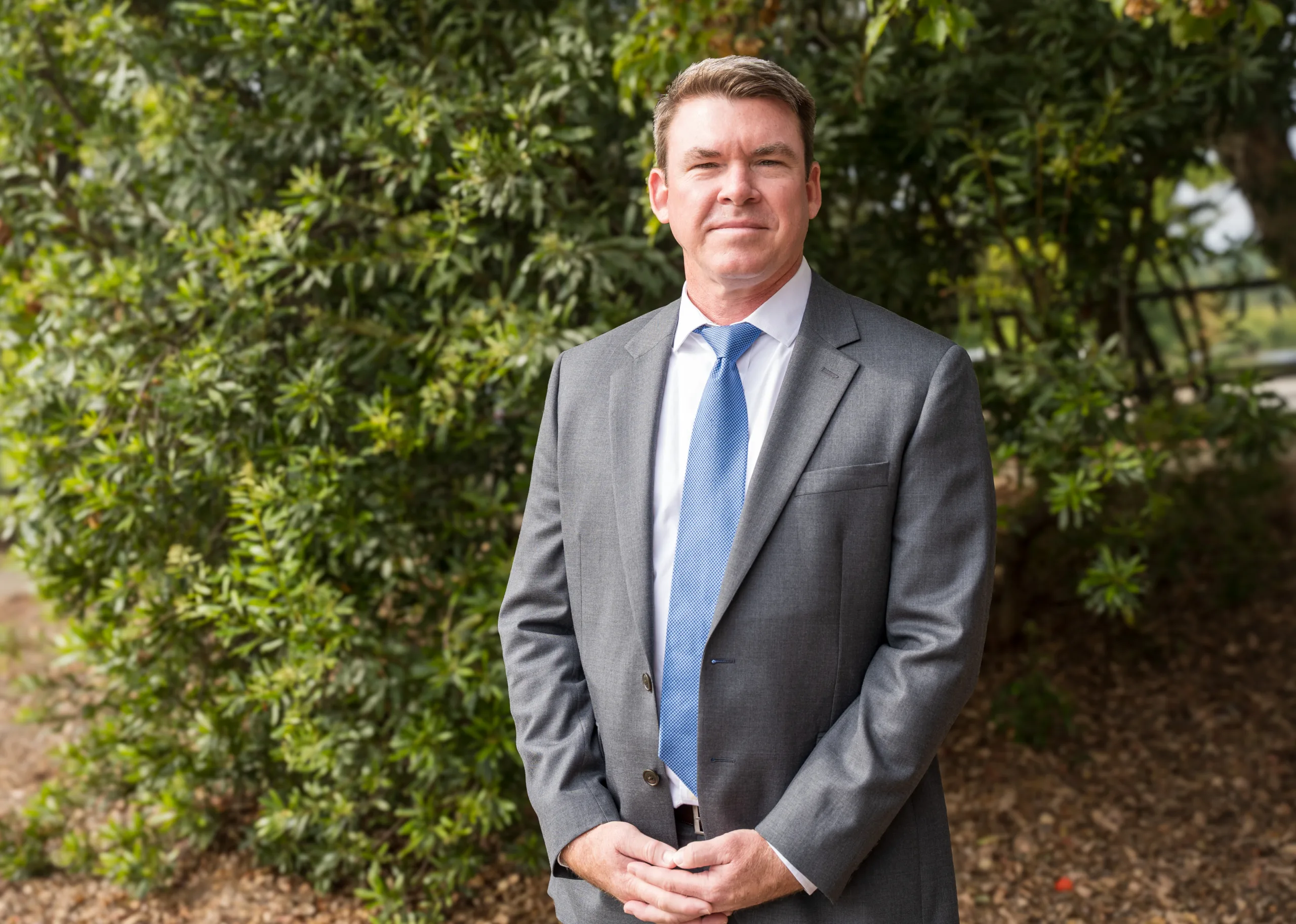
The University of Georgia has hired former U.S. Army intelligence officer Ben Thomas as director of the UGA Research Institute (UGARI), effective Oct.1. Thomas recently completed his service as a colonel and chief of intelligence of the Directorate for Science and Technology at the Defense Intelligence Agency in Virginia.
Thomas finished his military career with more than 25 years at various levels, from an aviation officer deployed in combat, to chief of the Nuclear Disablement Team addressing threats from weapons of mass destruction at home and abroad, to his final position as chief of intelligence. During those 25 years, Thomas also attained a bachelor’s degree in physics from North Georgia College and State University (now University of North Georgia), a master’s in nuclear engineering from the Air Force Institute of Technology and a Ph.D. in mechanical and aerospace engineering from the University of Virginia.
“I am thrilled that someone with Dr. Thomas’ experience and reputation will be leading the UGA Research Institute and guiding our research community in working with U.S. mission agencies to address research needs that are vital to the nation,” said interim Vice President of Research Chris King. “Ben has a wide-ranging understanding of the major federal agencies and how they prefer to collaborate with research universities, along with excellent relationships with these agencies. We look forward to supporting him as he leverages that knowledge to benefit our investigators — and ultimately, the country as a whole.”
“The UGA Research Institute is a critical component of our efforts to build upon the upward trajectory of the university’s research enterprise and our efforts to expand engagement with federal agencies,” said Benjamin C. Ayers, senior vice president for academic affairs and provost. “I am excited to welcome Ben to the University of Georgia in this important leadership role.”
Thomas becomes UGARI’s first permanent director, taking over for inaugural UGARI director Gene Rhodes, who served in the position since the institute’s launch in 2022 (along with retired faculty member Larry Hornak, who served as co-director with Rhodes until fall 2024). Rhodes is director of UGA’s Savannah River Ecology Laboratory.
“Gene Rhodes has worked tirelessly for three years to establish UGARI on a strong footing and develop connections among our researchers and key contacts at federal agencies,” King said. “I’m deeply grateful both to him and to Larry Hornak for their leadership of this critical unit for the continued growth and evolution of UGA’s research enterprise.”
As a chief of intelligence, Thomas led the development, coordination and implementation of the annual Science & Technology Operations Guidance, working closely with the directorates for Operation and Analysis, the Integrated Intelligence Centers and the Geographic Combatant Commands to integrate technical collection planning into campaigns for the Defense Intelligence Agency, Defense Intelligence Enterprise and Department of Defense.
“I’ve been working from the other side, from the requirement owner perspective,” Thomas said. “Now, I’m excited about the opportunity to work from the capability provider perspective.”
Since 2022, UGARI has taken the lead in streamlining research administration and facilitating secure research practices, both critical elements for landing partnerships with mission agencies such as the Department of Defense, Department of Energy (DOE), Department of Homeland Security and NASA.
Over the course of his Army career, Thomas had opportunities to collaborate on projects at the DOE’s Savannah River Site, including some aligned with the Savannah River Ecology Laboratory’s efforts.
“It’s exciting for me because I knew some of the investigators,” he said. “And I have a feel for how it’s run from the DOE side, not just the Department of Defense side. Each different community speaks in a different language, so this is a great opportunity to translate that and manage expectations on both sides, so the pace and focus of the research matches that of the sponsor.”
Thomas said that he’s familiar with the impact UGARI has had for many researchers through connecting stakeholders to ensure that projects are meeting the needs of their agency sponsor. In the short term, he hopes to double those partnerships and continue to establish a rhythm of collaboration, including community events that showcase capabilities or technology.
“We want to put research efforts in front of the customers or requirement owners so they can see the potential benefit of collaboration,” he said. “Often, they have needs and don’t know where to go, or they have a historical relationship with one partner and try to get that partner to do something that’s not really in their focus area.
“These are messaging opportunities to connect the right people with the right projects and ultimately to expand UGA’s research portfolio and broaden its impact.”