

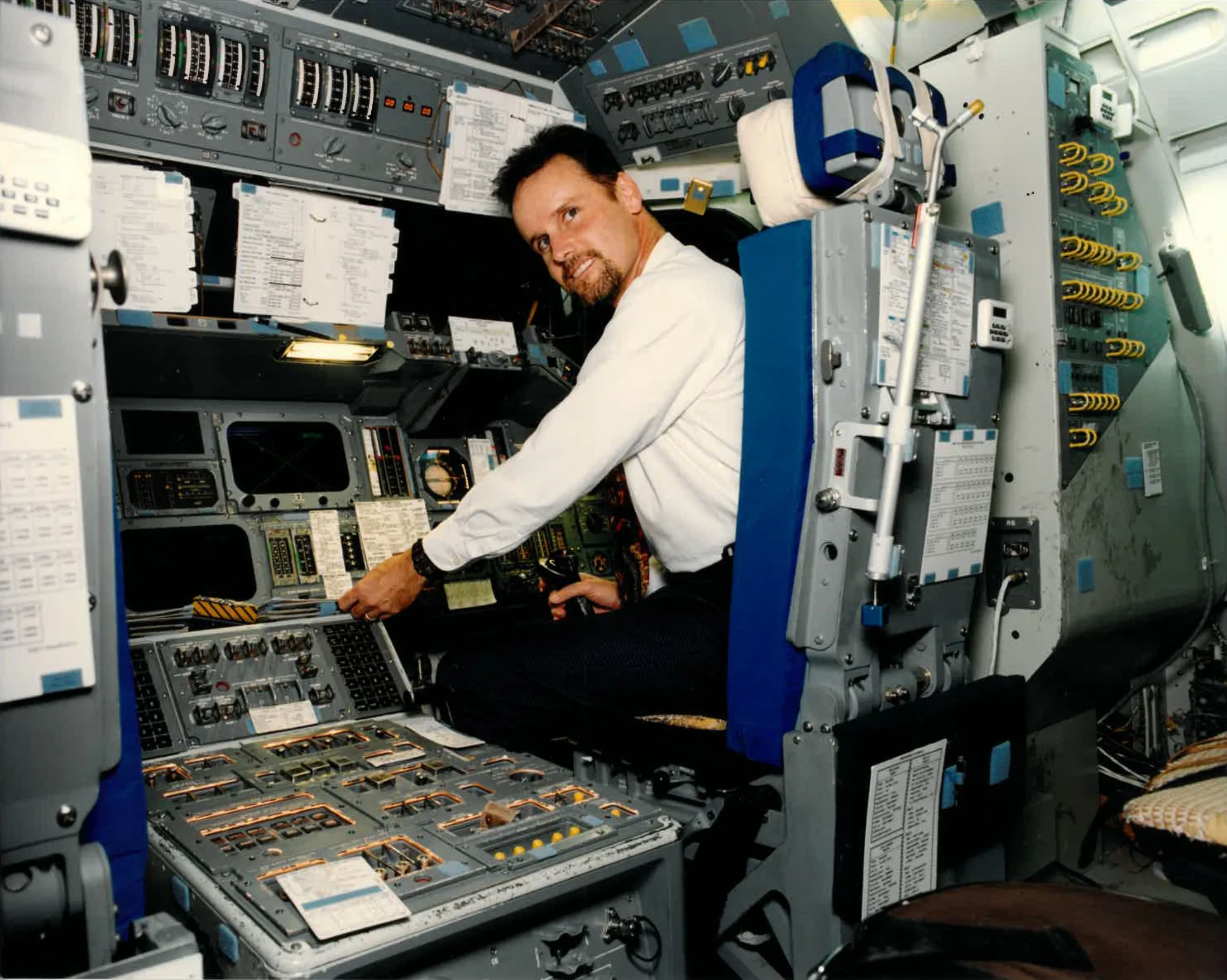
A lack of sight never kept Tracy Minish BS ’84 away from flight.
Minish spent 40 years at NASA programming space shuttle computers, training astronauts, and leading as the Control Center operations manager, among a variety of senior positions.
He has gradually lost much of his vision from retinitis pigmentosa, a genetic eye disease that causes severe vision impairment.
“People with disabilities are underrated because we’re great problem solvers,” Minish says. “NASA thinks outside the box, but people with disabilities have stomped the box.”
Minish started experiencing significant vision loss in high school, beginning with his ability to see at night. By the time he was a computer science major in UGA’s Franklin College of Arts and Sciences, he was legally blind, though most people didn’t notice as his central vision remained fairly intact.
Now, Minish is an advocate for genetic testing, which helped him discover the specific genetic defect that causes his variation of retinitis pigmentosa. He is involved in clinical trials and continues to raise awareness about his condition. “If I can do anything to kick that can just a little bit closer to the cure, that’s great.”
But when he began his career at NASA in 1984, Minish kept his impairment a secret from management out of concern that it would limit his career trajectory. That changed after a five-hour meeting where he gave a 40-slide presentation on flight-readiness reviews. He arrived 45 minutes early to the meeting with all his slides memorized. After the meeting, coworkers praised his presentation skills, but he wanted to tell them that it wasn’t even possible for him to read off his slides.
While it went well, that experience was the tipping point for Minish to no longer keep his vision loss a secret. He was getting his work done, and there was no need to hide how he made accommodations for his vision loss.
As his eyesight continued to deteriorate, Minish began using screen readers, voice dictation, and other assistive tools to program software, send emails, and create presentations. At NASA meetings, it was an unspoken rule that his seat in conference rooms was the one nearest the door.
He even had the chance to fly, experiencing zero gravity in a specially modified plane used for astronaut training exercises.
“I did not have a license to drive, but NASA gave me a license to fly,” Minish jokes.
For years, he traveled to Russia, Japan, Germany, France, England, and Italy as the chair of NASA’s ground segment control board to connect and negotiate with NASA’s international partners.
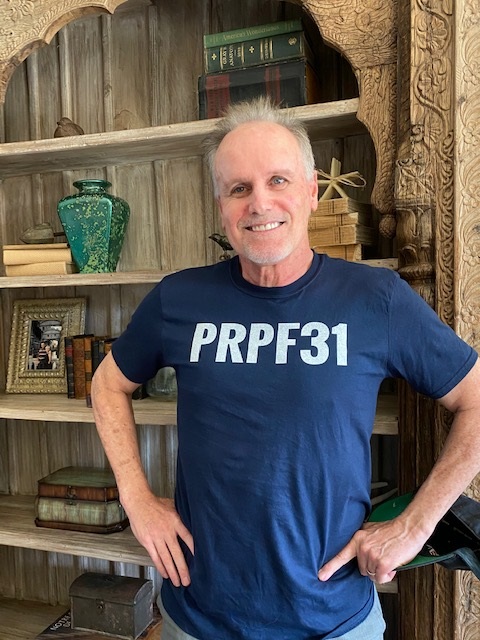
Minish retired from NASA in 2023 and started a new company: Plan, Train, Fly. With this new project, he speaks to audiences around the country about self-advocacy and pursuing their goals.
“Find out what tools are available and learn how to use those tools,” he says when speaking to students with disabilities. “We don’t want to be known for our weaknesses, but for our strengths—not for what we can’t do, but what we can do, not for our disabilities, but for our abilities.”
Leaning on his abilities was not only the theme of his work at NASA but also in Minish’s hobbies. He’s run 31 marathons, including Boston, New York, and Chicago, plus more than 100 half marathons.
“Somebody runs beside me to guide, someone is in front of me to protect me, and someone is behind me to encourage me. But I have to run.”