

The University of Georgia is now accepting applications for its 2026-27 Sustainability Leadership Program. This fall will mark the kickoff of the program’s third cohort of staff members interested in growing as leaders while they advance sustainability on campus.
Launched in spring 2025, the program gives participants the opportunity to build their knowledge about a wide range of sustainability issues, connect and build networks with colleagues across UGA and spark positive change on campus while building their leadership skills.
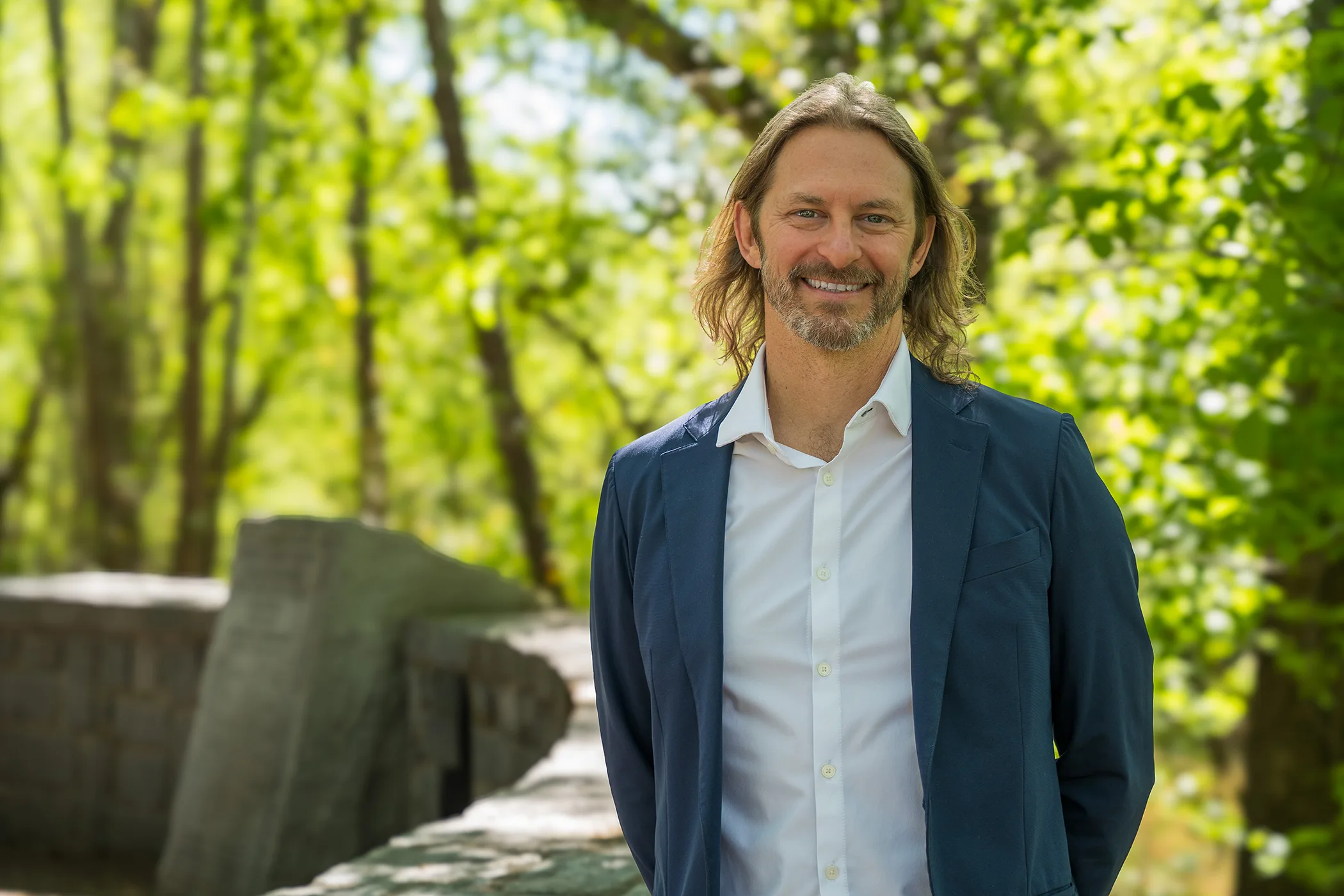
“A lot of UGA staff are passionate about sustainability,” said Kevin Kirsche, director of the Office of Sustainability, which runs the program in partnership with the J.W. Fanning Institute for Leadership Development. “Usually it’s not directly embedded in their job title, but they find ways to incorporate it. We wanted to provide an opportunity for staff to learn more and connect with peers across campus.”
The SLP is split into two halves. During the first half, participants meet semimonthly to learn about everything from energy conservation and waste reduction to food sustainability and biodiversity. Then, in the second half, they put their newfound knowledge into practice by completing a sustainability-related project, either individually or in collaboration with others in their cohort.
India Barfield enrolled in the SLP to broaden her sustainability knowledge and network with other like-minded professionals. By the time she earned her certificate, she had a new job in the Office of Sustainability and had launched a major sustainability program in her old one.
Barfield had worked in UGA Dining Services for years, moving up to managing chef at Joe Frank Harris Commons. Dining Services’ 400-plus employees switch out their uniforms after every semester, and Barfield watched anxiously as, twice a year, hundreds of uniforms went to landfills.
“As chefs and servers, our uniforms get stained and greasy, and we want to look fresh for the new semester,” said Barfield, who now serves as UGA’s waste reduction coordinator in the Office of Sustainability. “The consistent waste was really bothering me.”
Kirsche connected Barfield with Sha’Mira Covington, a faculty member in the College of Family and Consumer Sciences who’d launched a textile recycling program, and it was a match made in sustainable heaven. Now, about 2,000 uniforms per year are donated to Covington’s program, which hopes to turn those gravy-stained togs into useful consumer products.
Annelie Klein, who was part of the SLP cohort with Barfield, also brought her new SLP knowledge back to her job as graduate programs administrator in the College of Environment and Design. Klein turned CED’s annual spring convocation reception in May 2025 into a zero-waste event with no garbage generated and all products composted or recycled. Even the event’s food trays, Klein said, found new life after she took them to Athens’ Center for Hard to Recycle Materials.
“I didn’t put out a regular garbage can [at the event],” Klein said. “I only put out recycling and compost, and a lot of the guests were happy to see that. We generated six big bags of compostable items.”
In the SLP’s second cohort, which has run throughout 2025-26, some participants have their eyes on even bigger wins. Abi Aragon and Maggie Discher, who both work in the Office of University Architects and knew of Barfield’s project in Dining Services, recognized an opportunity among the cranes and wheel loaders that are a common sight on campus.
“One SLP presentation that stuck with me was [where I learned] that UGA generates enough waste each year to equal the size of the Miller Learning Center,” Aragon said. “That’s crazy to think about, and it inspired Maggie and me to try to quantify how construction on campus contributes to that number.”
The pair are working to reinvigorate UGA’s efforts to help companies divert construction waste from landfills. It’s not a completely new initiative — UGA already asks vendors to provide waste reduction plans as part of their project materials. Aragon and Discher are working to revise the plan template and give contractors better options and resources to follow through on the plans. They’re also trying to make the program more sustainable for future University Architects staff.
“In the same way we don’t want this to be a burden to the contractors, we also don’t want it to be a burden to the other project managers in our office,” Discher said. “We’re trying to dovetail it into existing processes so it’s not all this extra effort.”
All of these projects exemplify the Office of Sustainability’s goals for the SLP: equipping staff with the knowledge, organizational skills and collaborative network they need to make a sustainable difference in their own corner of the university.
“We’ve found it tends to enhance job satisfaction,” Kirsche said. “It’s allowed people to layer what might be a passion project into their day-to-day responsibilities. It adds value to the departments they serve.”
The Sustainability Leadership Program is accepting applications for its 2026-27 cohort through May 30.