

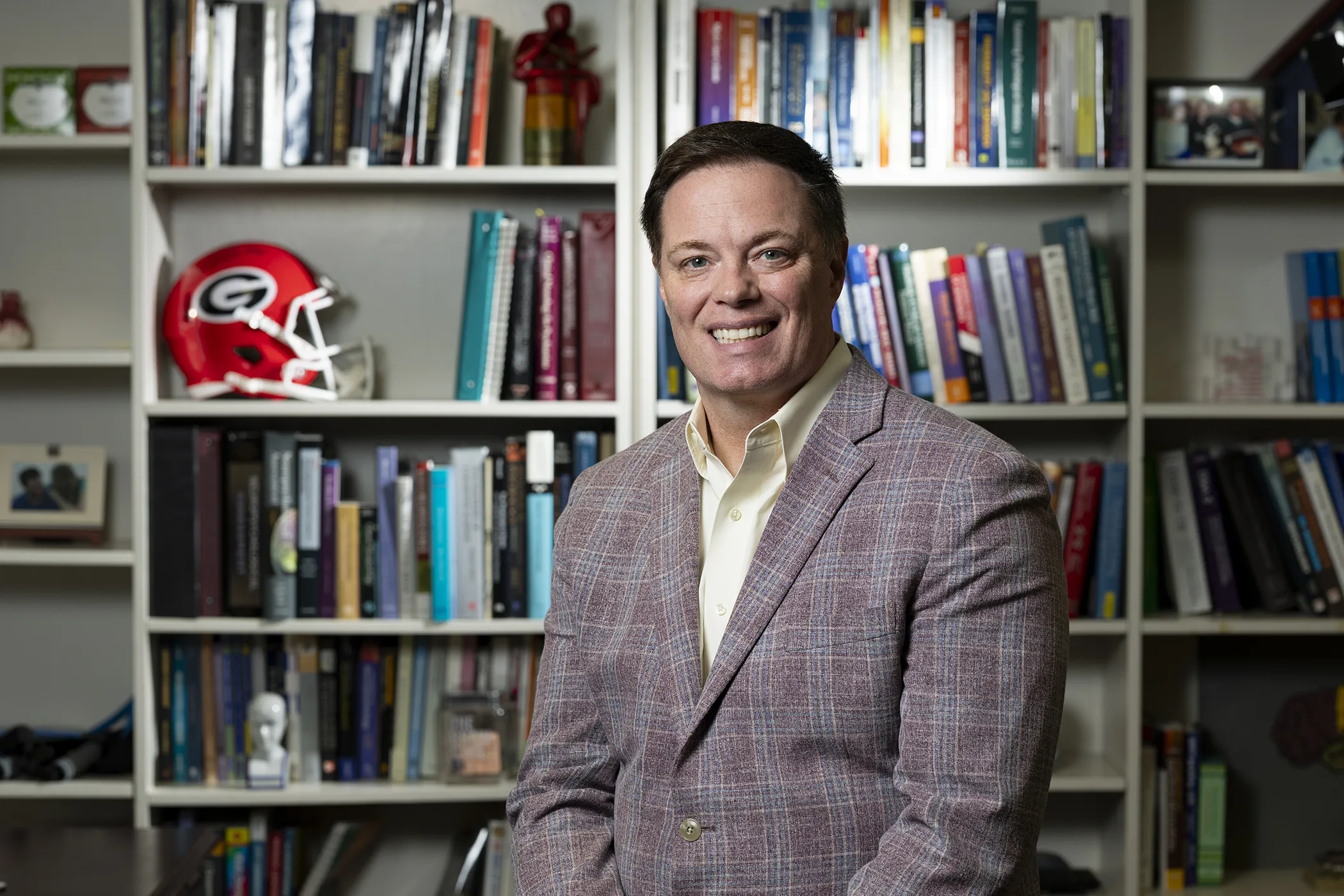
Gregory Strauss’ plans to become a fiction writer were derailed by undergraduate research.
As an English major at the University of Georgia, Strauss joined the laboratory of Lloyd Stephen Miller, where he encountered some of the first neuroimaging studies of schizophrenia.
The science fascinated him. The patients stayed with him.
“I was drawn to studying schizophrenia when I learned about negative symptoms,” Strauss said.
Negative symptoms — including reduced motivation, diminished emotional expression and social withdrawal — often have a greater impact on daily life than hallucinations or delusions. Yet they remain among the most difficult symptoms to treat because scientists still don’t fully understand their biological causes.
Today, Strauss is a professor of psychology in UGA’s Franklin College of Arts and Sciences, where he directs the Clinical Affective Neuroscience Laboratory and the Georgia Psychiatric Risk Evaluation Program.
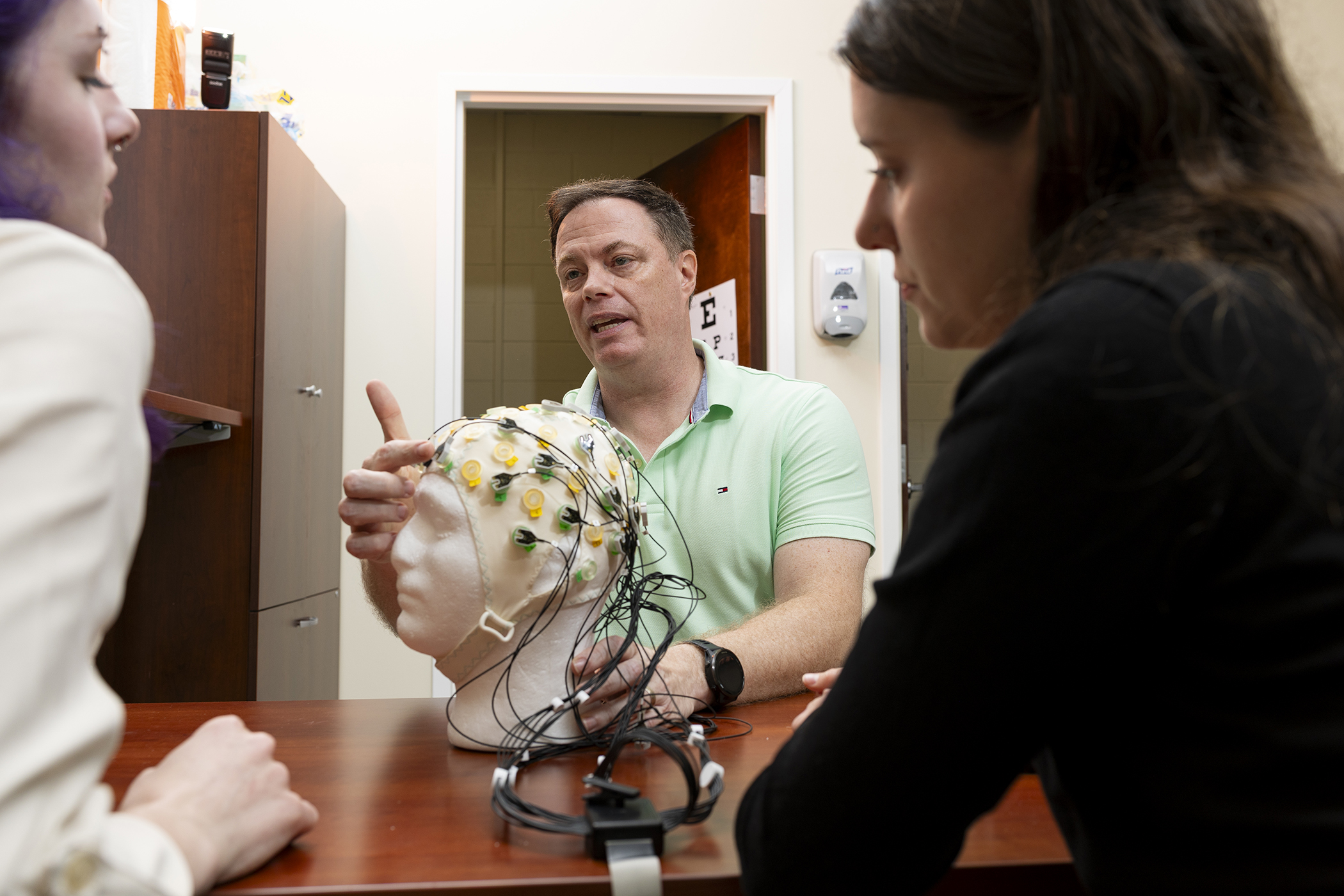
Supported by the National Institute of Mental Health, his research combines neuroscience, psychology, artificial intelligence and digital health to uncover the brain mechanisms underlying negative symptoms and develop more effective treatments.
His team is currently testing a smartphone-based cognitive training program designed to strengthen brain circuits involved in emotion regulation. Early findings suggest the training increases activity in those circuits, and a larger clinical trial is now underway to determine whether those changes translate into improvements in symptoms and daily functioning.
Although the current work focuses on schizophrenia, Strauss believes the approach could eventually benefit people with other psychiatric disorders involving disrupted emotion regulation.
Collaboration is central to that effort. Strauss co-leads one of Franklin’s Spark Hubs that brings together researchers in neuroscience, the social sciences and the arts to tackle complex questions about mental health. He also collaborates with faculty across the university, including geographers investigating how neighborhood environments influence psychological well-being.
Despite building his career in neuroscience, Strauss says his first major still shapes the way he thinks. Studying literature taught him to recognize patterns, draw connections across disciplines and ask broader questions — skills that continue to influence his research and mentoring.
Outside the lab, Strauss enjoys running, cheering on UGA athletics and spending time with his wife and two daughters. He’s also returned to his first love: storytelling. He’s currently writing a science fiction novel inspired by his daughters.
Looking back, Strauss sees more continuity between his two careers than he once imagined.
Whether through fiction or neuroscience, he’s always been interested in understanding the human experience and using that understanding to help people live better lives.