

Conservation in the galleries
Public access project gives Georgia Museum visitors a rare glimpse into the art restoration process.
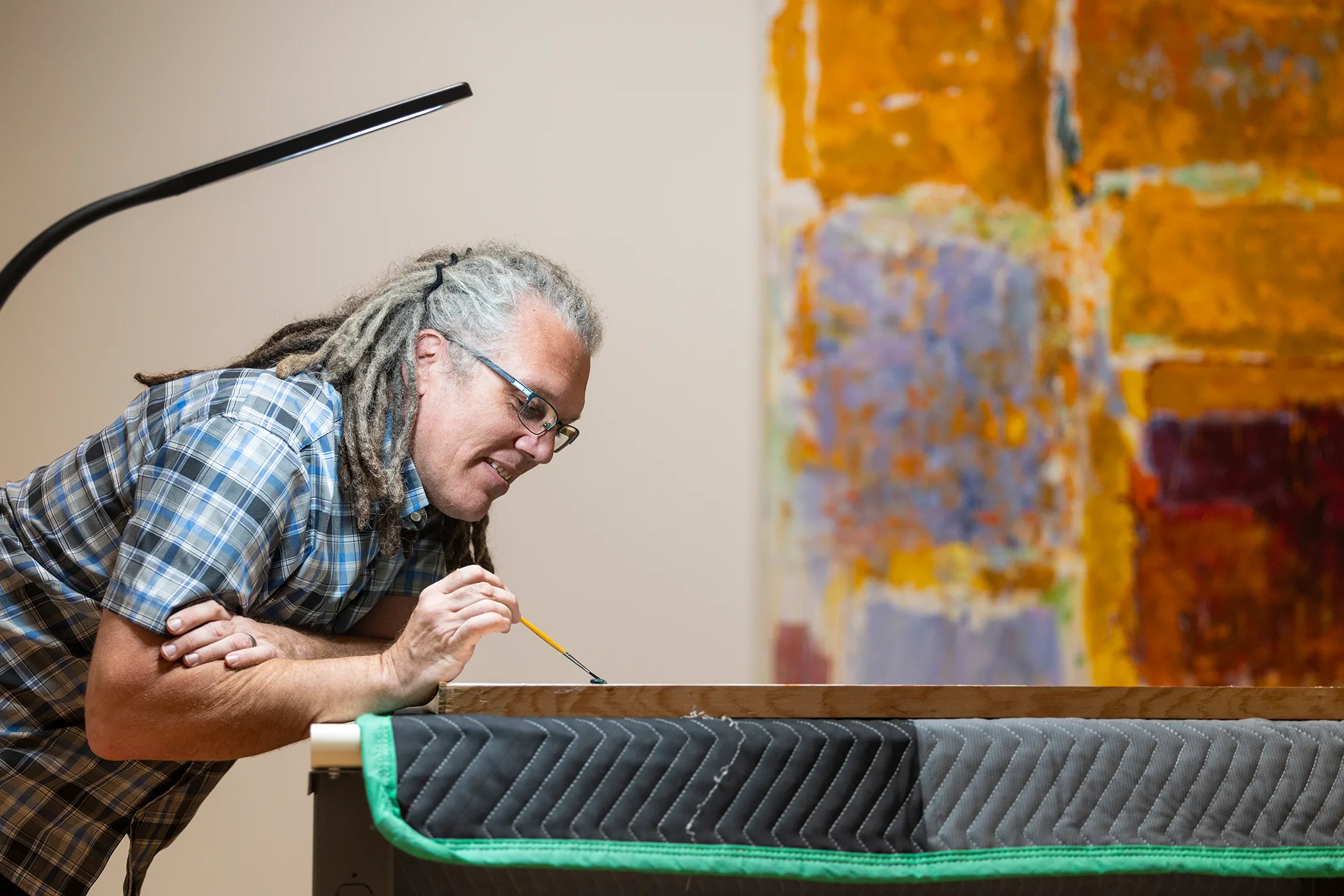
At the Georgia Museum of Art at the University of Georgia, art is being conserved in the galleries in full view of the public. Atlanta-based art conservator Larry Shutts is stabilizing and cleaning “Close” by Joan Mitchell, an abstract expressionist painting that’s been in the museum’s collection since 1974.
Shutts is working on the painting in a viewable, open-access lab created in the museum’s temporary exhibition space. Separated from visitors only by a low half-wall, the setup gives visitors a rare live demonstration of art conservation and a chance to interact with Shutts throughout the process.
“This project is a unique opportunity to make art conservation accessible to a broader audience,” said David Odo, the museum’s director. “As an academic museum and the official state art museum of Georgia, it is our mission to share the beauty, value and history of the art in our collections, and this is exactly the kind of public educational opportunity to highlight that.”
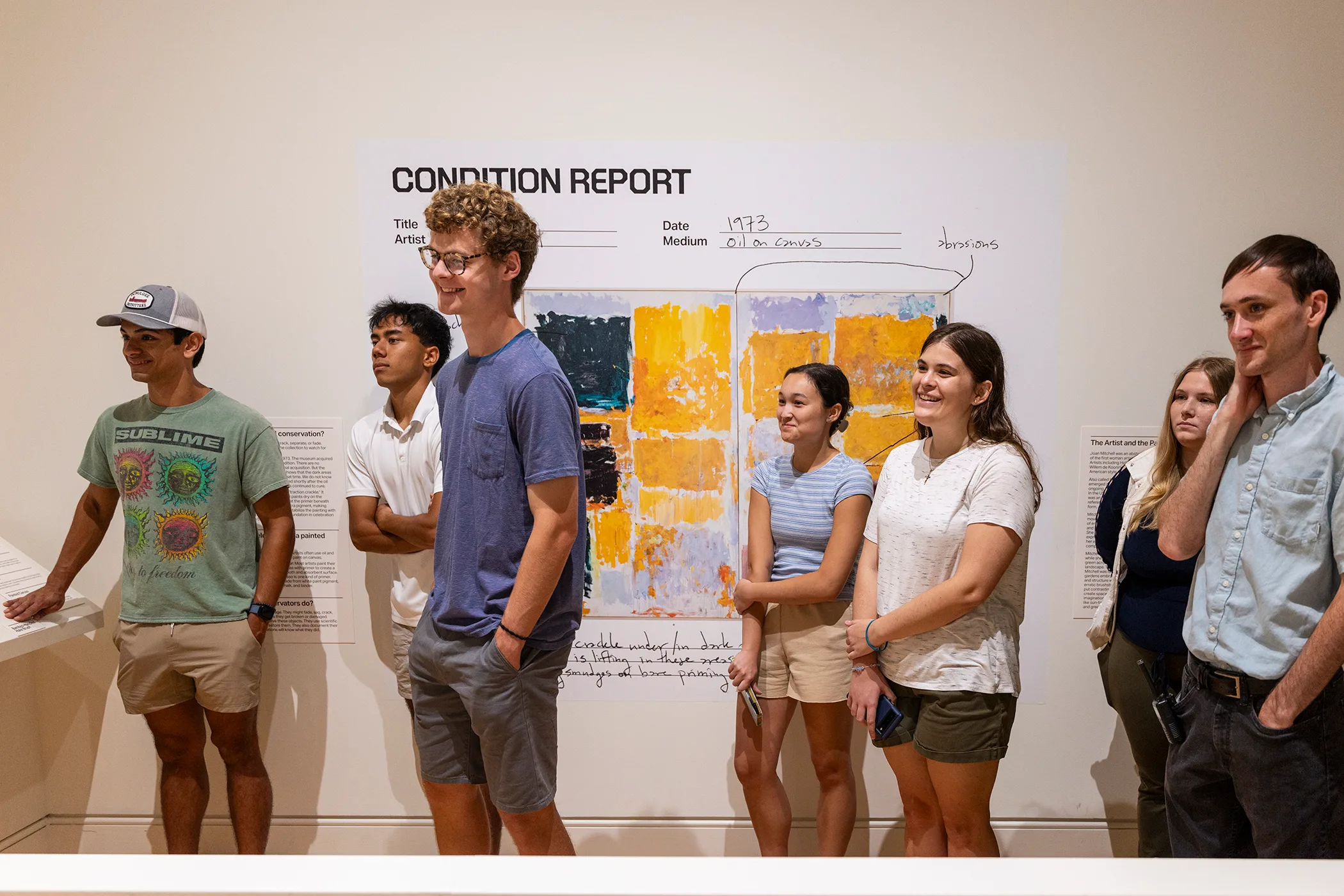
Visitors observe restoration efforts of “Close,” a painting by Joan Mitchell at the Georgia Museum of Art.
Breaking barriers
In recognition of the artist’s 100th birthday, the foundation put out a call for projects highlighting Mitchell’s work, leading to grant funding for the museum to hire Shutts for this public conservation project.
“We asked ourselves, ‘How do we keep this work available, and how do we allow people to see a little bit behind the veil and remove some of the mystery?” said Kathryn Hill, associate curator of modern and contemporary art and the driving force behind the museum’s grant application.
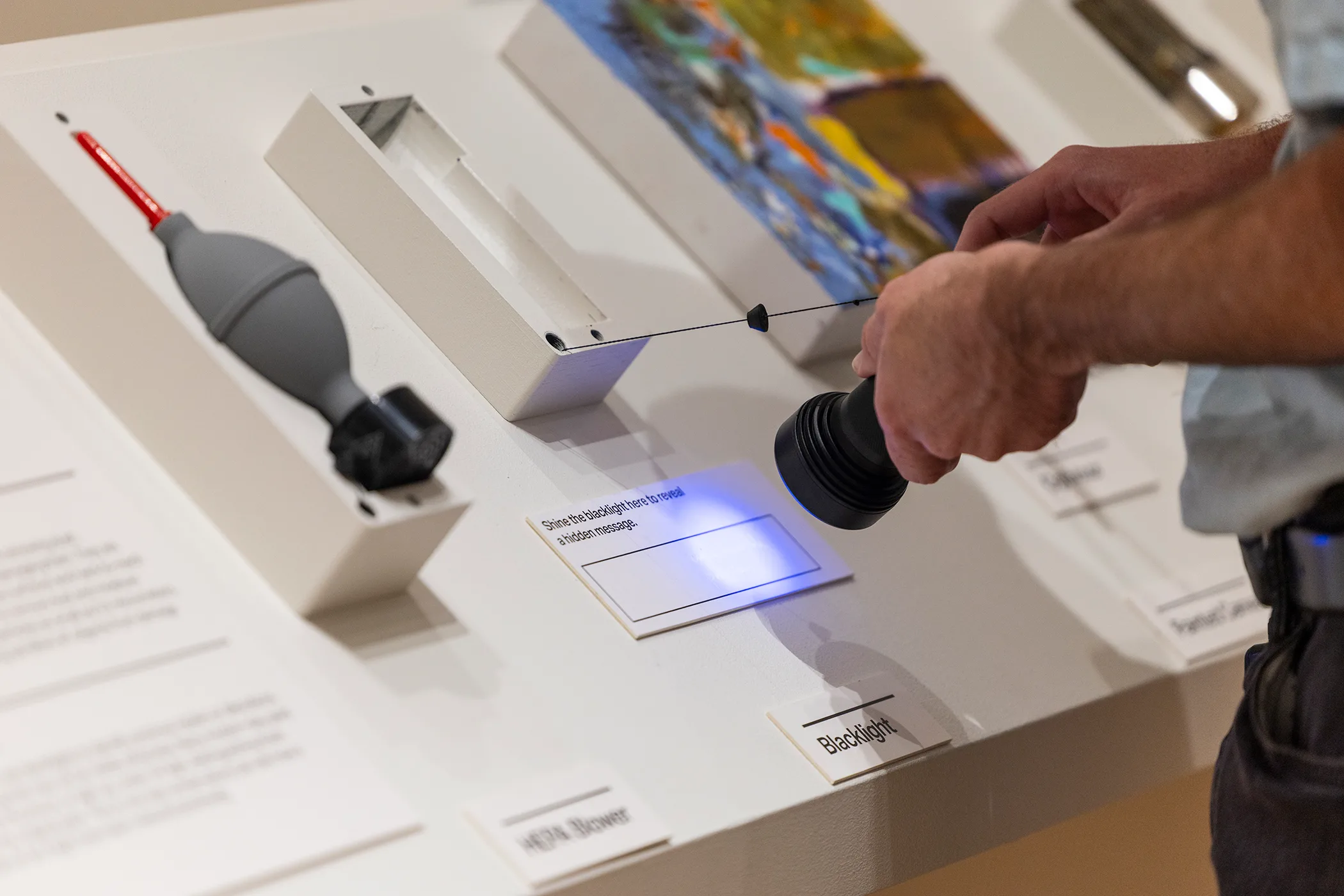
The result is this novel open-access lab paired with interactive exhibition elements. On one wall, visitors can see a sample condition report for “Close” with arrows and annotations identifying the destabilized areas on an image of the painting. Next to the low half-wall in front of Shutts’ work area is a display with tools of the trade that visitors can interact with including an air blower, blacklight, a binocular magnifier known as an optivisor and a sample painted canvas for guests to feel the texture of the canvas and paint.
“This project presents an incredible experiential learning opportunity for UGA students and the general public alike,” said Callan Steinmann, the museum’s director of learning and engagement. “Art conservation is a fascinating but typically behind-the-scenes aspect of museum work. It’s our hope that the touchable tools, video and interpretive text help bring that work to life, allowing visitors to learn more about how museums care for the objects in our collections.”
Transparent art care
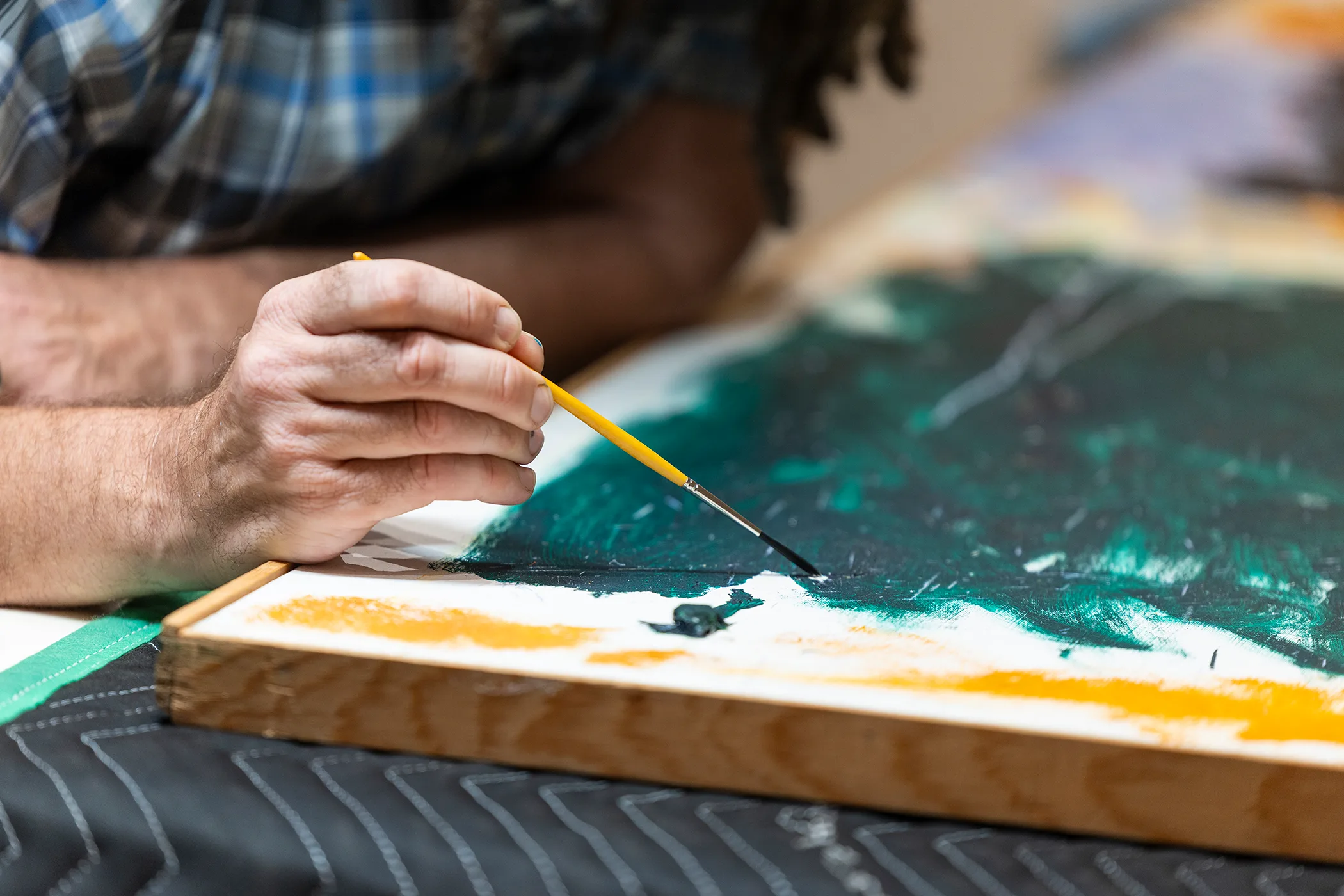
Like all paintings, “Close” has aged with time, leading to some cracking in its darker areas. This type of cracking is known as traction crackle and can occur when thickly applied oil paints dry on the canvas. In this case, sections of dark, translucent green paint on the canvas have had their binding medium absorbed by the priming underneath, causing cracking, shrinking up and even some areas of flaking.
Using a brush and water-based adhesive, Shutts feeds the adhesive under the lifted sections while warming each section of the paint with a pencil-sized hot air blower to help it soften and bond with the glue and canvas.
This process is slow and challenging, but necessary for this project.
We work with what the painting lets us do and what gives us the results we need without making any alterations that would be detrimental to the artist’s intent,” Shutts said.

After stabilizing the cracked and lifting areas with adhesives, Shutts touches up areas where the dark green paint has already flaked off. This happens when the painting is hung back on the wall so he can correctly color match in the gallery lighting and angles that the painting is usually seen from.
One dime-size portion where the paint has chipped off will require him to fill and sculpt the area with gesso, a type of plaster, to provide the shape of the missing brushstroke and a base for the color-matched paint.
He will also use deionized water to clean some areas of slight smudging on the outer edge of the painting, likely caused by the painting being handled in the studio before the museum acquired it.
“If I do my job 100% perfect, nobody will ever know I was there,” Shutts said.
The in-gallery work will take place through Nov. 2, and Shutts will be present in the museum from 11 a.m.–noon and 2–4 p.m. on Tuesdays and Thursdays until Sept. 4. He’ll also be giving a public lecture on Sept. 25 covering techniques, tools and approaches to art conservation and restoration.
“Conservation is often a silent work. It’s behind the scenes,” Hill said. “There’s a science to it, and this is a really lovely way of showing the public what we do in terms of caring for and protecting visual and cultural history.”
Written by: Hannah Gallant
Photography by: Chamberlain Smith
Video by: Geanna Orozco