

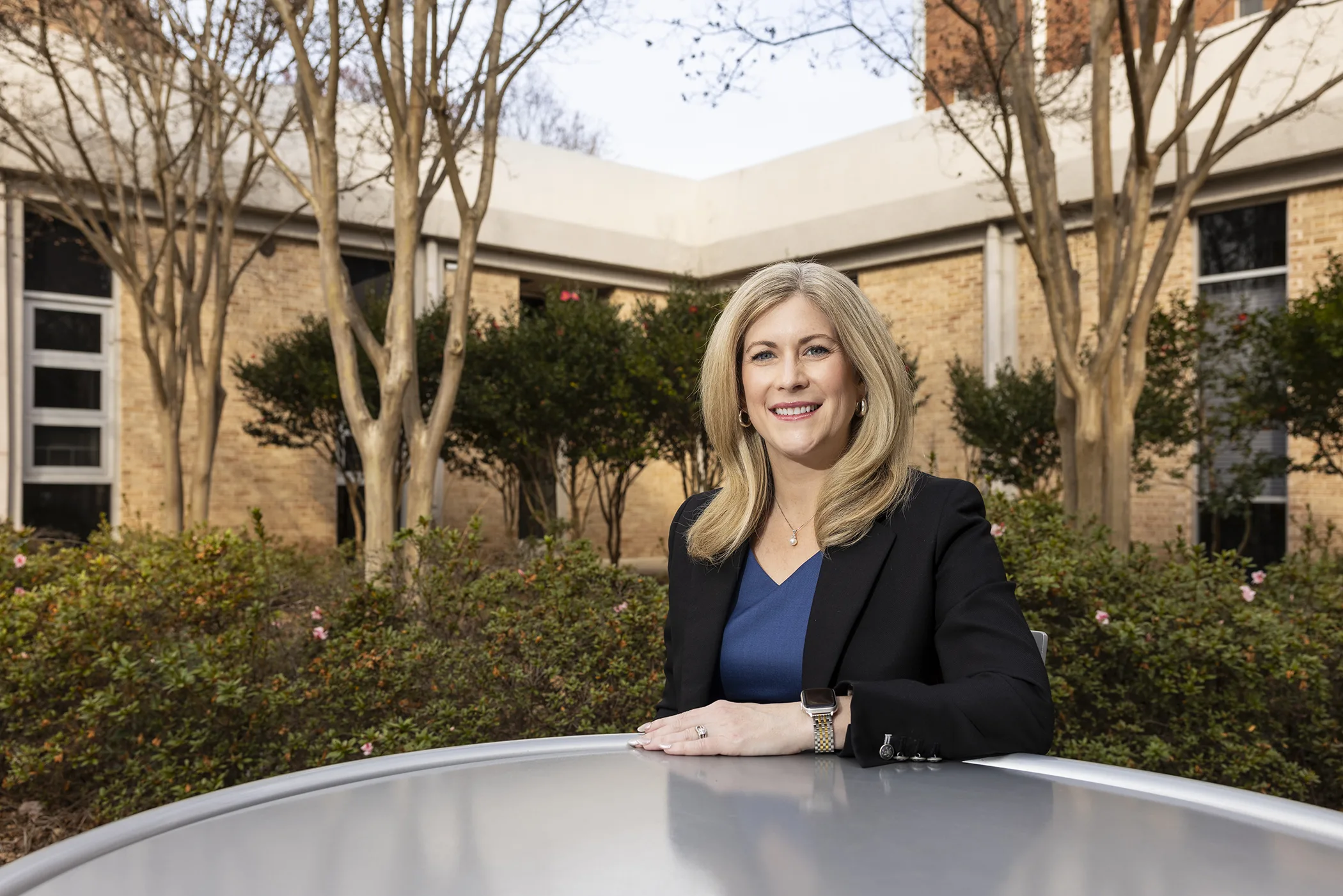
Meg Mittelstadt understands that what happens at the front of the classroom matters.
As assistant vice president for learning initiatives and director of the Center for Teaching and Learning, she’s working behind the scenes to make sure faculty members have the resources they need to foster excellence in teaching and learning.
“We have an administration that cares deeply about teaching and learning, faculty who by and large trust the Center for Teaching and Learning and truly excellent colleagues who work at both the CTL and across the many units that collaborate with us,” she said.
Mittelstadt’s own career path began in front of a classroom. While she earned her doctorate in molecular, cellular and developmental biology, she served as a teaching assistant for 11 semesters.
“I really took to it and enjoyed it,” she said.
During that time, the coordinator of lab courses became her mentor. Mittelstadt recognized the influence that coordinator had over a large number of graduate students, including not only what they taught, but also how they taught. Together, they wrote a new lab manual for molecular biology focused on inquiry-based learning — a departure from the “cookbook-style” labs common at that time, Mittelstadt said — and it is still used in undergraduate labs today.
Mittelstadt also served as the biological sciences graduate student representative at the department’s faculty meetings. It gave her a peek behind the curtain and a better sense of the relationships between faculty members, department chairs and associate deans. After graduate school, she set out on that exact path.
Although she enjoyed cancer biology research, Mittelstadt found that she missed teaching during her postdoctoral research work. She transitioned to a teaching-focused position at Harvard Medical School as a lecturer of genetics and eventually as the director of training and education for the Landry Cancer Biology Consortium at Harvard University. She contributed to the design and launch of the Consortium, a Harvard-wide graduate education program, and particularly enjoyed implementing innovative curricular and co-curricular offerings for postdoctoral fellows, graduate students and undergraduates. Building the program required close collaboration with colleagues across the university, from the development office and academic departments to Harvard-affiliated hospitals, as well as partnerships with educational developers.
“I started to see a spark,” she said. “Everything was coming together — my enthusiasm for higher education administration, the teaching that I so enjoyed and working with faculty across the Harvard landscape. And finally, I discovered the field of educational development — roles in higher education dedicated to instructional and organizational development with the goal of advancing instructional excellence and efficacy.”
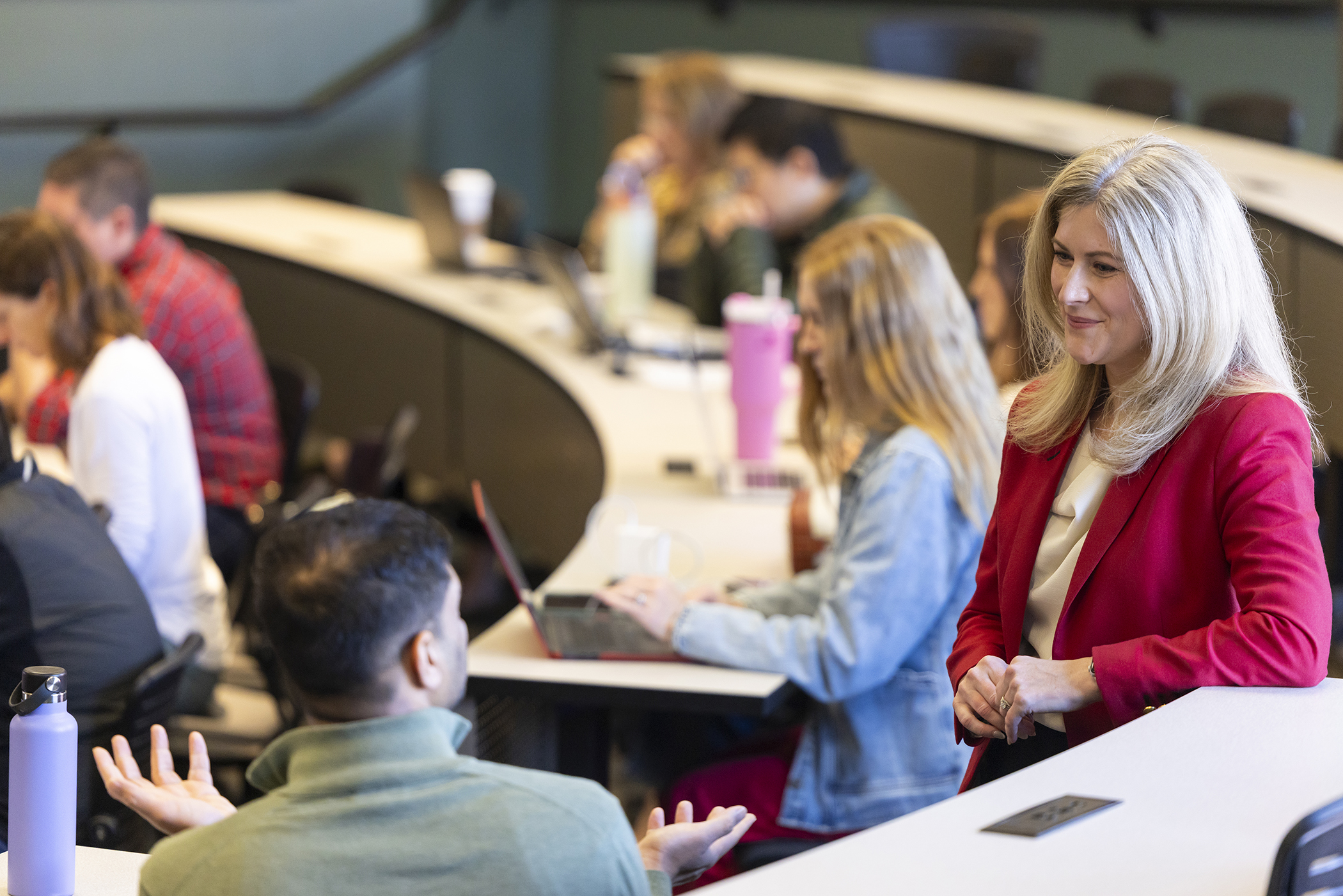
Soon after, Mittelstadt embarked on a series of informational interviews at centers for teaching and learning, including UGA’s. She knew before leaving campus this was where she wanted to be. She joined the university as the CTL’s assistant director in 2017 and has been its director since 2018. In that time, she has helped broaden the center’s reach, strengthen partnerships across campus and scale programming that supports faculty at every career stage.
One of the standout projects Mittelstadt brought to UGA is the Active Learning Summer Institute, an intensive course redesign experience meant to increase student engagement and success by implementing active learning techniques. During the three-week program, faculty members participate in daily sessions that include discussion of active learning pedagogy and other evidence-based teaching practices, workshops exploring the application of pedagogical techniques and structured work time to focus on their course design.
“Designing and deploying that institute for the first time was one of the most professionally gratifying moments of my career,” she said. “It was so exciting to work with other educational developers to create something new, watch it unfold, have faculty respond positively and then see positive outcomes in the classroom as a result. It was such a wonderful, tangible embodiment of when educational development goes right.”
Mittelstadt’s day-to-day work centers on presentations, meetings and teaching consultations. She supports faculty at all stages of their careers by serving as co-director of the Senior Teaching Fellows program and the Lilly Teaching Fellows program. She and the center’s faculty and staff collaborate with entities across the university, from the Office of Instruction and the Division of Student Affairs to each of the schools and colleges, to ensure that teaching support remains responsive, research-informed and aligned with institutional priorities.
The CTL’s offerings help faculty members who have expertise in their respective fields develop and refine their expertise in teaching that material effectively. The center revises its programming regularly to stay ahead of trends in educational development. For example, programming around generative AI has grown steadily since 2022 and now includes the Generative AI & Teaching Faculty Fellows program, which helps instructors thoughtfully integrate emerging technologies into their teaching in ways that complement, not substitute for, the development of essential human and disciplinary skills.
“Centers for teaching and learning play a crucial role in supporting faculty as they critically reflect on their teaching, engage in teaching scholarship and stay connected to evidence-based instructional practices,” she said. “Our work helps distill the teaching and learning literature into approaches faculty can use right away, and it allows us to spotlight and celebrate excellent teaching across campus.”
Outside of work, Mittelstadt focuses on her family including her husband, two kids and two dogs. They love traveling, especially road trips, watching college football and attending Atlanta United games. She also enjoys playing the flute — a lifelong passion she’s carried from concert band and marching fields to flute studio in college, and one she now jokingly refers to as her “built-in stress-relief soundtrack.”
Mittelstadt cares just as much about the university community and the partnerships that make her team’s work possible.
“I hope people know the Center for Teaching and Learning is dedicated to supporting instructional efficacy and excellence at our institution, and that has long been a core value of mine,” she said. “As we look ahead, I’m excited to continue strengthening collaborations that help faculty thrive in the classroom. UGA’s instructional environment is like no other I have experienced. I am grateful to work at an institution where teaching and learning is so valued and supported.”