

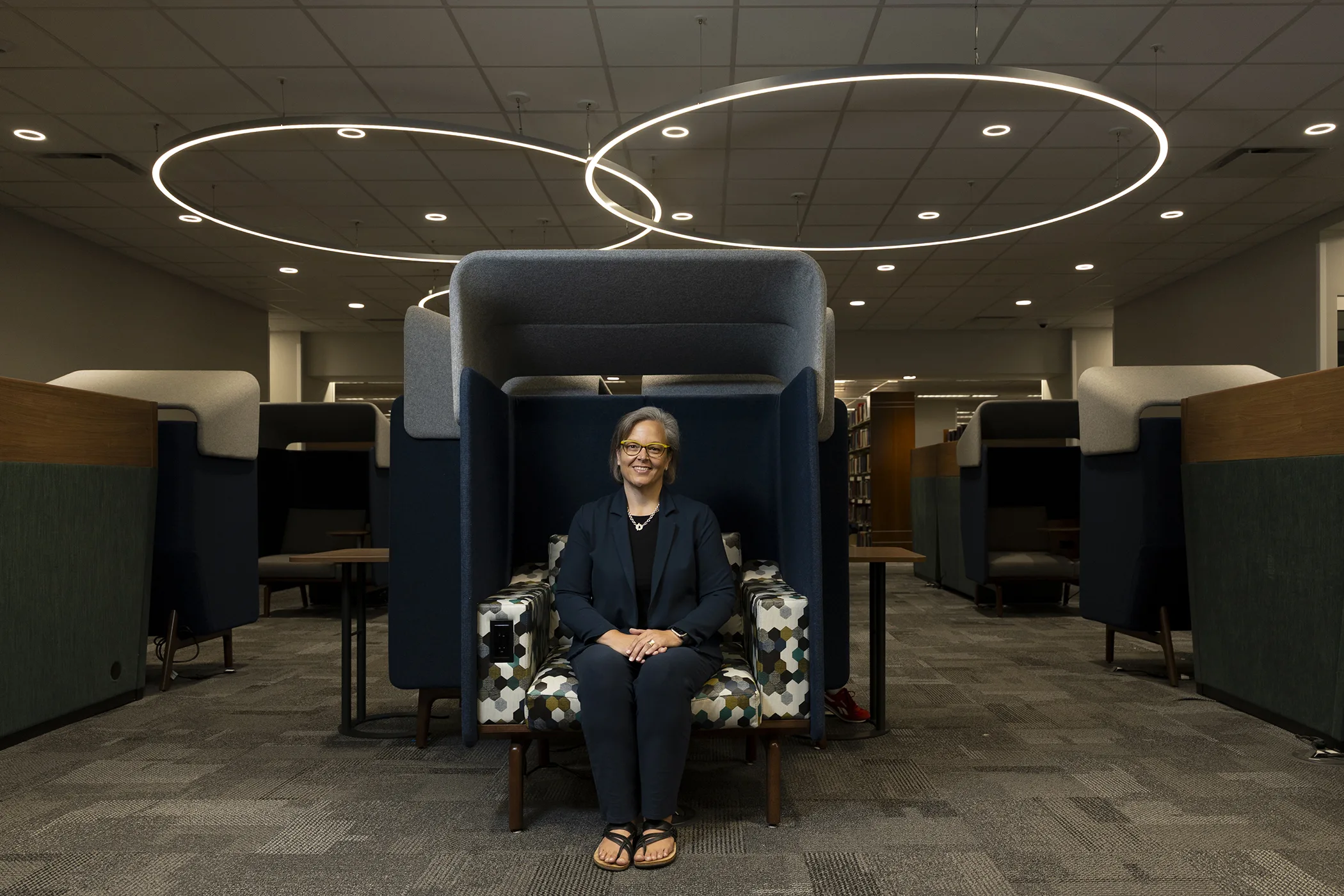
A librarian with a passion for accessibility, a knack for technology and a flair for interior design, Emily Gore not only shapes collections on campus at the University of Georgia, she also leads international efforts for online access to knowledge.
“Broad access to content without barriers has always been a driving force for me and a core value in my career,” said Gore, deputy university librarian at UGA Libraries. “Earlier in my career, when I was working to build statewide and national digital libraries, my goal was to share content broadly and promote use and reuse of collections. That goal is just as clear now, as we build Georgia’s online assets, envision data services for faculty and expand open access publishing opportunities for UGA researchers.”
When Gore first pursued her education in librarianship, the profession mostly centered around physical objects like books and journals in buildings. Even then, Gore’s passion was in breaking down barriers so that people could access that knowledge as much as possible.
As technology expanded, so did Gore’s work, first helping with websites and then in building expansive web portals that allow people to access the same materials on the internet that they might have to travel across the country to see at a library in person.
“Digital libraries became my passion because they married my love for primary source material, technology, search and discovery,” she said. “As my family genealogist and North Carolina history enthusiast, I have always enjoyed primary source records, photographs, newspapers and correspondence, so being able to build systems, standards and best practices that allowed libraries to put those materials online was a dream come true for me.”
Earlier in her career, Gore helped develop massive online repositories and storage system networks through the Digital Public Library of America and the Digital Preservation Network. She was one of the original U.S. leaders in developing rightsstatements.org as a standard way of expressing copyright for cultural heritage objects. The statements are now in use in more than 15 countries worldwide and are integrated into numerous digital library system platforms.
UGA faculty and students benefit from that expertise now, as Gore’s team in the department of research and computational data management launch UGA Open Scholar, a repository dedicated to enhancing open access and data preservation and sharing among the UGA research community. The portal allows researchers to deposit publications, data, code, mint DOIs and link to their ORCID profiles, adding even more benefits to the service.
The new online repository helps researchers fulfill the requirements of federal mandates related to data preservation and sharing, as well as a new campus policy and guidelines that were developed through the Research Data Management Advisory Council (RDMAC).
“Working with faculty groups is so valuable because I am able to hear firsthand about research support needs across the university and to work on ways that the libraries can help meet those needs,” said Gore, who chairs RDMAC and serves on the Research Communication and Collaboration Roundtable and the AI Leadership Council. “I have also been able to share more about library services with the groups including continual updates about our open access agreements and evolving data services.”
With Gore at the negotiating table, UGA Libraries has signed transformative agreements with most of the major journal publishers, allowing faculty and students fee-free open access publishing in more than 7,000 titles.
“I am proud to see the researcher interest in open access publishing and open data sharing increase dramatically in the three-plus years I have been at UGA,” Gore said, adding that open access publishing can dramatically increase the visibility and citations of research. “I have long been an advocate for universal access to scholarship, not just for those who can afford subscriptions, but for all people in order to improve the lives of people throughout the world.”
Gore also serves as an advisor for the pieces of Georgia history that are openly available online. She serves on the Digital Library of Georgia Advisory Board, the New Georgia Encyclopedia Advisory Board and the Georgia Historic Newspapers Advisory Board.
While many of the libraries Gore has worked to construct are online, she also loves a good interior design project. A former home furnishing and design store owner, Gore enjoyed working last year to shape the new study area on the fourth floor of the McBay Science Library.
Whether online or in physical spaces, there’s more than one way to build a library. But for Gore, the universal goal is that it needs to be open, accessible and ready to take research into the modern age.
Audiences can join Gore and others in a discussion on the new Research Data Stewardship policy and support services during Research Live on Nov. 4.