

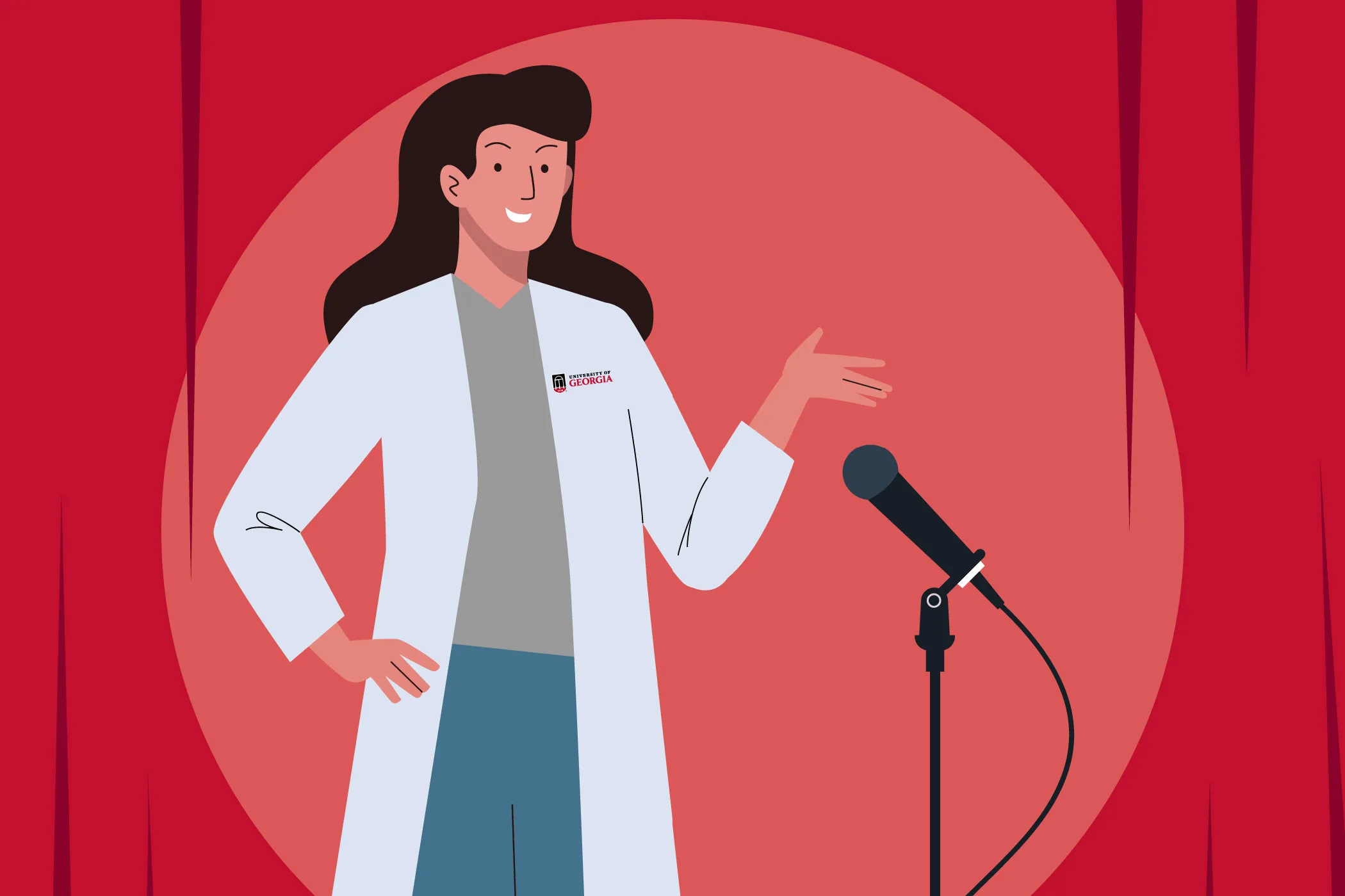
Instructors cracking a joke here and there could make students feel better about the class as a whole, according to new research the University of Georgia.
Unlike lectures with packed auditoriums, smaller lab courses can make it easier for teachers and students to get to know each other. A few jokes during class could help students feel more relaxed and eager to participate, the new study suggests.
More than 45 instructors from institutions across the country recorded audio from their classes. The researchers picked out any examples of humor the teacher used, and students in those classes answered surveys asking if they found their instructor funny.
What the researchers found humorous had no link to how students felt about the class, the study found. What really mattered was whether students thought their teacher was funny.
“If a student thought their instructor was funnier, they had more positive emotions about the course and fewer negative emotions about the course as well,” said Trevor Tuma, a co-author of the study and a postdoctoral research associate in the UGA Franklin College of Arts and Sciences. “We wouldn’t have seen that if we had only relied on whether we as researchers thought the instructor was funny or not.”
Humor linked to positive emotions, stronger desire to learn
The study was part of a larger interest in how the language instructors use affects the students they teach. Some made fun of themselves while others joked about the class content or lab equipment.
These quips may go a long way in keeping students engaged, the researchers found. Not only are positive emotions linked to better learning during a course, but they could also make students want to keep studying a topic in the future.
“People might look at emotions and say, ‘Oh, you know, that doesn’t really matter. What matters is they’re learning,’” said Erin Dolan, a co-author of the study and a professor in the Franklin College’s department of biochemistry and molecular biology. “But emotions influence our learning and our motivation to continue with a subject.”
Teachers should use humor with caution
Humor can be a way for teachers to improve how a student feels about the class, the researchers said. But it doesn’t always work.
In some classes, students disagreed widely on whether their teacher was funny. This may be because some forms of humor land better than others, the researchers said.
“Humor is subjective. It’s going to depend on the type of humor. It’s going to depend on the context. It’s going to depend on your relationship with that instructor,” Tuma said. “So we encourage instructors to be really thoughtful about what kinds of humor they use and when humor might be most appropriate. If humor is not received well, it may not be effective, and it even might have a negative effect.”
The study was published in the Journal of Microbiology & Biology Education and co-authored by undergraduate student Zarae Allen and doctoral students C.J. Zajic and Christina Leckfor. The study was conducted as part of UGA’s Vertically Integrated Projects for Research program.