

Lucky Dawgs
For their Maymester adventure, a dozen UGA students explored Ireland, where they learned a lot about Irish history, culture, sports medicine, and–most importantly–a bit about themselves.
Ireland.
“It looks like a quilt with all the different shades of green,” says Anna Foster, a third-year exercise and sport science major from Macon. Foster was one of 12 University of Georgia students spending their two-week Maymester crisscrossing the Emerald Isle.
“It’s like patchwork. And it’s beautiful.”

Foster previously visited Ireland, so she knew a bit about what to expect. She’d even traveled to the Cliffs of Moher, a jewel of Ireland’s west coast and one of the Maymester’s mid-trip highlights.
The first time she saw the cliffs, the sun shone as though Moher was posing for a postcard.
On this trip, Foster and her fellow Bulldogs left a gray but dry Galway, arrived in Moher amid steady rain, and—before heading back to Dublin through a misty drizzle—watched the sun break through once more.
It was as authentically Irish as anything else they experienced.
And these students experienced a lot during UGA’s Sports Medicine and Physical Performance Maymester program in Ireland. From completely unfamiliar sports in Dublin to conversations and clinics with coaches and athletes in Galway to deep dives into Irish history and culture all over the country, this summer, UGA students’ eyes were definitely smiling.
Ireland’s rich sports tradition had all but disappeared in the decades after the 1840s Great Famine. The Gaelic Athletic Association was founded in 1884 to revive classic pastimes of hurling, Gaelic football, and handball.
Today, those sports thrive, with Gaelic sports regularly selling out 80,000-seat stadiums, the party atmosphere surrounding them rivaling any fall Saturday in the South.
But beyond sports, the GAA is a cornerstone of Irish society. What’s one of the first things travelers see when they disembark at Dublin Airport? Framed GAA jerseys celebrating the island’s 32 counties, including those in Northern Ireland.
“My family was brought up in the GAA,” says Sarah Lavin, a coach at Sport Ireland in Dublin and a guide during the students’ visit to the facility that serves as Ireland’s Olympic training center. It was one of many Irish sports venues on the itinerary.
Lavin is a multisport athlete who plays Gaelic football for her club in Kilcock, west of the city, and camogie for county Kildare—all of that in her spare time, like every other GAA athlete.
“The GAA is part of the reason why communities stay communities,” she says. “And it’s the glue that holds the small ones together.”


Understanding the Place
McCullick didn’t consider a study away trip to Ireland until about three years ago. The idea arose from his conversations with colleague Bud Cooper, who led previous study away trips to Taiwan and Scotland focused on athletic training and sports performance.
“The field of athletic training is only recognized by three countries: the United States, Canada, and Ireland, so this was a wonderful opportunity to introduce students to a country where athletic training is recognized,” says Cooper, who retired in September 2024 and is now an emeritus faculty member. Prior to coming to UGA, he served as head athletic trainer at the 1996 Paralympics among other high-profile roles.
To laypeople, the differences between athletic training—those who work with athletes to minimize and treat injuries—and physiotherapists—whose work and patients are more wide-ranging—is subtle.
But among the UGA students, whose career interests include that full scope as well as physical and occupational therapy, health and wellness, and exercise science, the opportunity to learn firsthand about Ireland’s community-based sports infrastructure and how its athletes—almost all of whom are amateur—stay healthy is unmatched.


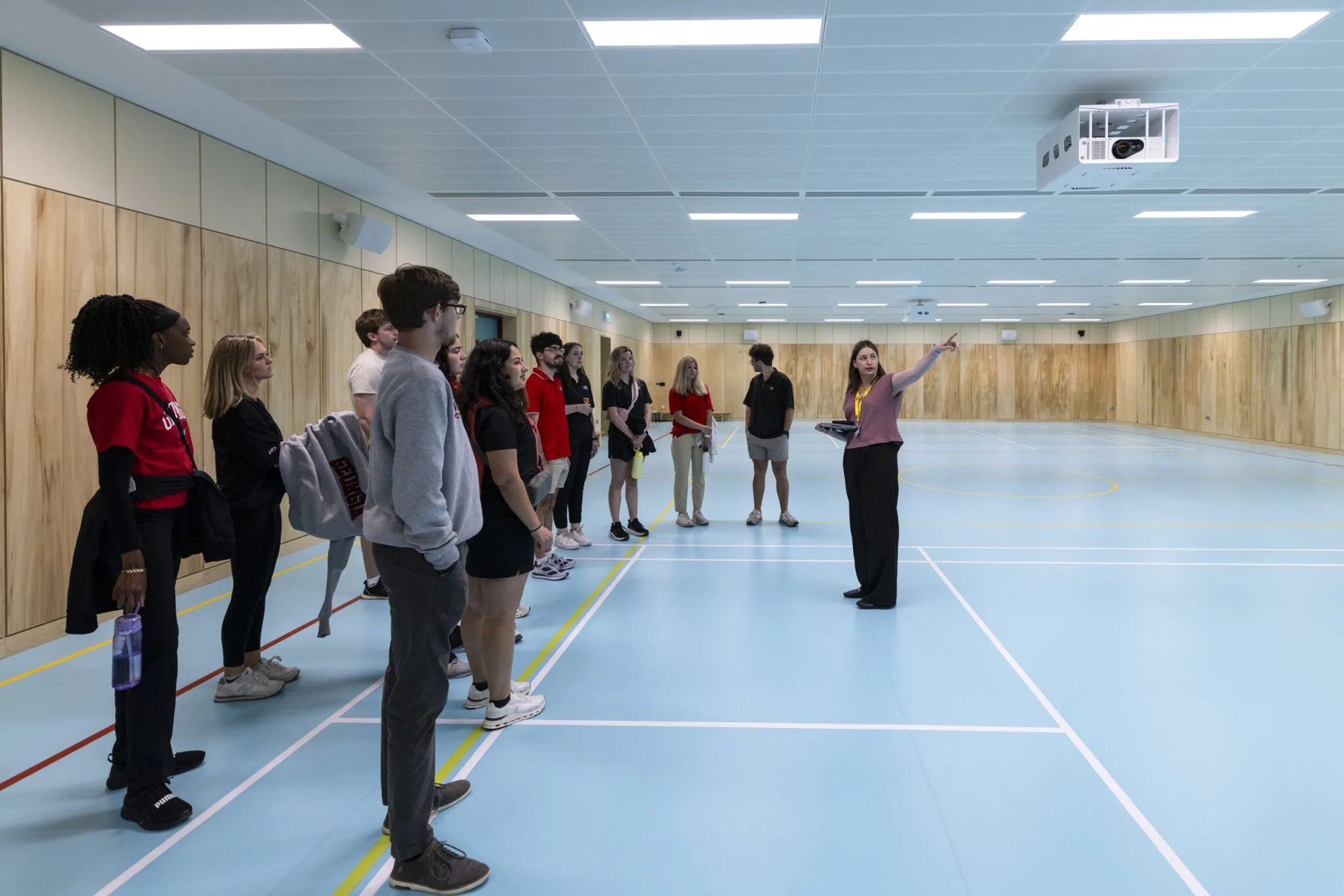

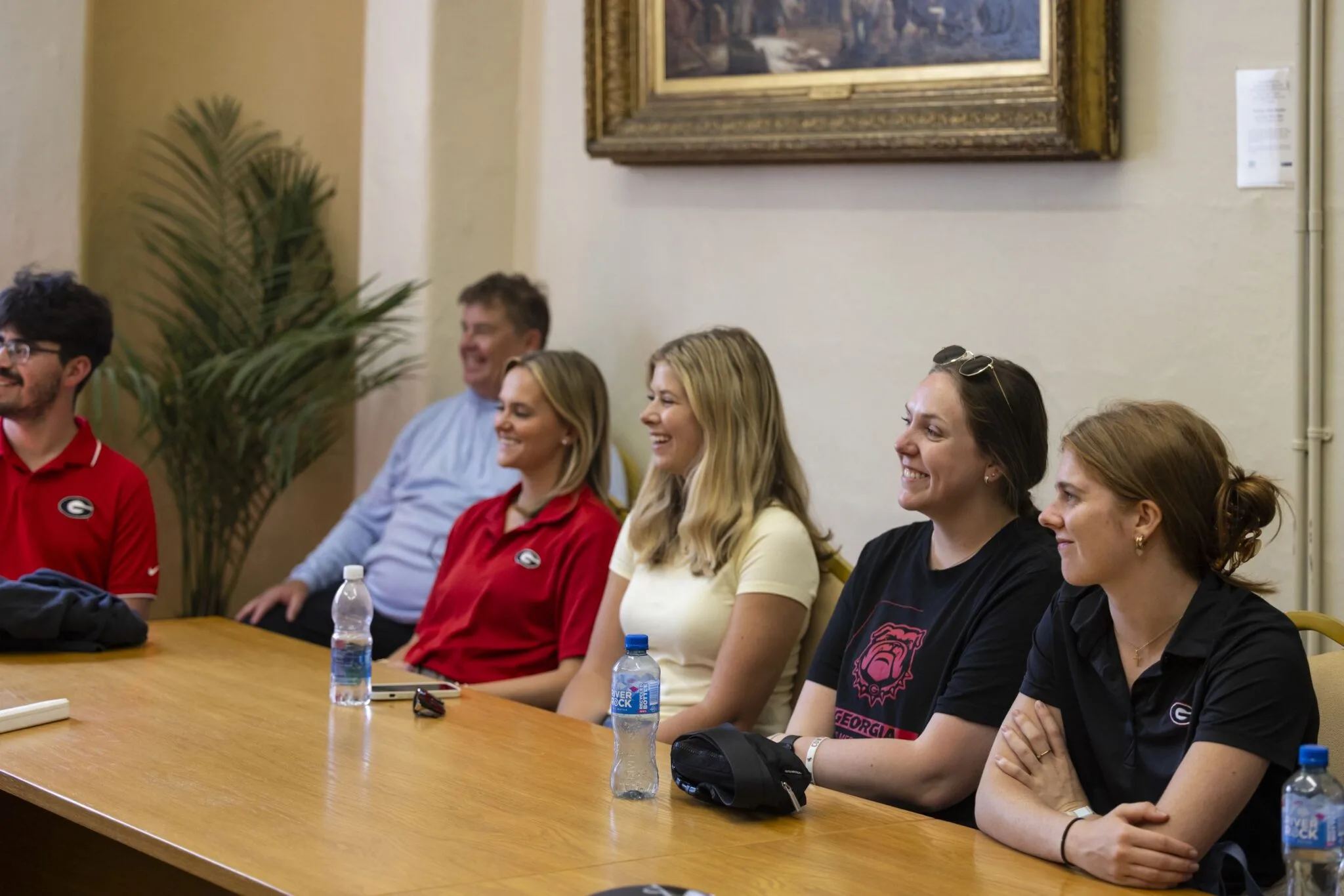
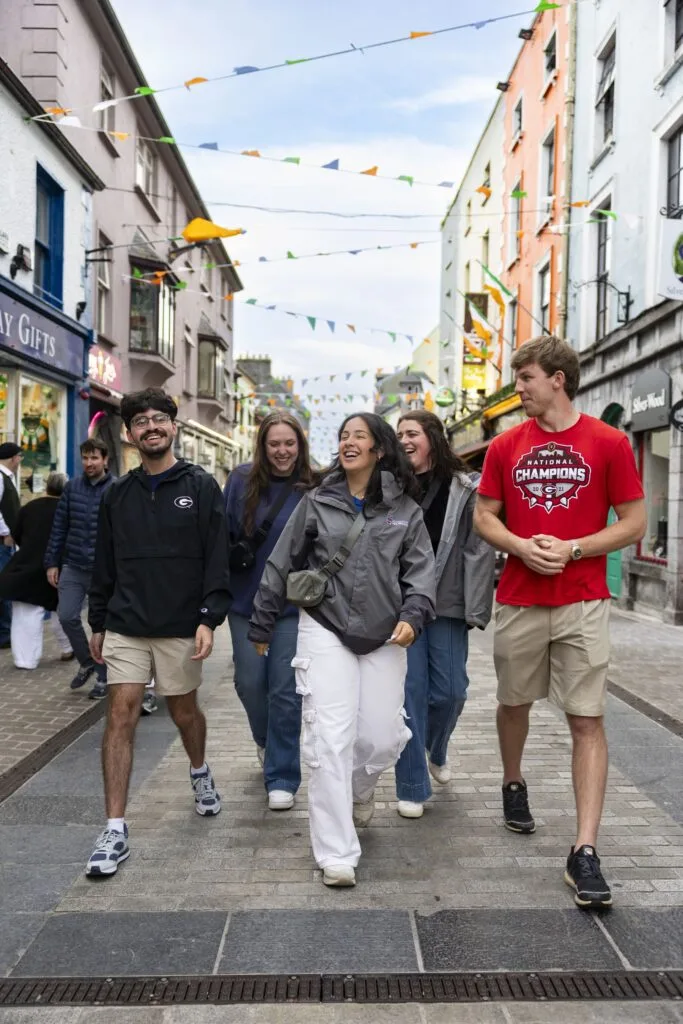
A Group Becomes One
The Ireland travel group included nine undergraduate students and three graduate students, all of them from UGA and 11 of the 12 in the College of Education. Yet, most didn’t know each other.
“It started in the airport,” says Kylie Horgan BSEd ’24, one of the three graduate students. “It was unspoken, almost. We found each other, and we all just kind of clicked. You don’t see that very often.”
Even during free time, the group traveled everywhere together. A dozen students walking the streets of Galway as one, stopping for ice cream (they did sample different flavors) or listening (and occasionally dancing) to buskers.
During his many visits to Ireland, McCullick has collected a lot of friends. He spent the trip introducing the students to them.
Peter Horgan, the GAA’s strategy, insights, and innovation manager (no relation to Kylie), was a constant source of information and storytelling. Jack Cooney, also with the GAA and a former player and manager at the county level for Gaelic football, helped introduce the association to the students in Dublin and also met up with them across the country in Galway. Des Ryan, director of sport and well-being at the University of Galway, delivered a lecture there and then saw the students again following a hurling match in Kilkenny.


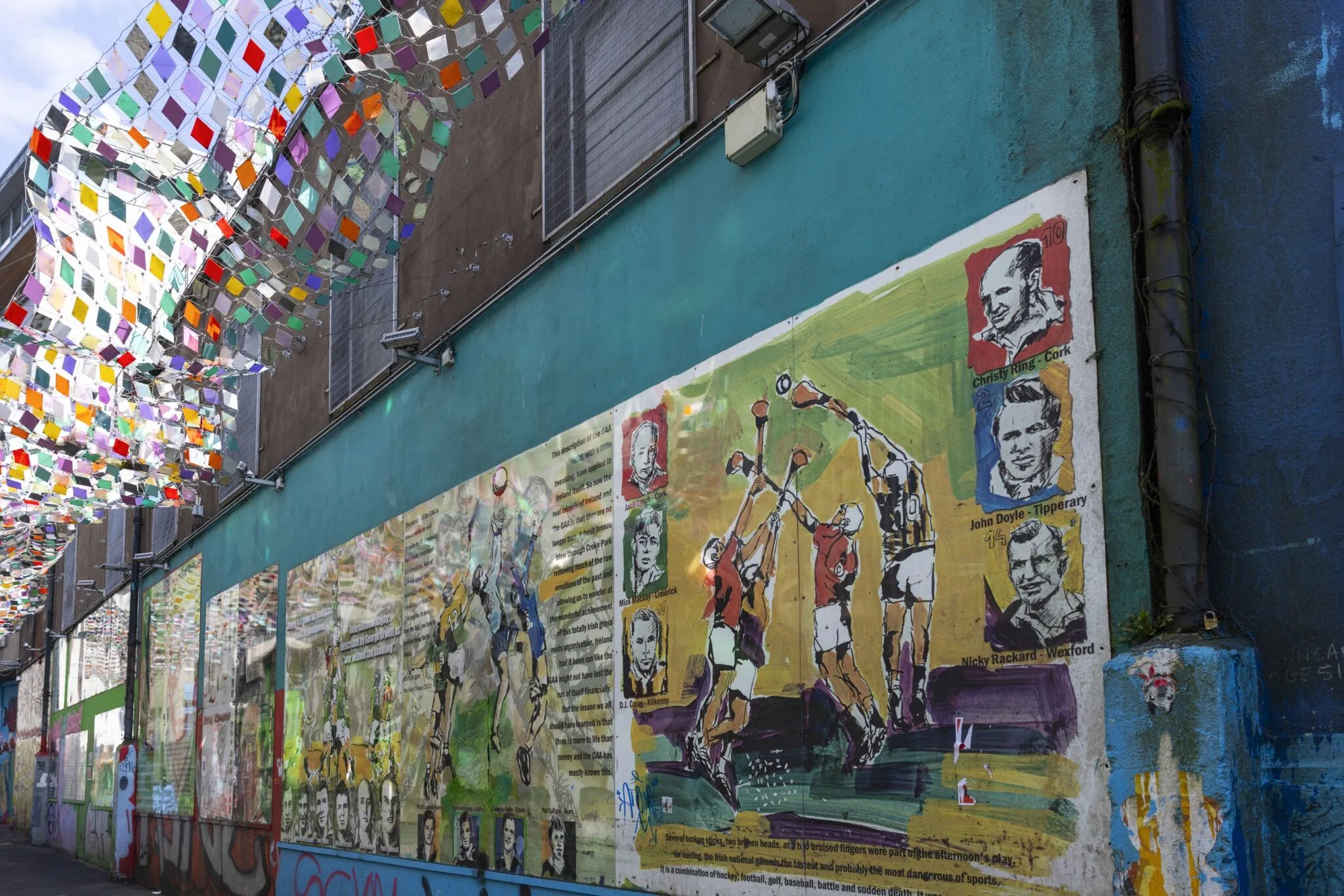
Hearing the stories first-hand brought the Irish sports experience to life.
“It’s been really interesting from an athlete’s point of view to learn about the different aspects of sport here in Ireland,” says Susanna Yonk, a Dance Dawg—UGA’s athletic dance team—and a fourth-year exercise and sport science major from Cumming.
“I could definitely see myself coaching in the future,” she continues. “So when I hear different perspectives about how to run a team and how to support athletes physically and emotionally, I definitely can see sports from an occupational perspective.”
Dublin City University faculty members Siobhan O’Connor and Sinead O’Keeffe spoke on injury prevention and athlete mental health, respectively. That hit home for students in lots of ways.
“I know in Ireland they try to be tough, too, but sometimes you just have to look out for your body and yourself,” says Landon Kardian, a fourth-year sports marketing major.
O’Connor’s presentation included statistics on the underreporting of concussions in athletics. While in high school, Kardian suffered three concussions, and while he was treated for them, he hasn’t forgotten the struggle.
“If you don’t feel right, then you need to get checked out,” he says. “It’s good that more people are speaking up now.”
There were times when it seemed like McCullick knew half the country’s population. On the Dublin City campus, out of nowhere, he’d walk past strangers on the stairs and greet them.
“Mika! Congratulations on the new baby!”
It was Mika Manninen PhD ’19, an assistant professor of physical education at DCU and a UGA alumnus. So not exactly a stranger.
“That’s the thing about Ireland,” McCullick says. “You just go up and talk to people.”
A Legend in Her Time
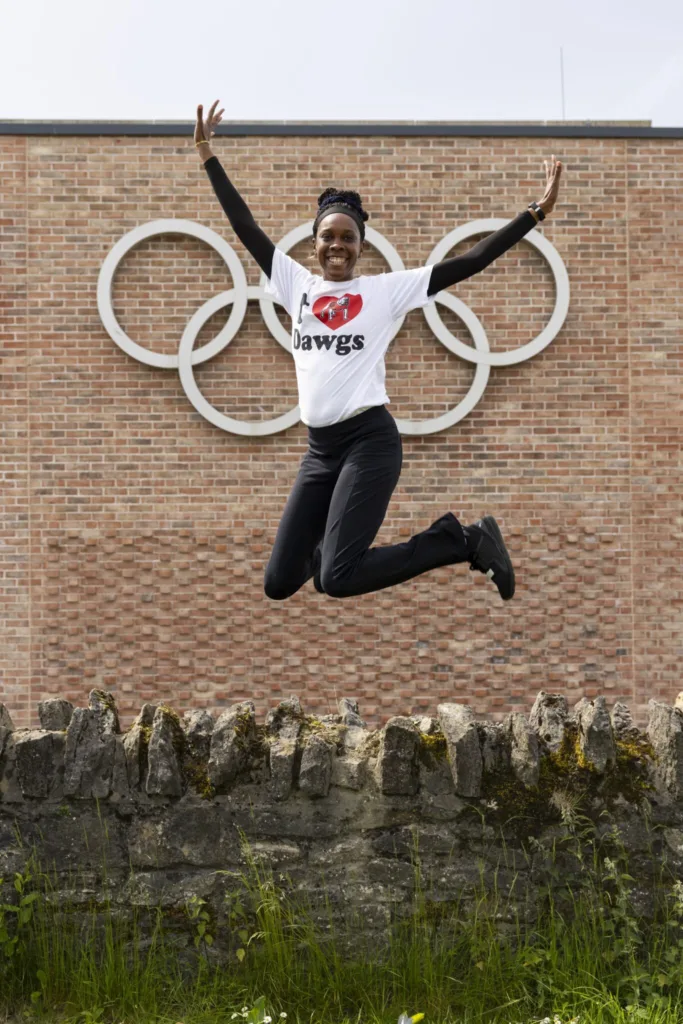
Levern Spencer is a national hero.
A world-class high jumper from the Caribbean island nation of St. Lucia, Spencer BSHP ’08 won two outdoor SEC titles and one indoor competing in college for the University of Georgia. She was a four-time All-American, and the university’s outdoor high jump record she set in 2007 lasted for 14 years.
On the larger stage, Spencer has carried St. Lucia’s flag at every international competition she’s entered, including four Summer Olympics. Her two golds at the Pan American Games and additional gold at the Commonwealth Games were the first-ever won by a St. Lucian athlete in any sport. And earlier this year, she received the Saint Lucia Cross, the country’s second highest civil honor.
Spencer’s fellow student travelers knew none of this.
Not until McCullick casually mentioned it at lunch on the trip’s second day.
Many, many questions followed. What athletes do you know? Which Olympics was your favorite? What’s your top memory?
Spencer took it all in stride and spent much of the meal flipping through Olympics-themed photos on her phone, including several of her very impressive Olympic pin collection.
Spencer retired from competition in 2021 following the Tokyo Olympics. She worked as a wellness instructor for a time, and then she decided to return to UGA to pursue a master’s in kinesiology. She is also interning with the UGA Athletic Association and working with the Olympic sports program.
“There were a lot of things I wanted to do that I didn’t because I felt like if I was competing professionally while going to school, something would suffer,” she says. “Now that I’m retired, I can focus solely on school.”
Spencer found out about the Ireland trip from Cooper, who discussed it in one of her classes.
On the first day during the group’s tour of Croke Park in Dublin, she made sure to get a selfie with the Olympic torch sculpture atop the stadium. It was from the 2012 games in London.
She waited for most of the others to move on before chronicling the moment.
“I was there.”
Crossing the Finish Line
“Putting your body on the line is really something we’ve only seen in the Olympics when you see a whole nation come together,” says Harper Brown, a graduate student in athletic training. “But in Ireland, it’s an everyday thing when the entire community comes together for every single game.”
Learning the lessons of keeping those everyday athletes healthy, as well as the underlying motivations that inspire them to give so much of themselves for their communities, were themes that the UGA students fully embraced.
“I didn’t know anything about Irish history before I got here, and I loved learning about it,” says Madison Huss, a fourth-year exercise and sport science major from Evans. “Now I have a full understanding why Gaelic sports are so important.”
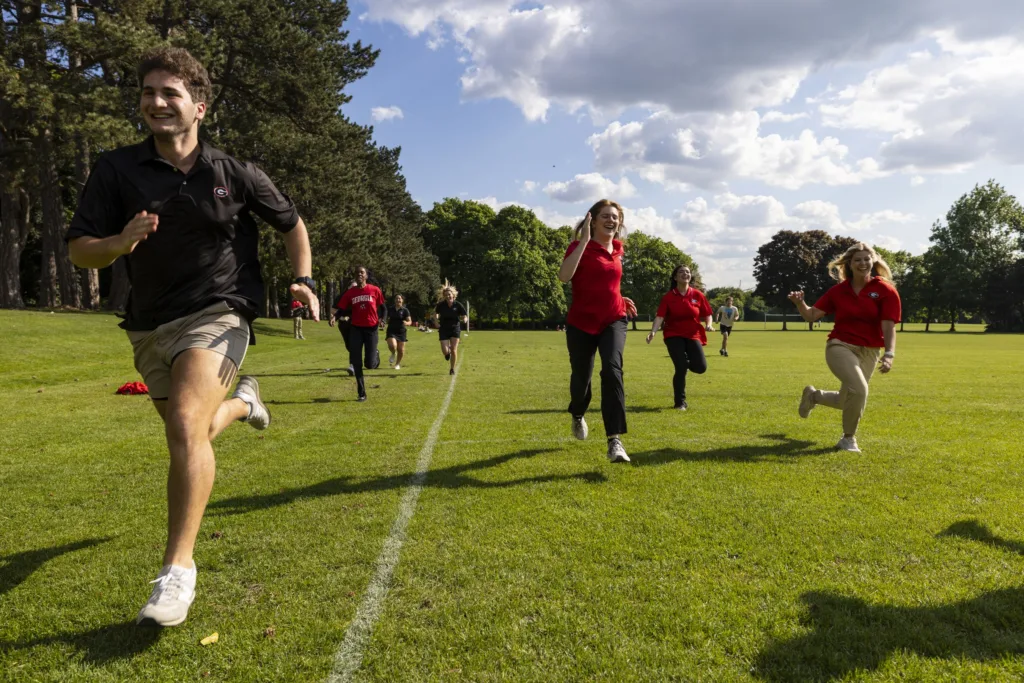
For Jackson Dollar, a fourth-year exercise and sport science major from Dublin—the one in Georgia—the experience was so meaningful, he’s considering returning to Ireland for a rotation after he enters physical therapy school. “It’s good to explore different cultures and see how life can be different in other places,” he says.
Dollar credits McCullick and Cooper for making the experience a memorable one.
“They were laid back and chill,” he says. “They wanted us to have a good time and enjoy the learning process.”
Cooper ate almost as much ice cream as the students, and the self-effacing McCullick, who spent most of his time at the front of the group, remained approachable. For instance, students didn’t hesitate to tease him about his driving—understandable, given that Ireland’s narrow, winding rural roads aren’t for the faint of heart—or his eclectic taste in music.

“The students are fun, that’s what I love about them,” McCullick says. “A lot of them would be friends with my daughter, who’s almost 20. And as a group, they are very inquisitive. They have been wonderful.”
Now as the summer moves toward fall and the new semester begins, the travelers are still posting to their vibrant group chat.
“If I had been here by myself, I don’t know how much I would have enjoyed it,” says Val Suarez, a fourth-year exercise and sport science major from Dacula. “But if you are with people and you enjoy their company, you’ll try a lot of new things, and it makes it that much better.”

Gaelic Sports at a Glance
The GAA was founded in 1884, but Gaelic sports have origins that reach back much further. There are more than 2,000 GAA clubs in Ireland, and none of the players or coaches, even at the highest levels, is paid. Injury treatment and prevention with this population is a relatively new area of study.
While Gaelic sports are played outside of Ireland—Atlanta has had a club since 1996—it’s in Ireland where they are an essential part of the culture. These are the five sports that make up the GAA.


Gaelic football: A form of football that includes elements of rugby and is played with a ball that most resembles a volleyball.
Hurling: Played on the same pitch and with the same scoring system as Gaelic football, hurling is distinct for its wooden, paddle-like hurleys. Hurling includes the best elements of field hockey, lacrosse, and soccer.
Camogie: A version of hurling played by women and girls.
Handball: An indoor sport that is basically racquetball without the racquet.
Rounders: A bat and ball game that includes elements of baseball and cricket.

“The players are so proud to be from Ireland. It shows with the history, you can see they fought for freedom and everybody’s proud to be where they’re from.”
Anna Foster, third-year, exercise and sport science
Macon, GA

“It was cool for all of us to be able to see what professors were talking about in real life as opposed to just hearing about it. It’s one thing to hear about Gaelic sports, it’s another thing to actually witness them.”
Harper Brown, graduate student, athletic training
Sammamish, WA
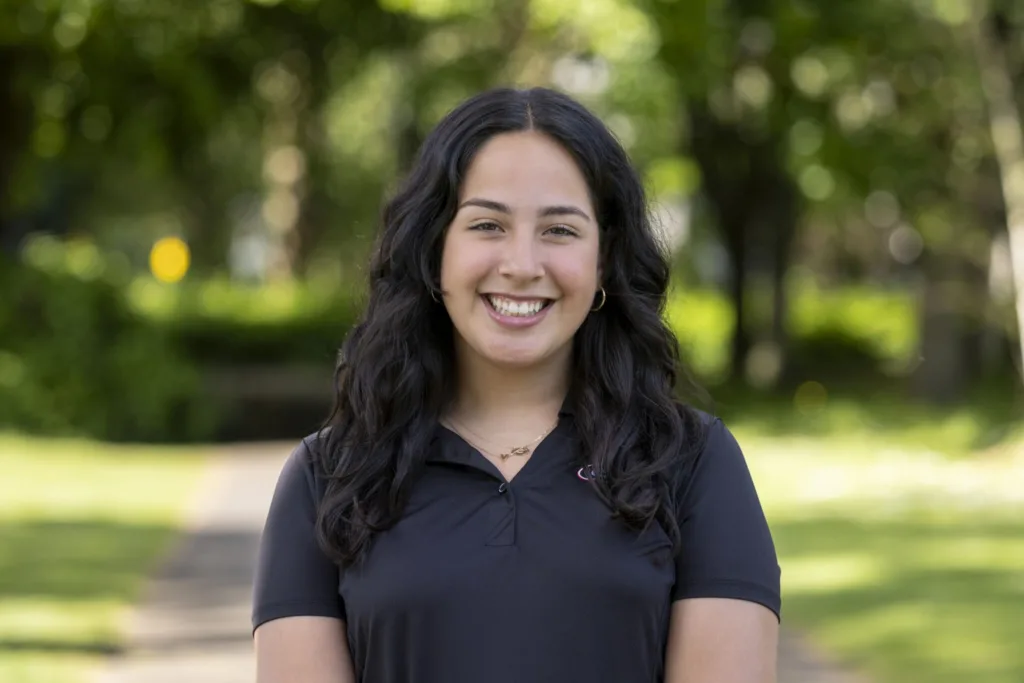
“I wanted to study abroad this summer—it’s the last one before we go off into real life. I read about the Ireland trip, and I’m glad it all worked out. This is what I want to do.
Val Suarez, fourth-year, exercise and sport science.
Dacula, GA

“We’ve kind of stuck together throughout everything that we’re doing, so that just gives us an opportunity to build new relationships pretty easily.”
Susanna Yonk, fourth-year, exercise and sport science.
Cumming, GA

“One of the things that I learned was from our lecture at University of Galway: truly taking care of the whole player instead of just the injury. It really clicks with me.”
Jackson Dollar, fourth-year, exercise and sport science.
Dublin, GA

“You can tell they implement rules from different types of games. There’s soccer, and football, and basketball, and all these things going on just combined into one game. It’s really cool.”
Jose Anguiano, fourth-year double major, exercise and sport science and veterinary medicine
Calhoun, GA

“Here in Ireland, they focus so much on mental health, and they start at a young age. I like how they talk about playing sports but also how you need to be happy.”
Katy Krumrey, fourth-year, exercise and sport science
Canton, GA

“I don’t think we would even understand or appreciate Gaelic culture without this experience. We were really watching because it looks like a game, but it’s more than a game. It’s life.”
Kylie Horgan BSEd ’24, graduate student, athletic training.
Roswell, GA

“Gaelic sports are a mixture of different American sports, and there is so much teamwork involved. That’s a focus here.”
Landon Kardian, fourth-year double-major, management and business
Atlanta, GA
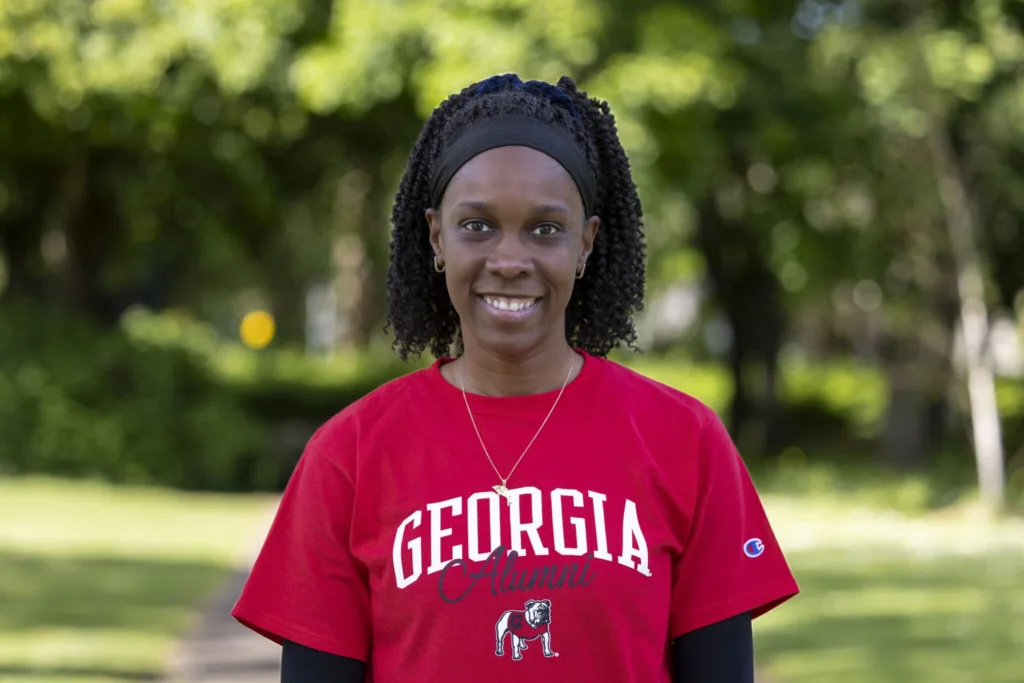
“The very first time carrying the flag at the Olympics is nerve-wracking, but I think after a time you get used to it. But it’s just a different feeling stepping into that stadium and seeing thousands of people. It’s a great honor.”
Levern Spencer BSHP ’08, graduate student, kinesiology
Athens, GA

“Concussions aren’t ever going to stop. Athletes are taught to be tough, which is great, but you have to speak up if you’re not feeling right.”
Luke Whitehead, fourth-year, exercise and sport science
Rome, GA

“Everyone here has a place and they’re passionate about every single sport and everything that they do. They do it for each other and they do it for the community.”
Madison Huss, fourth-year, exercise and sport science
Evans, GA