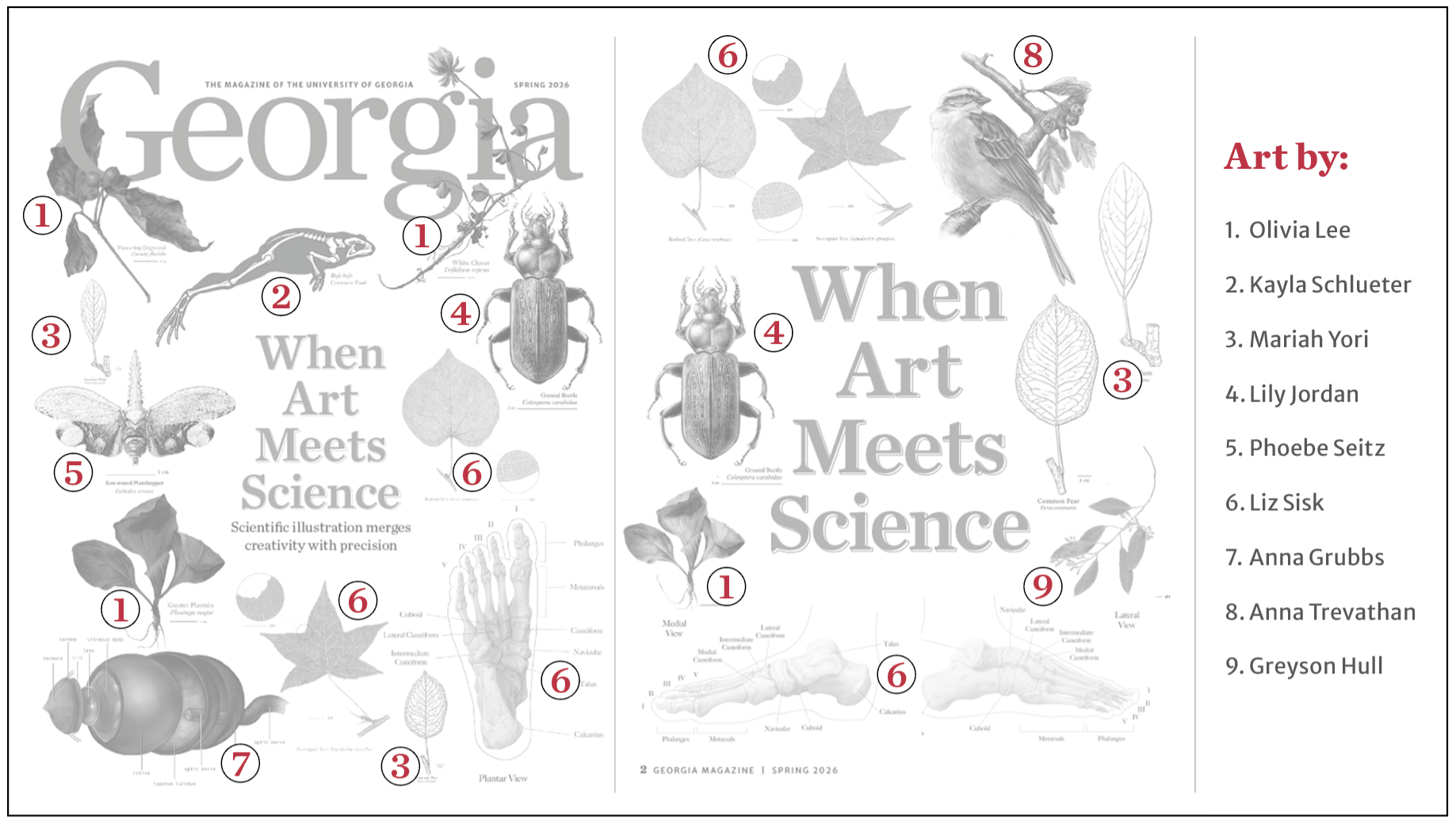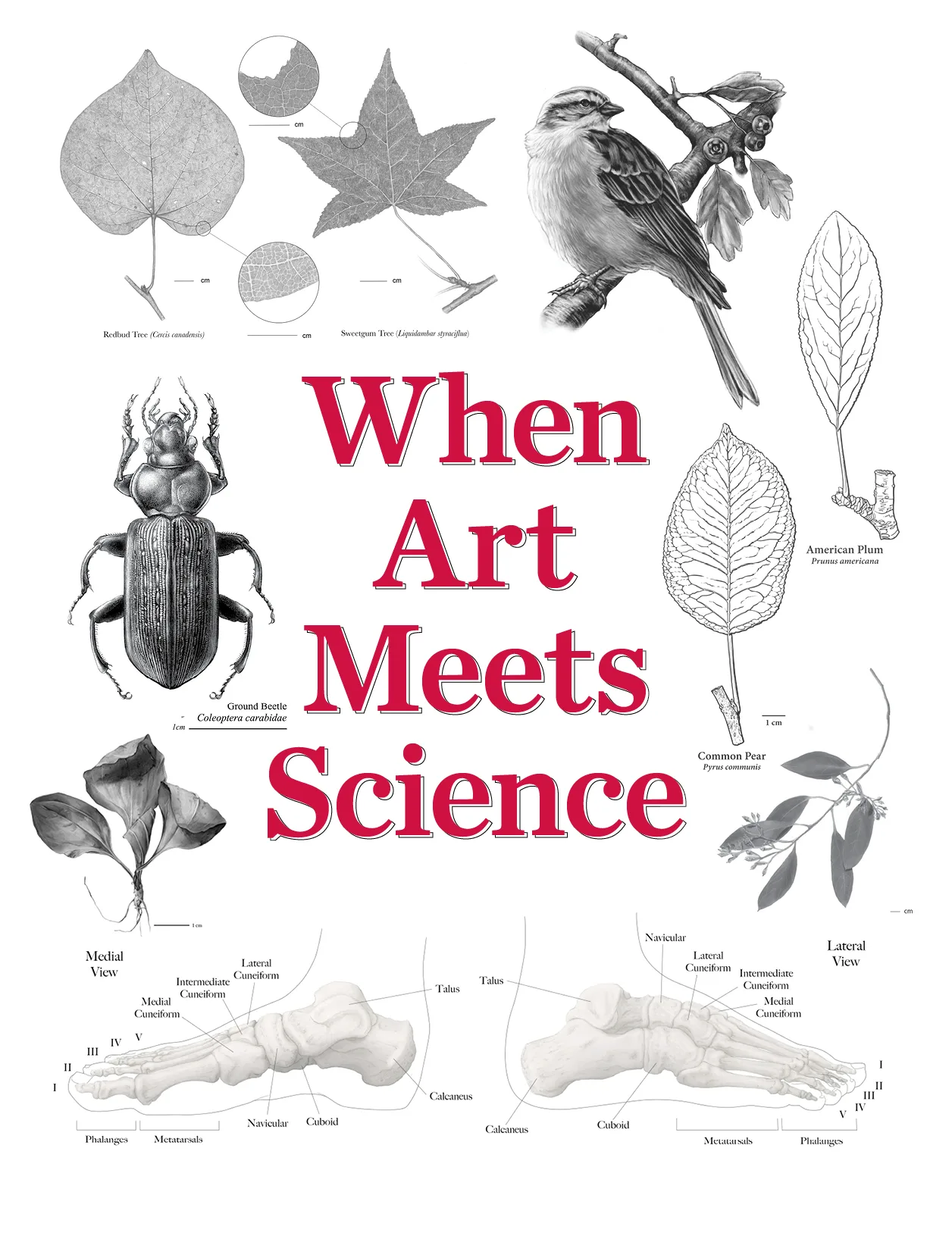
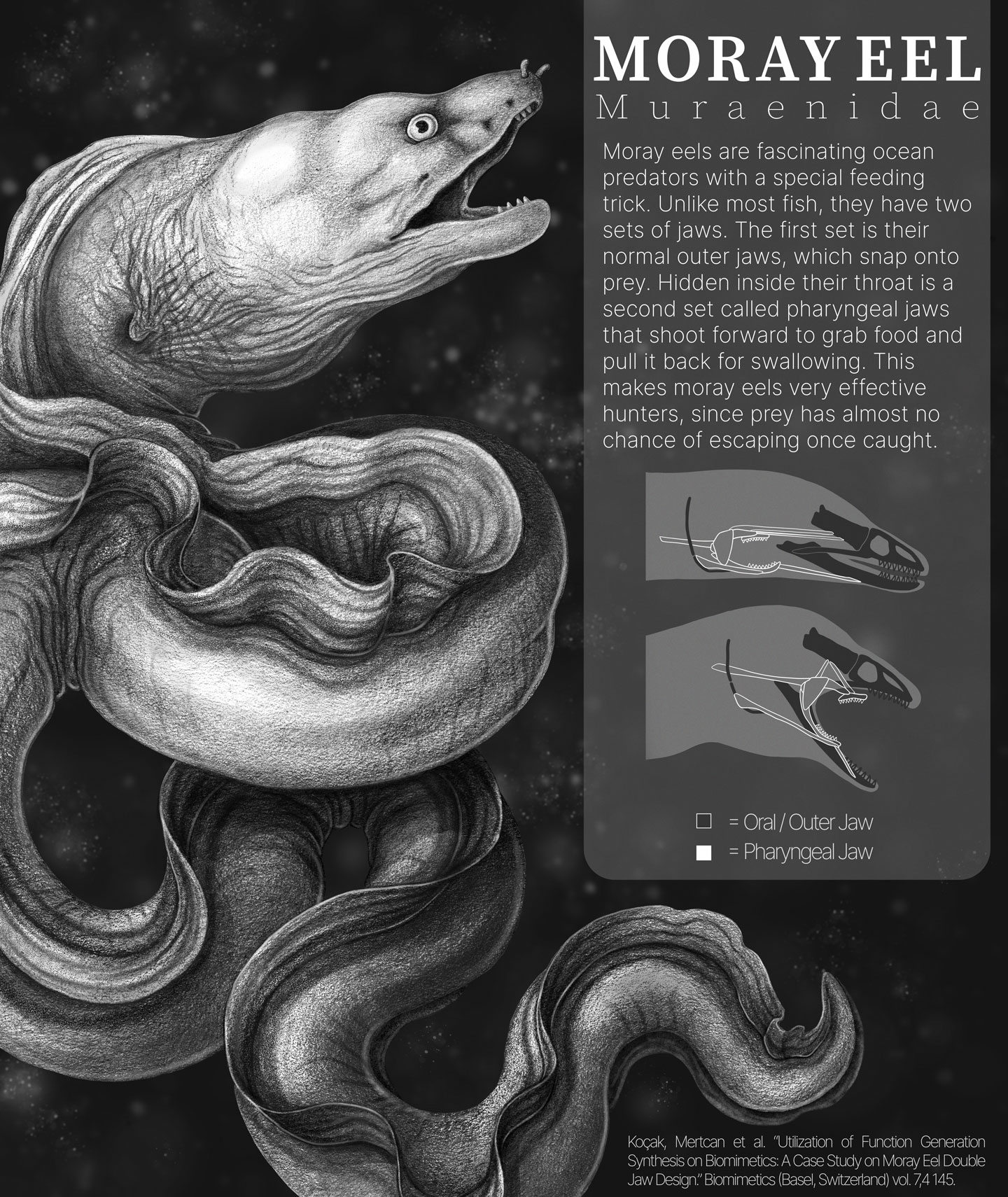
Consider the diagrams of the human body in a science textbook, infographics that guide readers through geological processes, or renderings of extinct creatures that are so detailed that they almost spring back to life.
Scientific illustrators must strike a careful balance to provide the right amount of information to a public that may have little knowledge of the concept or scientific area depicted.
Too much detail or jargon can overwhelm or confuse readers. Too simple and audiences might miss information or, worse, come away with an inaccurate understanding of what they’re seeing.
The scientific illustration program is housed in the Franklin College of Arts and Sciences’ Lamar Dodd School of Art. It is one of fewer than 20 undergraduate degrees in the specialty worldwide.
With only 18 students—all third and fourth years—the scientific illustration concentration is small and incredibly selective. But that selectivity is good preparation for what’s to come.
Scientific illustration is a niche field, and competition is fierce. Students who graduate from UGA’s program, though, are more than up for the challenge.
The Teacher
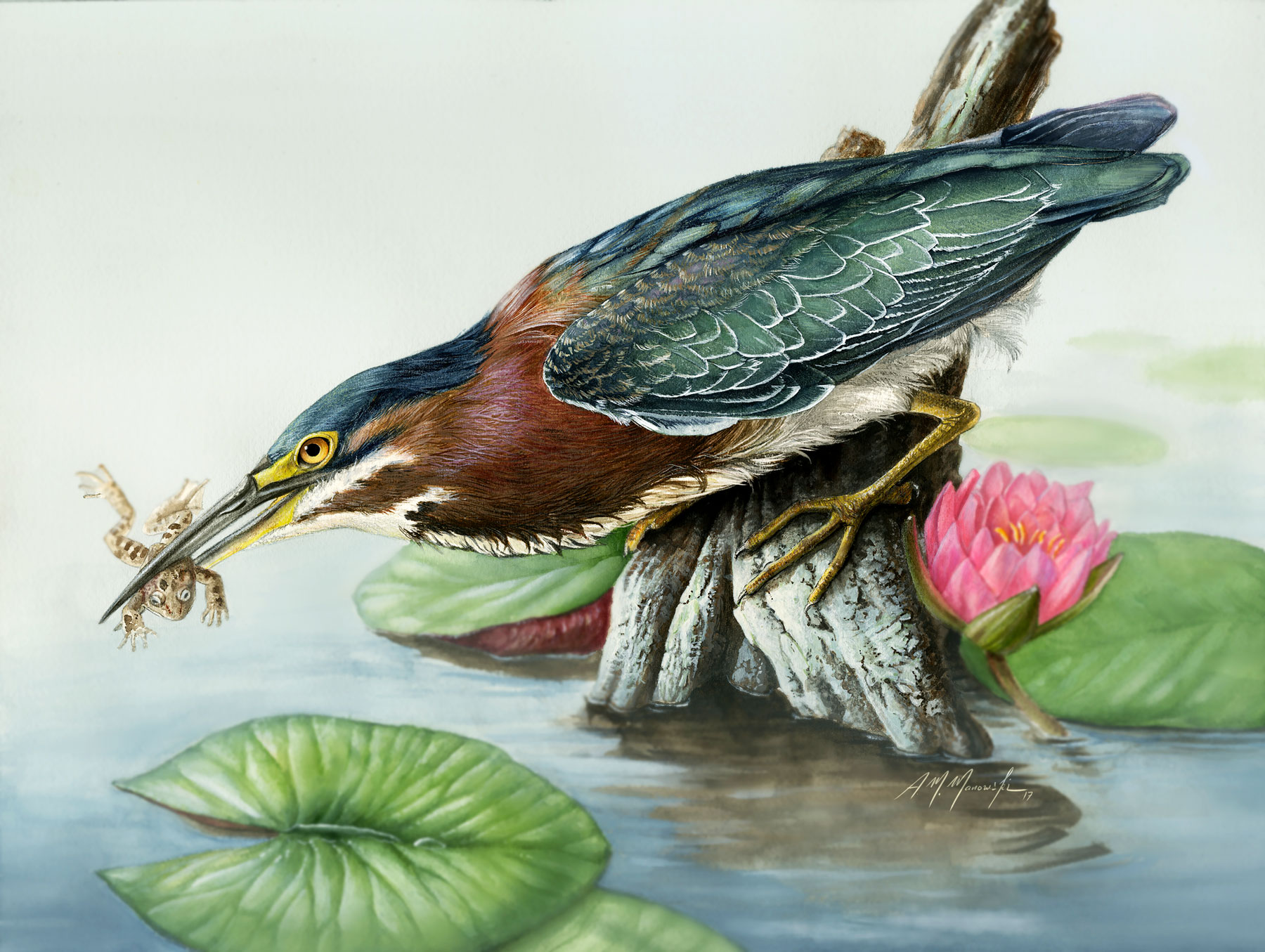
Amanda M. Manowski BFA ’18 had never heard of scientific illustration before coming to the University of Georgia.
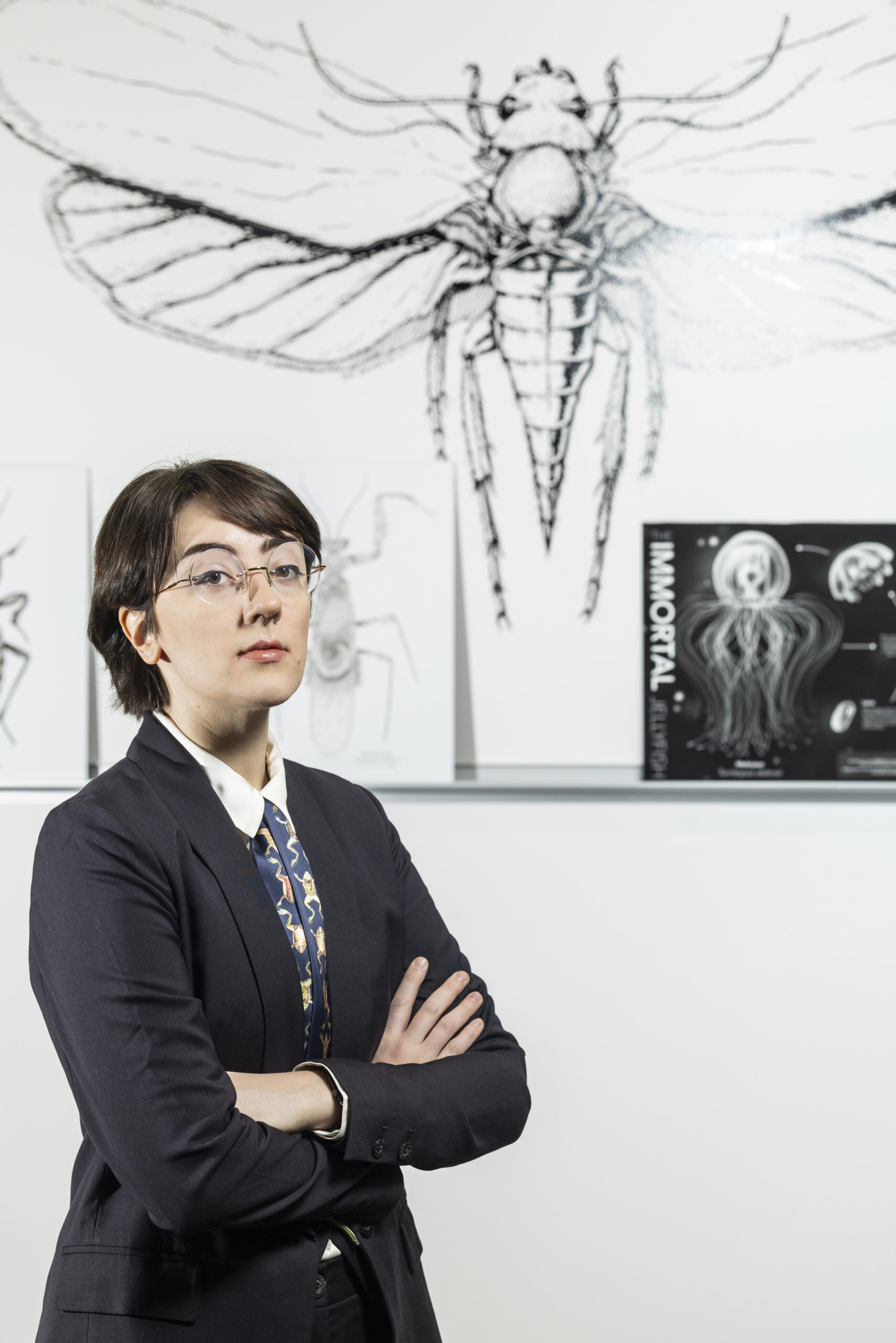
As a freshman, Manowski spotted her roommate’s friend sketching a group of three beetles and thought, ‘Why are you drawing bugs for a school assignment?’
“I had no idea there was a whole sector of art with a very utilitarian purpose of educating people,” says Manowski. “I did some research and found the Guild of Natural Science Illustrators and the Association of Medical Illustrators. I was immediately sold.”
So she switched her major, studied under then-Chair of Scientific Illustration Gene Wright, earned a master’s degree in medical illustration from the Medical College of Georgia at Augusta University, and began freelancing as a medical animator and illustrator.
When Wright retired in 2023, Manowski returned to UGA to become the program’s new director.
“Scientific illustration is a difficult concentration,” says Manowski. “Like other intensive studio disciplines, it’s about so much more than simply checking off course requirements. This is real job training.”
That means teaching students the latest digital tools and foundational techniques, of course. But it also means client interactions.
Researchers need graphic support for academic papers. Museums require illustrated explanations for exhibits. Scientific illustration students can fill those needs while also earning valuable experience managing projects, timelines, presentations, and client expectations.
“A potential student could be a great artist, but if they don’t understand the science, then their illustrations won’t achieve their objective,” Manowski says. “On the other hand, they could be an excellent scientist, but without the technical art skills, they won’t be able to convey those correct scientific points.
“It all matters.”
The Naturalist
Going into natural science illustration instead of medical illustration will be hard. I don’t recommend it.

Liz Sisk BFA ’19 knew the advice was coming from a kind place. Natural science illustration is a niche field within the niche field of scientific illustration, focusing on depicting the natural world and everything in it. There aren’t a lot of jobs, and the ones that exist—particularly the staff jobs at publications or agencies—are tough to come by.
“I’d rather my path be more challenging than do something I don’t love,” Sisk told herself at the time.
Thankfully, UGA’s program teaches students how to draw up contracts, set rates, and manage client interactions, all key skills for thriving as a freelance scientific illustrator.
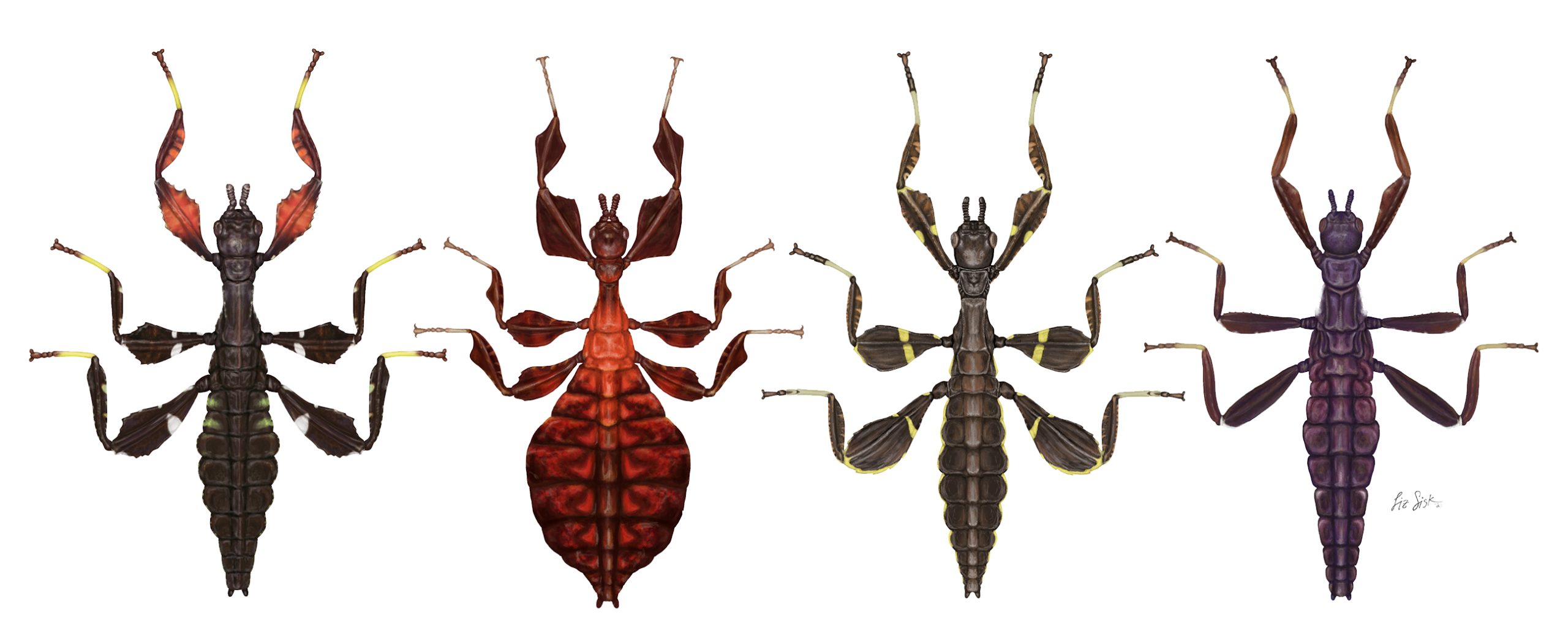
Sisk hit the ground running after graduation, creating depictions of everything from the spotted skunk and bongo antelope to diagrams and infographics on nitrogen pollution and the anatomy of a pit viper. She did projects for the U.S. Geological Survey and researchers at universities, among others, and she also interned at the National Museum of Natural History. Through those jobs, Sisk made connections that led to her current position as an associate graphics editor at National Geographic Magazine.
“Science education is really important to me,” Sisk says. “People are like, ‘Why don’t we just take pictures of the bugs?’ Have you ever tried to take a picture of a bug? And did you tell it to just stick its arms out perfectly straight? Did it listen to you? No.
“Sometimes a drawing is worth a thousand words.”
The Textile Artist
Greyson Hull BFA ’25 argues that medicine wouldn’t exist without art.

“Early medical illustrators, like Leonardo da Vinci, they would study and draw anatomy,” Hull says. “And that’s how people learned. Visual aids are important, and art is such a beautiful communication tool.”
But scientific illustration abounds in more than just the medical field, Hull says.
“It’s not just in textbooks or educational materials,” she says. “It’s everywhere.”
Precision. Realism. Accuracy.
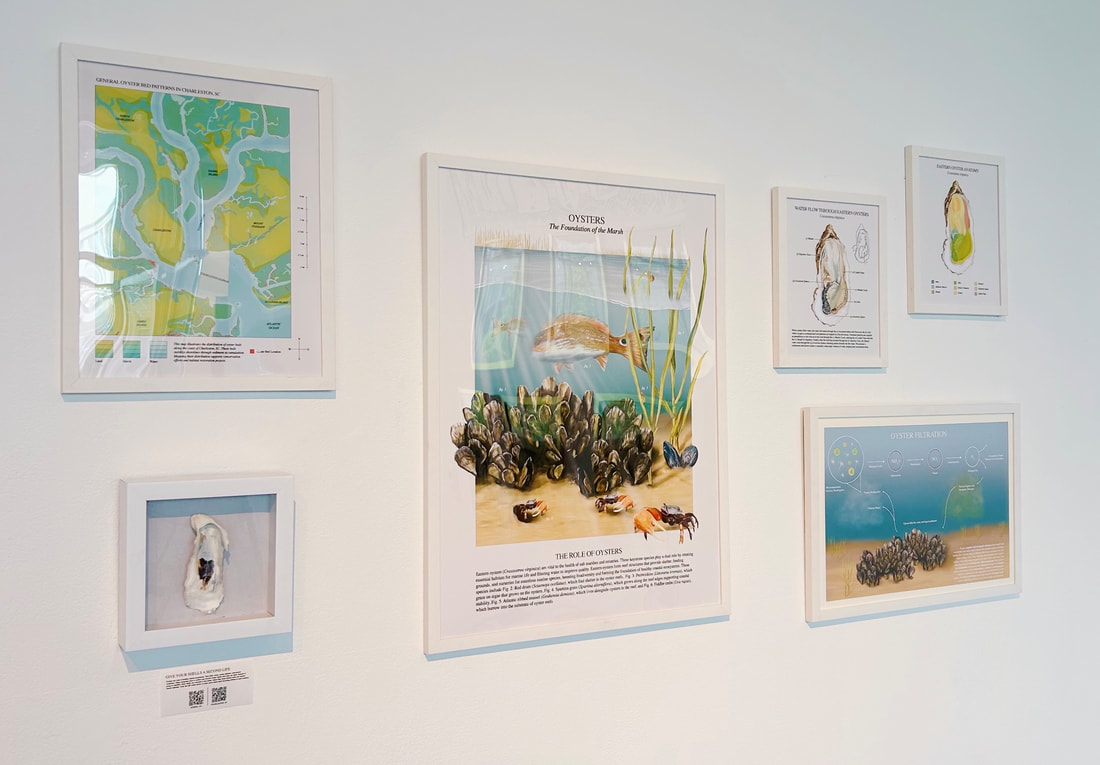
In addition to technical skills, these tenets of scientific illustration stayed with Hull as she expanded to textile work, developing a swimsuit line and marketing her creative and scientific work to boutiques in Charleston, South Carolina.
Increasingly, though, she finds those worlds merging. Scientific illustrations are popping up on clothing and influencing interior design choices.
Prints of antique illustrations of native plants hanging on living room walls. Gift wrap covered in flying insects with their scientific names embossed underneath. Sweatshirts with anatomically correct hearts on the chest.
Hull’s here for all of it.
“Before I entered the program, I don’t think I had ever sat down and done a realistic drawing,” she says. “And I think that learning how to make these tiny marks that make such a big difference is a skill that all artists should master, even if it’s not their style. In my opinion, anyone who likes art and remotely enjoys nature should consider scientific illustration as their path because it translates to so many different careers.”
The Conservationist
For Josh Hatfield BFA ’18, it was a children’s book on human anatomy.
Weird topic for that audience? Maybe. But also super cool.
He loved that book, and he held onto it for years.
“Someone had to create these illustrations and models,” he remembers thinking as he thumbed through the pages as a high schooler.
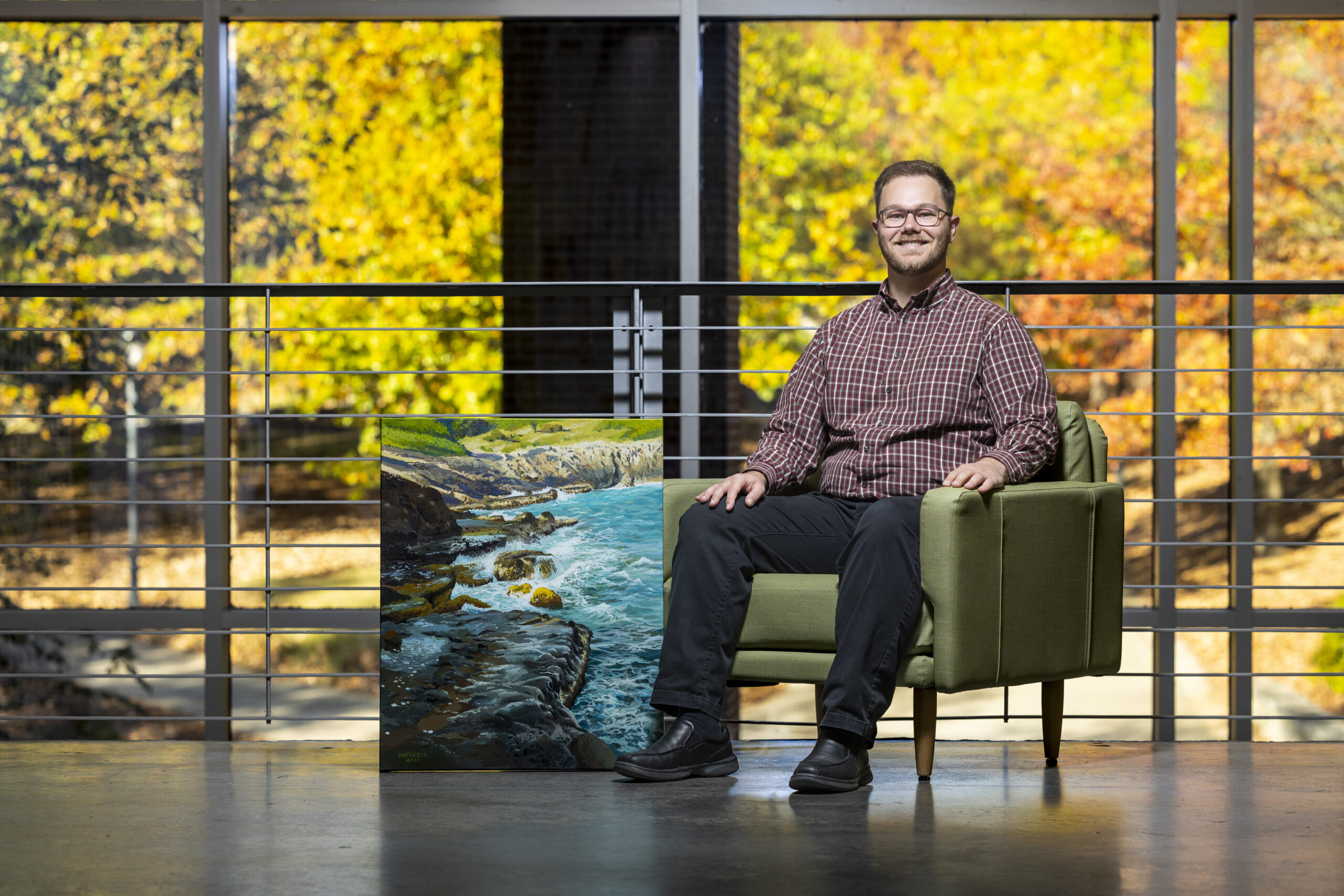
“With scientific and medical illustration, the didactic value is more important than the aesthetic. Does it describe the anatomy or the scientific process accurately or not?” Hatfield says.
While Hatfield loves creating artwork, that commitment to accuracy drew him to UGA’s scientific illustration program. But it also made some projects more challenging.
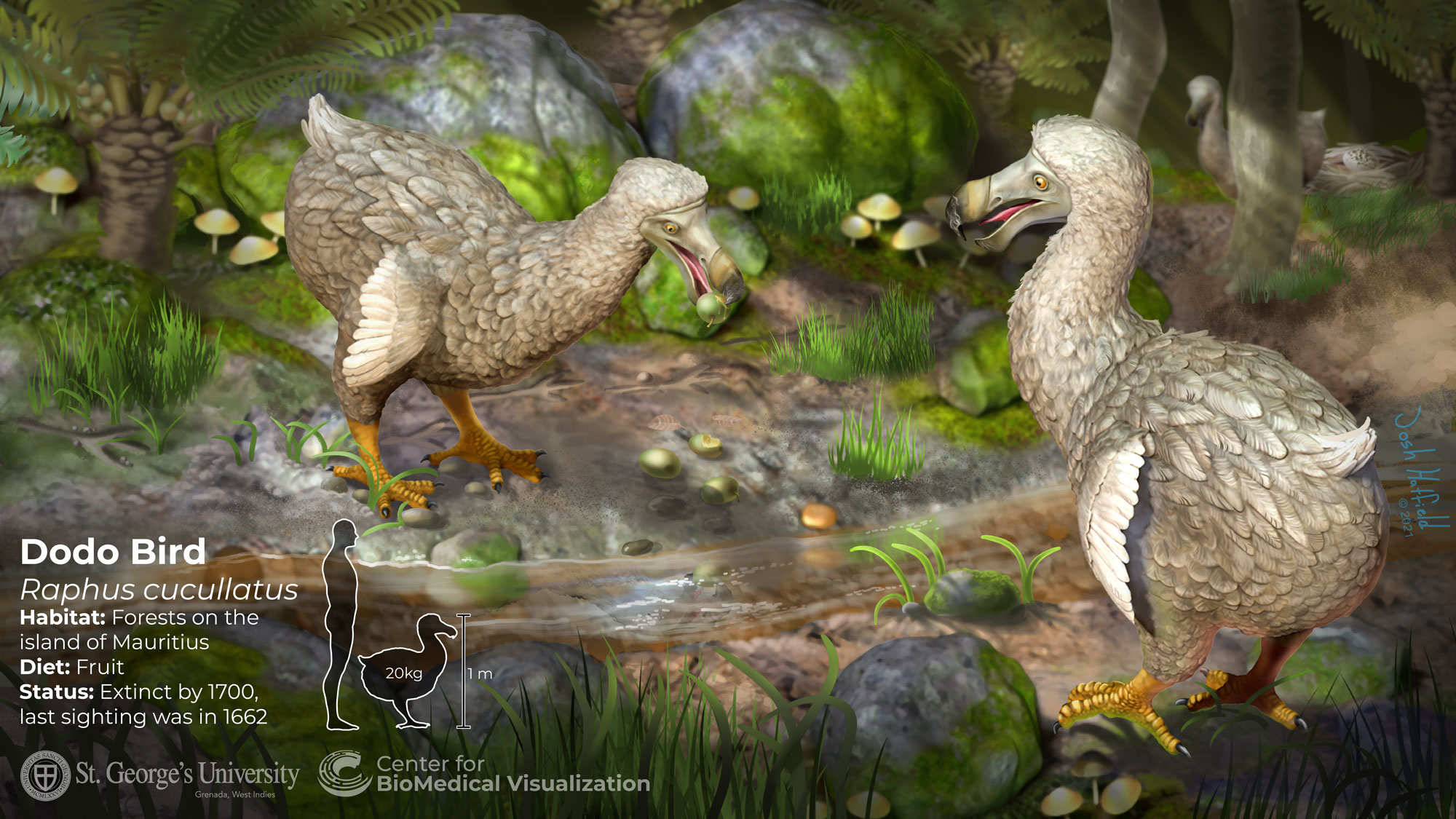
During his fellowship in biomedical visualization at St. George’s University, Hatfield was tasked with bringing the dodo bird back to life. On paper, at least.
“We don’t have many tissue samples or fossils of dodo birds. And obviously, this is before cameras, so we don’t have any photos of them either. I found original sketches that were done by some of the explorers who first visited the island of Mauritius (where the dodo bird existed).
“I had to pull together what little information I had and figure out, ‘Well, how is this thing supposed to look?’”
And he did. The 3D model and poster he created were designed to educate students about biology, ecology, conservation, and extinction at St. George’s and beyond.
The Medical Illustrator

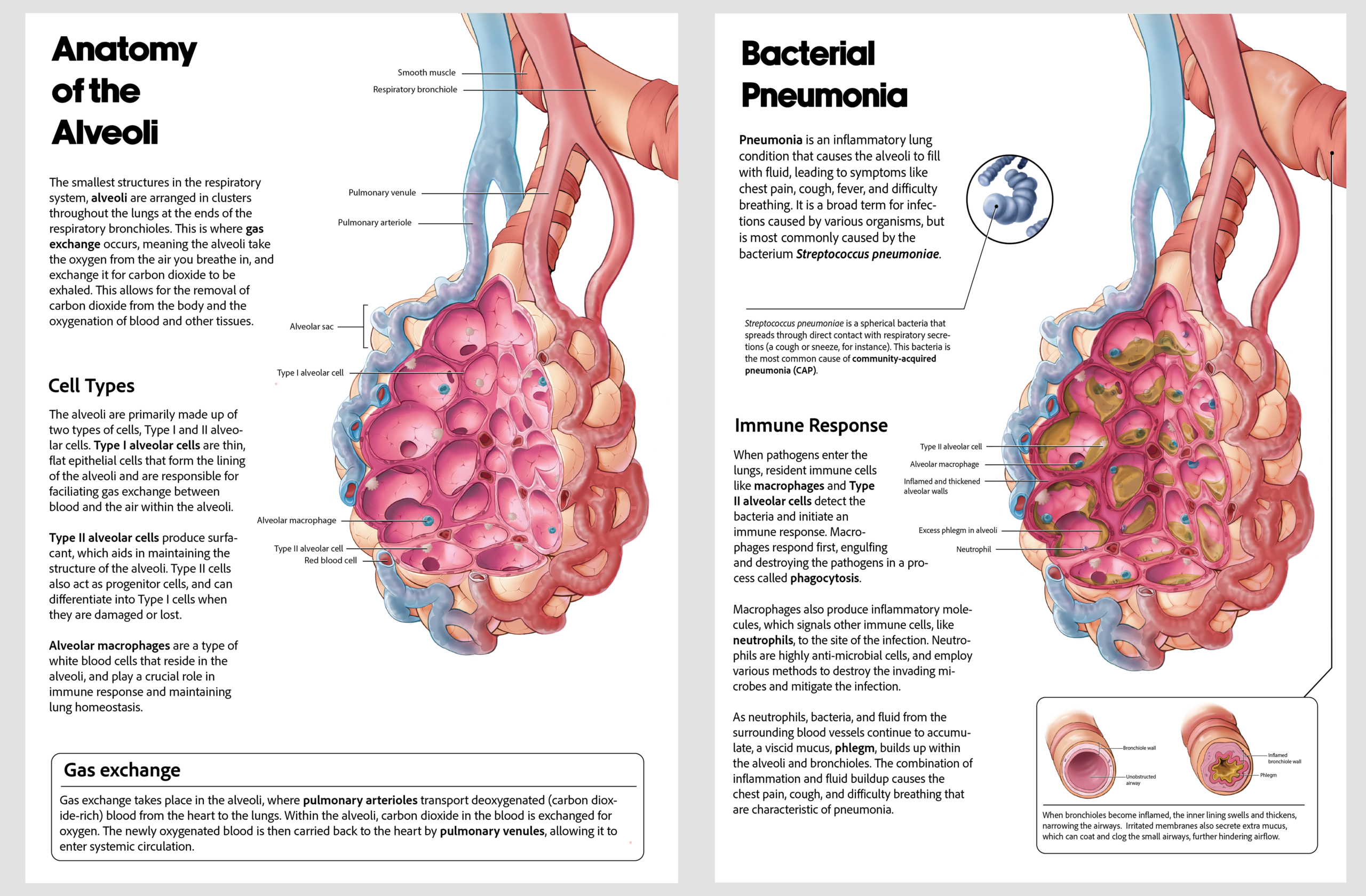
Reading about how cells work is one thing. But for Lily Jordan BFA ’25, seeing those processes depicted in print was another.
“The visuals—renderings of what was going on in the human body or within the cell—affected me differently than the words in the textbook,” she remembers.
She’d never had formal art training and came to UGA as a biology major, but when Jordan learned of the scientific illustration program, she knew it would be a perfect blend of her passion for science and her interest in art.
“Access to information can be empowering,” says Jordan, who is currently pursuing a master’s degree in medical illustration from the Medical College of Georgia at Augusta University. “People digest information in different ways, and giving people access to information in the way that they understand most clearly matters to me.”
A doctor’s office waiting room, for example. It’s a vulnerable place, and there may be information that you don’t understand as the patient, Jordan says.
“As a scientific or medical illustrator, you’re more than just an artist,” she says. “You are also a researcher, a designer, an editor. There’s a lot of work that goes into creating accurate and well-thought-through illustration.”
The Next Class
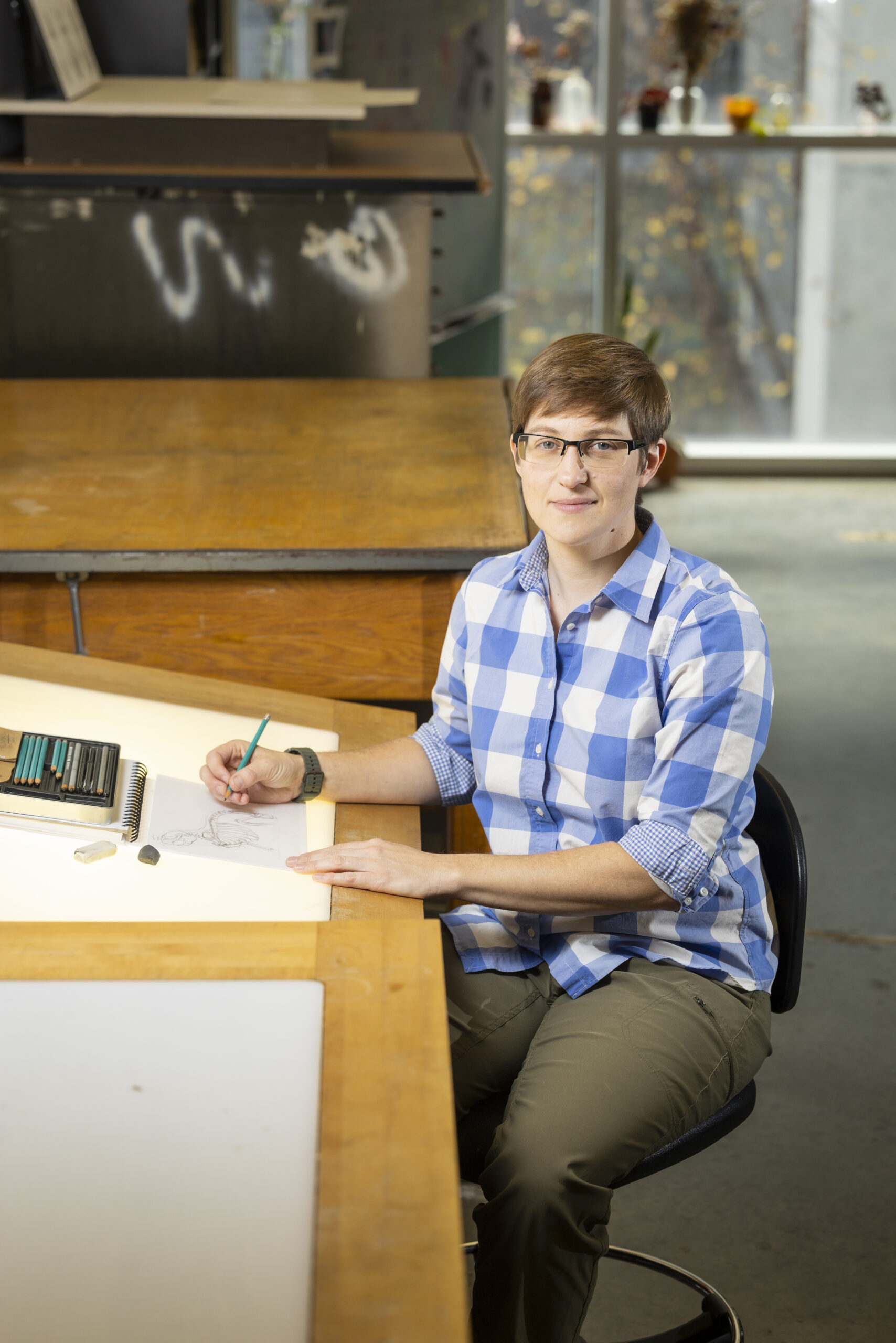
Intended scientific illustration students spend the first two years of their undergraduate art education learning the basics—color, composition, drawing, three-dimensional design—before submitting for a portfolio review.
This is, of course, alongside the general core requirements of a Franklin College bachelor’s degree.
Once accepted, scientific illustration students spend their first semesters honing their skills, ensuring that they firmly grasp how to draw objects with proper proportions, texture, and form.
“Any time I tell somebody what I’m going to school for now, they’re like, ‘What is scientific illustration?’” says Mariah Yori BS ’13. “It’s almost hard to explain because it’s so all-encompassing.”
Each student has his or her own interest, says third-year Olivia Lee, and the program is one place where they can all geek out over their favorite caterpillar or the workings of the human circulatory system.
“Everyone is very nerdy in the best way possible.”