

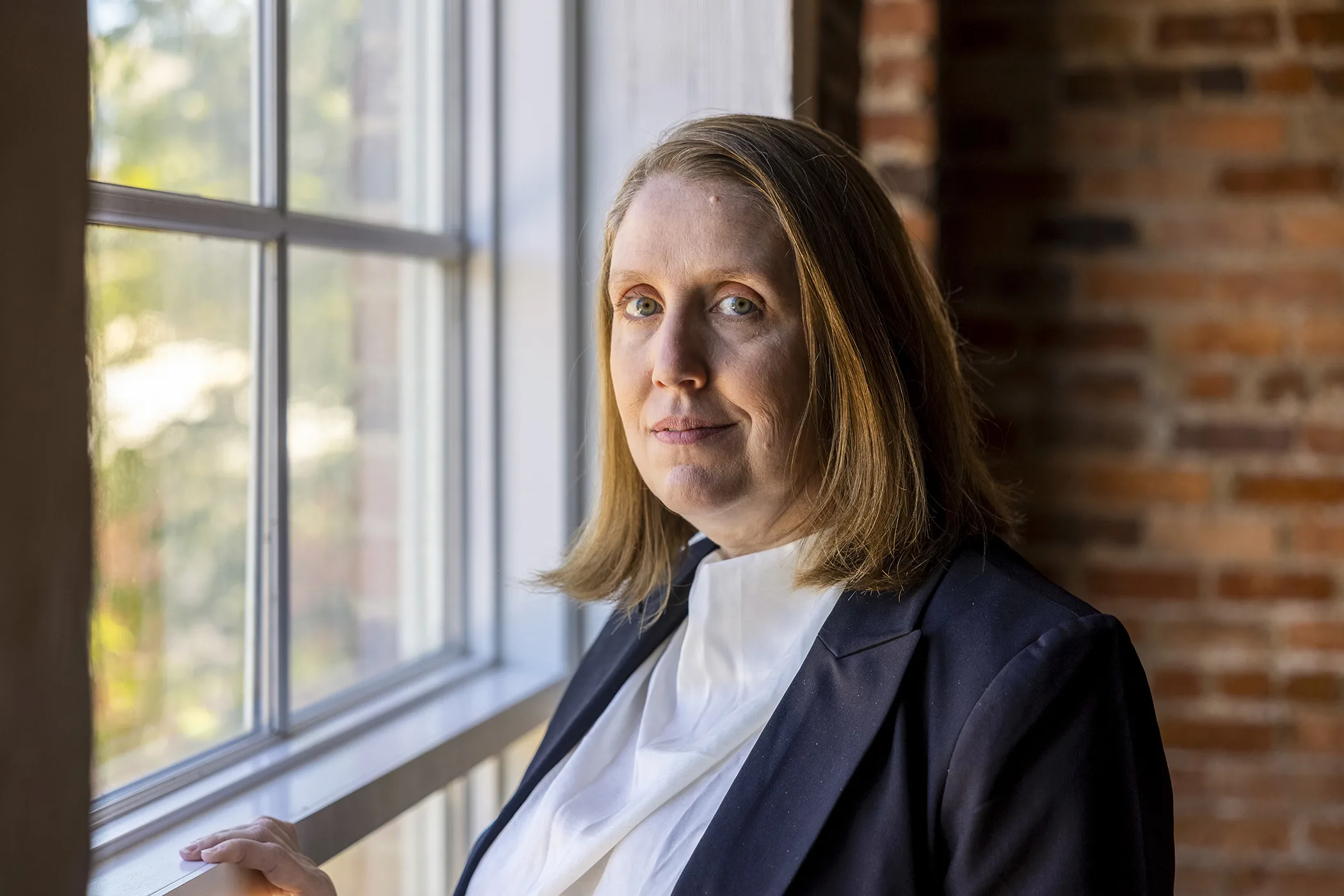
Growing up, Allison Dunnigan worked with vulnerable children and families as a volunteer and later as a foster care case manager. Today, Dunnigan has traded volunteer work and direct practice for the classroom, ensuring the next generation of social workers is prepared to help vulnerable populations.
Dunnigan is an associate professor and director of the UGA Title IV-E program, also known as the Child Welfare Stipend program, housed in the School of Social Work. The federally funded initiative, in partnership with five other institutions in the state of Georgia, covers tuition and fees for selected Master of Social Work students to prepare them for competent, professional child welfare practice.
Title IV-E connects research and classroom content with child welfare practice to improve the quality of services for families served by the Georgia Department of Family and Children Services while also better preparing tomorrow’s professionals for the field. Each student commits to a year of employment with DFCS for every year they receive funding.
“We have people who have a commitment to the DFCS, who are committed to child welfare, wanting to better themselves and earn their MSW,” Dunnigan said. “It’s a great partnership because it provides an opportunity to increase and improve the child welfare workforce and maintain partnerships with these agencies and other universities throughout Georgia.”
A history of growth
Dunnigan joined the program when she began working at the School of Social Work in 2018. When she arrived, the Title IV-E program was offered to Athens and Gwinnett students but was not available to online MSW students.
She and her colleagues applied and received a grant from the National Child Welfare Workforce Institute, and Dunnigan used the grant funds to expand the Title IV-E program at UGA to the online MSW program. By the end of the three-year grant, more than 15 enrolled online students were being funded by Title IV-E.
Today, 35 students participate in Title IV-E, both online and in-person, and three full-time faculty and staff have been added to accommodate the growth. In addition to classes for students, the program offers continuing education courses and supports training for its alumni and industry professionals. It’s able to provide this additional outreach thanks to its staff and partnerships with organizations including Resilient Gwinnett, a nonprofit dedicated to building community resilience, preventing trauma and driving systems change.

Title IV-E students complete a standard MSW course load as well as practicum placements where they are able to utilize the skills they develop in the classroom. For instance, one student who serves as a DFCS county director partnered with a local school to tackle food insecurity. The student coordinated the distribution of food-filled backpacks to 1,500 individuals, which led to private sponsorships that allowed the effort to continue. Another student serving on the Georgia-Alabama line helped facilitate around 30 DFCS placements across the state line by building relationships with counterparts in Alabama.
“Those are examples that we think of as real successes,” Dunnigan said. “We love being able to highlight the great work that our students are doing, and they get the opportunity to have a real role in developing their internship.”
In addition to training, Title IV-E hosts events throughout the year, including several during Child Abuse Prevention Month in April. The program’s annual community agency fair connects agencies with the university while spreading awareness to the university community.
Refining research
Outside of the Title IV-E program, Dunnigan teaches master’s-level introductory and child welfare courses along with a doctoral-level statistics class. Her research interests include children with complex needs, such as physical and mental well-being, and families’ experiences with the child welfare system.
Dunnigan also engages in large data research, including projects that seek to understand trends and patterns from a database of millions of hotline calls from families served by the child welfare system.
She has ambitious long-term goals such as having workers with an MSW in every DFCS office in the state. “My goal is to make sure that we are providing our students the best training, education and experience that they will then take to go work and improve the lives of families,” Dunnigan said. “There are a lot of different ideas that come in, but really, everyone who is drawn to this work, their focus is improving the lives of children and families, and we want to make sure they have the tools and skills to do that.”