

A mere 39 miles down University Parkway from the University of Georgia lies Rowen, the state’s largest knowledge community. Rowen boasts 2,000 acres of land on the eastern edge of Gwinnett County, sitting nearly equidistant from Georgia’s leading research universities. Led by a not-for-profit foundation, Rowen’s mission revolves around innovation, research and collaboration at the intersection of three vital Georgia industries: agriculture, the environment and medicine. Ultimately, Rowen markets its land as the potential new home for companies in the life sciences and technology industries.
Before landing its first tenant, Rowen understood that partnerships with its university partners were vital for the tenants it would be pursuing. For UGA, those partnerships represent a diverse tapestry of problem-solving efforts — from sustainable development and electric mobility to forestry — that connect students with employers from industries the company is partnered with.
“Through this partnership, our students are applying classroom knowledge to complex, real-world challenges alongside industry leaders,” said Benjamin C. Ayers, the university’s senior vice president for academic affairs and provost. “That experience not only deepens their learning but also prepares them to lead in fields critical to Georgia’s future, from environmental sustainability to life sciences. As Rowen grows, so will the opportunities for our students to contribute and thrive.”
Those partnerships were a key factor for UCB, the Belgium-based biopharma giant that announced its decision in March to build a $2 billion biologics manufacturing campus on 90 acres at Rowen. The UCB facility is expected to create opportunities for UGA alumni and talented individuals from across the region.
Living labs
Rowen’s first and largest collaboration project with UGA is Living Labs through a multi-institutional partnership with the University System of Georgia. This project allows UGA students to collaborate with industry professionals to create real-world solutions that address some of today’s most pressing industrial and environmental challenges.
Over summer 2025, Rowen launched a two-year Hydrometeorology and Land Cover Change Observational Study, known as the HALOS project, that provides research opportunities to students from UGA’s Franklin College of Arts and Sciences, College of Agricultural and Environmental Sciences and College of Engineering.
The HALOS project implements the use of drones, satellite imaging and real-time sensing instruments to monitor environmental indicators and will generate data to monitor how large-scale development impacts local weather, geography and watershed properties. The goal of this study is to explore the impacts of urban heat islands and assess the effects on air quality, flooding and water quality during all stages of development in the Rowen community.
“Rowen is leading the way when it comes to developing a community where sustainability and environmental stewardship are core principles, integrated into site planning and future developments,” said J. Marshall Shepherd, Regents’ Professor and Georgia Athletic Association Distinguished Professor, director of the atmospheric sciences program and lead researcher of the HALOS project. “This study will provide valuable insights into how large-scale construction projects can be developed in sustainable and resilient ways.”
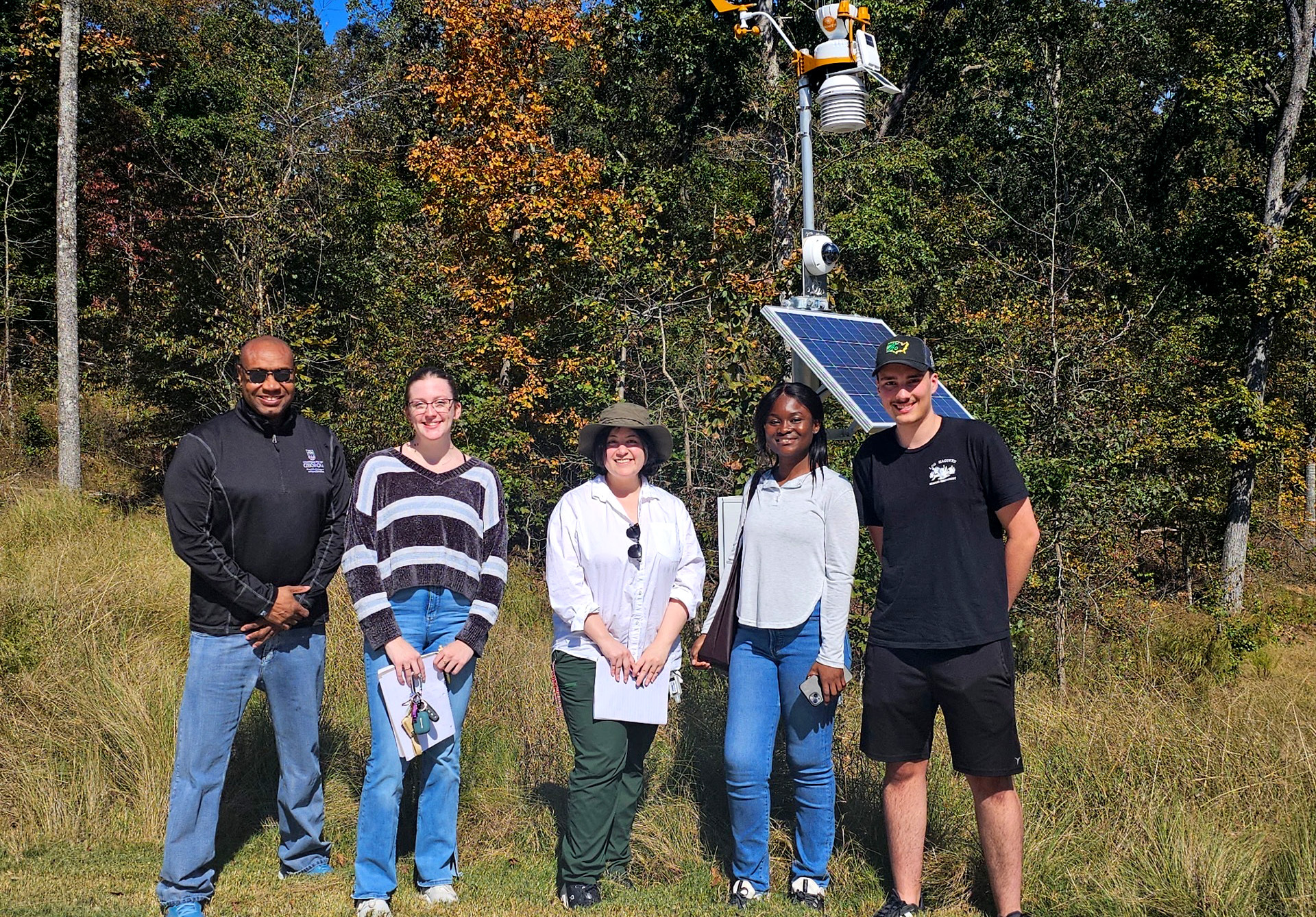
Along with HALOS, another Living Lab was launched in partnership with UGA’s Odum School of Ecology and Georgia Power. Led in part by Seth Wenger from the Odum School and Rhett Jackson from UGA’s Warnell School of Forestry and Natural Resources, that lab produced a study that assesses how Rowen’s development interacts with the area’s forest streams, wetlands and freshwater ecosystems over a 2.5-year period.
The Rowen property is located on watersheds that empty into the Apalachee River. UGA students in this Living Lab monitor water quality, take inventory of wildlife and evaluate stormwater in those watersheds. Wenger noted that the project offers a unique opportunity to study firsthand how sustainable development affects aquatic ecosystems.
“It is exceedingly rare to have a partner who invites us to monitor the ecological impacts of their development; it is rarer still to have a partner who wants to use the results of that monitoring to improve the sustainability of their site,” Wenger said. “This partnership will provide an unprecedented opportunity to advance the science of sustainable urban development while providing training for graduate and undergraduate students. In fact, we are already incorporating this collaboration into one of our undergraduate courses and plan to expand into other courses next year.”
Rowen has also established a partnership with UGA’s Georgia Electric Mobility Network, helping to catalyze the next generation of clean energy and electric transportation solutions. This Living Lab serves as a test bed for technology innovation and experimentation, curriculum development and workforce readiness.
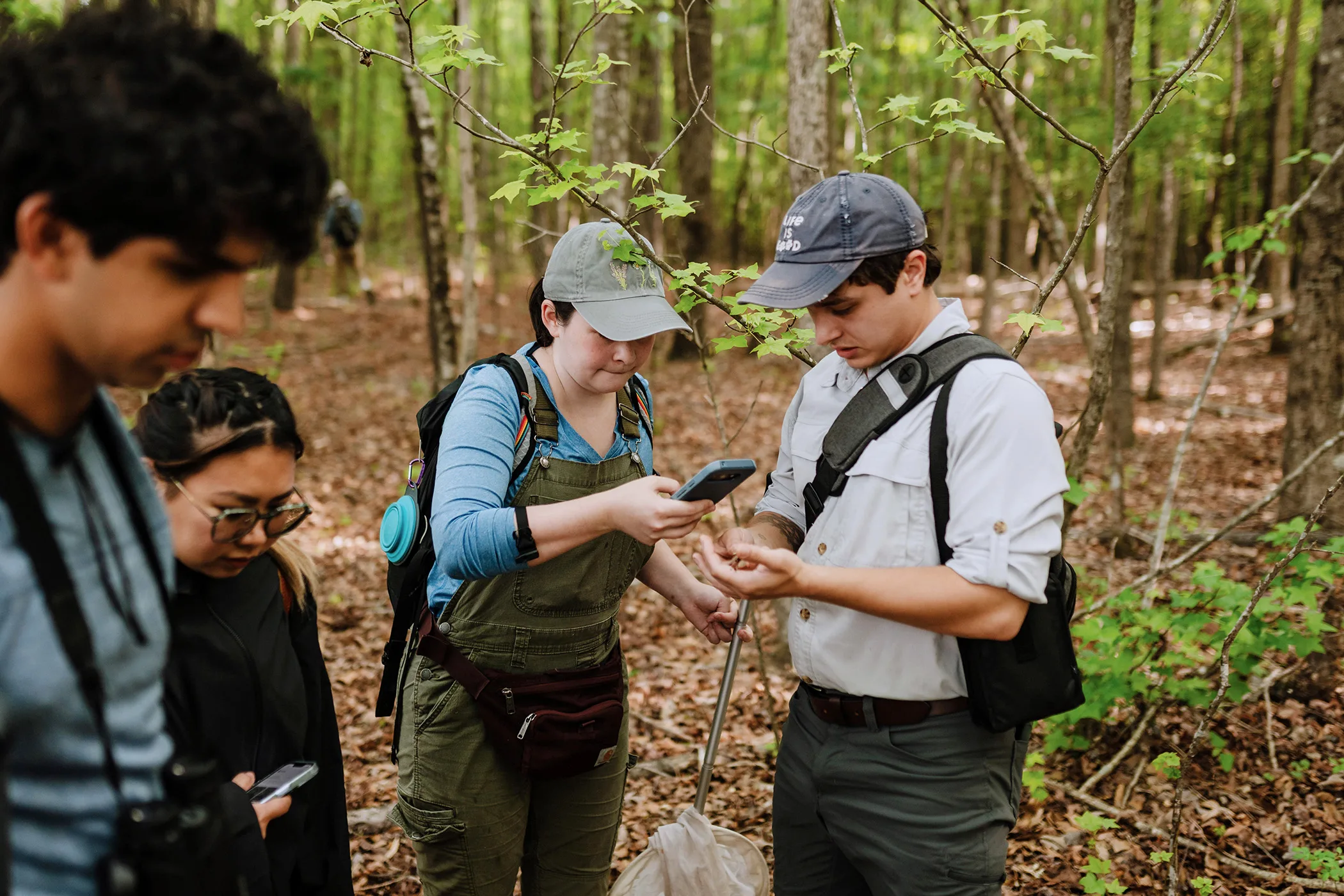
This April, Rowen partnered with the Odum School again to host a BioBlitz on its 2,000-acre site that brought together professional and hobby naturalists to survey the biodiversity across key areas of the campus.
The foundation for collaboration
Before the Living Labs, and before Rowen broke ground, there were other collaborative projects between Rowen and UGA. In 2021, two professors from UGA’s College of Environment and Design and three graduate students walked the grounds of the soon-to-be Rowen community to assist the company in honoring two of its core values: stewardship and sustainability.
Although the site would be a new home base for innovation, the company wanted to paint a full picture of its historical significance before site planning began. Their findings, dubbed the “Rowen Historical and Cultural Report,” noted remnants of past structures, remains of a historic mill, two historic homes and one of Gwinnett County’s oldest dirt roads.
Report in hand, Rowen employees were able to map sensitive cultural and historic areas alongside sensitive ecological areas, creating a heat map of areas more or less suitable for development that eventually guided the site’s master plan. The Rowen Foundation wants to preserve, enhance and celebrate the site’s historical and cultural attributes with minimal impact to these existing features during the course of the foundation’s 50-year build-out schedule.
Rowen’s collaboration projects are more than just an investment into students’ educational experiences. With these partnerships, Rowen is hoping to build connections that last far beyond graduation.
“Being involved in students’ academic journeys is especially meaningful for Rowen, as it allows us to help bridge the gap between education and opportunity while supporting the next generation of innovators and leaders,” said Mason Ailstock, president of the Rowen Foundation. “Ultimately, it is these students that will be employed by and lead the companies Rowen is looking to recruit and partner with, making discoveries that could change lives for all of us.”