


Growing up in Orlando, Florida, hurricanes were a regular part of Matt Bilskie’s childhood. Today, he’s working to better understand and reduce their impact.
An associate professor in the University of Georgia College of Engineering and leader of the Coastal Ocean Analysis and Simulation Team, Bilskie’s research focuses on the dynamic interactions between natural systems and the built environment. His work aims to determine how nature-based solutions can reduce flood risks and strengthen long-term resilience.
Bilskie’s career path took shape during his undergraduate studies at the University of Central Florida, where he conducted research on tides and storm surge flooding through the Coastal Hydroscience Analysis, Modeling & Predictive Simulations Laboratory. Before joining UGA’s faculty in 2020, he earned his bachelor’s and master’s degrees in civil engineering from UCF and his doctorate in civil engineering followed by four years as a research scientist at Louisiana State University.
Reflecting on his decision to come to UGA, Bilskie said, “It was just like a match made in heaven.” He was drawn to the university’s collaborative culture, diverse academic disciplines and shared research focus.
“I also always wanted to live in Georgia because I was a huge Braves fan growing up,” he added with a smile.
Through his work with the Institute for Resilient Infrastructure Systems, Bilskie regularly collaborates with colleagues across campus.
“The collaborative atmosphere here is fantastic,” he said.
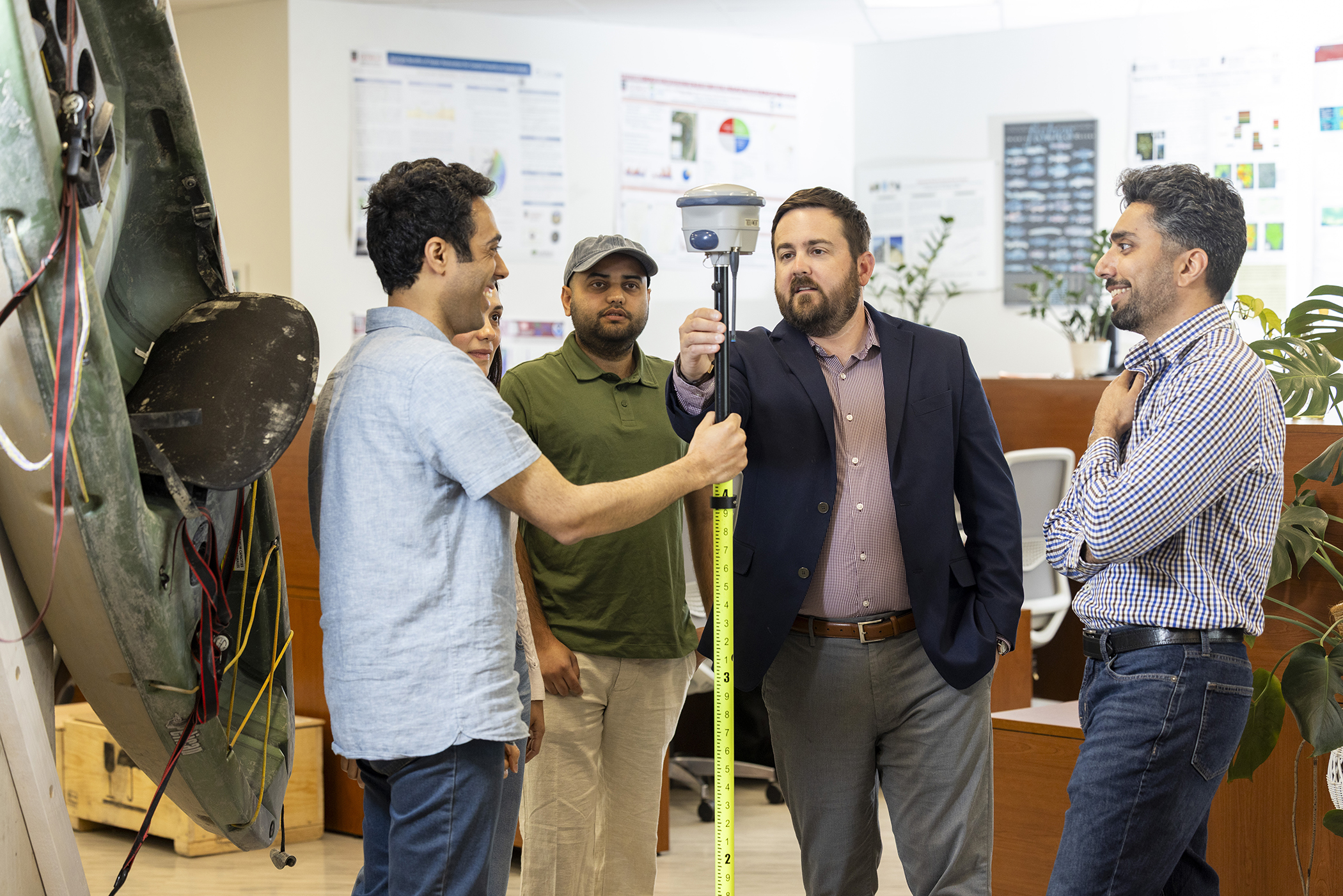
In partnership with colleagues at UGA and Duke University, Bilskie recently helped launch the Center for Innovation in Risk, Catastrophes and Decisions. This initiative focuses on insurance innovation and large-scale climate risk mitigation, bringing together leaders from the insurance and climate data industries.
Another current project involves improving natural infrastructure and resource management at Marine Corps Recruit Depot Parris Island. The effort addresses habitat degradation and shoreline erosion affecting the island’s nature system with impacts to the military mission.
“What’s exciting about this project is how comprehensive it is,” Bilskie said. “We’re pushing boundaries in everything from research to implementation, working with the installation, private engineering firms and state, federal and local agencies. We’re also able to monitor conditions before and after construction to make sure the solutions are working as intended.”
Bilskie’s research plays a central role in his teaching. This past semester, he taught a catastrophe modeling course focused on hazards such as floods and wildfires and how they affect people and property.
“One of my students shared that she secured a summer internship at an insurance company because of what she learned in the class,” he said.
Outside the lab, classroom and field, Bilskie enjoys spending time with family and working in his yard. “I really, really love turfgrass,” he said. “My lawn is like a golf course.”
But at the university, Bilskie emphasized the importance of the people who make his work possible. “It’s important to acknowledge that none of this would be possible without our incredible research staff and students, both current and former.”