

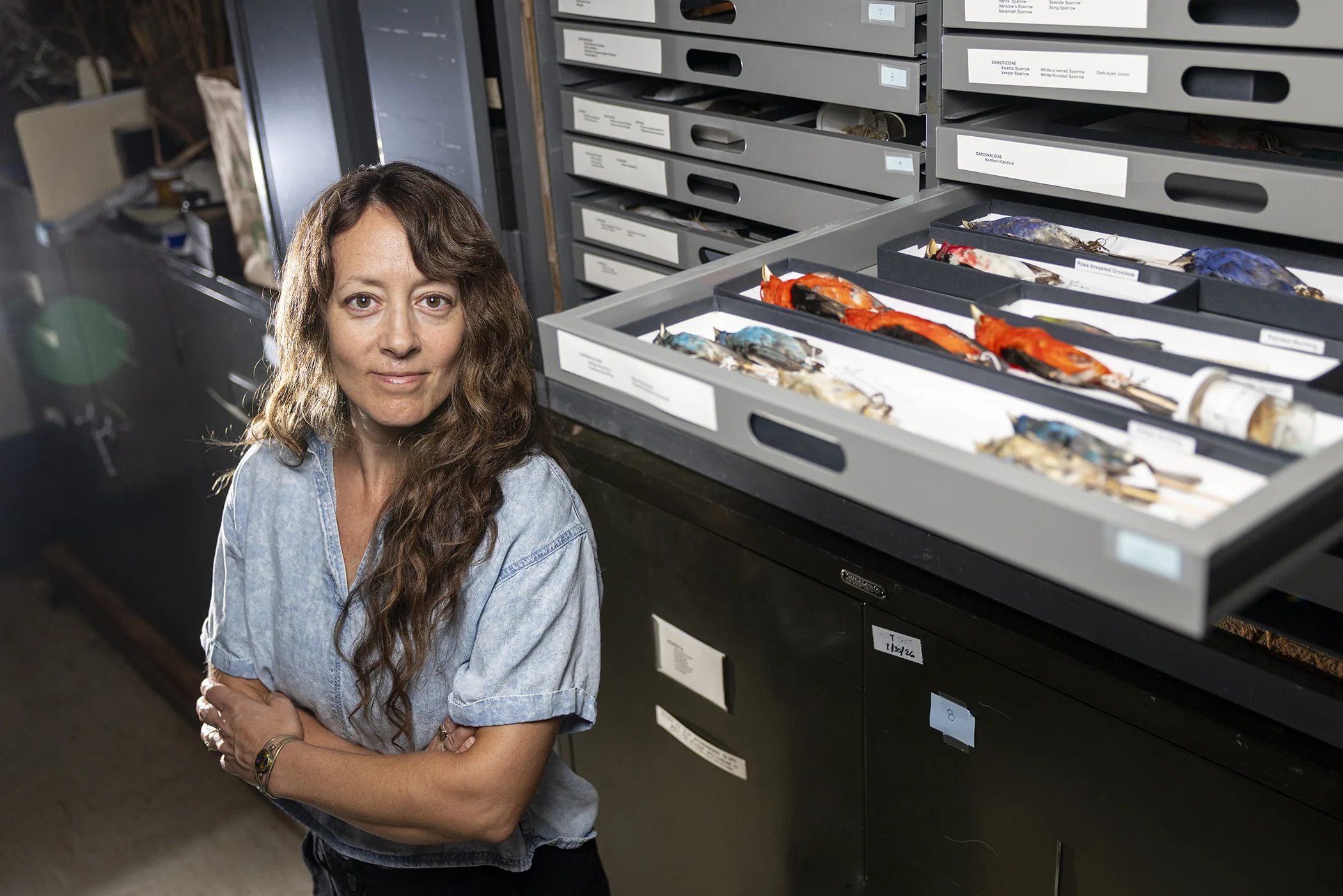
Each day, Nicole Pontzer brings the outside world indoors.
As a collections manager for the Georgia Museum of Natural History, she ensures the museum’s holdings are available and ready for research opportunities. And as the museum prepares to reopen, she also welcomes guests who are curious about the world around them.
“You never know how things will be utilized or the questions that can be answered,” she said.
Pontzer earned her degree from the University of Georgia’s Odum School of Ecology and then began working as a field technician for the River Basin Center. As part of that work, she collected fish and worked with the museum to identify and preserve them.
Eventually, that led to a position with the Georgia Museum of Natural History in 2012. When the museum’s holdings initially moved from buildings off of College Station Road, Pontzer took on the task of reorganizing the fish collection. Her attention to detail crossed over to other areas, and she’s been manager of the museum’s entire vertebrate collection for more than two years.
That larger collection consists of four separate collections — mammals, birds, fish and the herpetology (reptile and amphibian) collection. Numerically, the museum’s fish collection remains its largest, but the mammalogy collection might be its largest in volume.
“We have a lot of whales, for example,” Pontzer said.
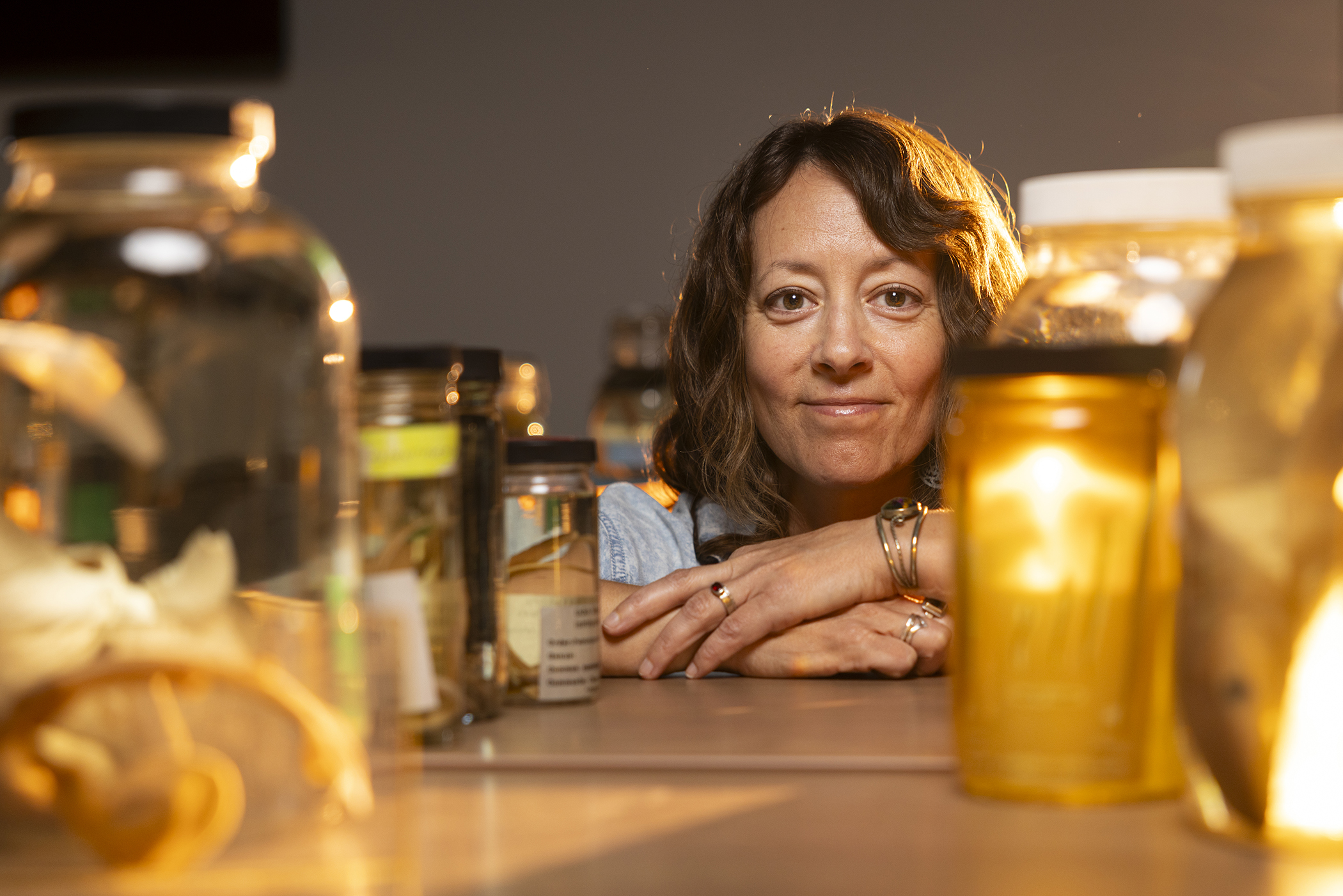
Pontzer’s interest in the natural world began as a child. She spent her summers in Key West, Florida, where her dad lived. As a teenager, she began working with a friend of his, who became a mentor. Pontzer would work on her boat, helping lead private chartered eco-tours. She explored that interest in marine ecosystems in college, but that interest quickly expanded to other areas of the natural world.
“The museum fits perfectly,” she said. “I love science and nature.”
The museum’s unique collections also present unique challenges. The logistics of housing a collection with rather large specimens — like those whales — mean sometimes resizing doorways and shelving and lots of extra hands to help.
The museum actually gets most of its holdings by taking in collections from other institutions or organizations like Georgia Power. Private citizens also call with donations. Some of the specimens date back to the 1800s.
Those collections are available for researchers to use, and Pontzer helps facilitate that. For example, a researcher with Wellesley College needed sternum bones of a specific whale for measurements and photographs and found the largest collection at the Georgia Museum of Natural History.
While research remains an important aspect of the museum’s work, new exhibitions open soon. Each collection will be represented. The museum generally rotates exhibitions every couple of years, and Pontzer gladly gives tours.
“I’m very excited that people will be able to see more of the museum,” she said.
Pontzer typically spends her days working in her collections — helping with loans, preparing specimens and identifying, tagging and cataloging items. She also assists with research and supervises the museum’s interns.
Outside of work, Pontzer enjoys spending time with her son, reading, teaching yoga and being outdoors, particularly hiking and running. She’s set two goals for herself — getting another degree and running five marathons before she turns 50.
While taking care of things from the past, she’s also keeping an eye toward the future.
“That’s my goal — to take care of the collections and preserve them for whoever needs them in the future,” she said.