





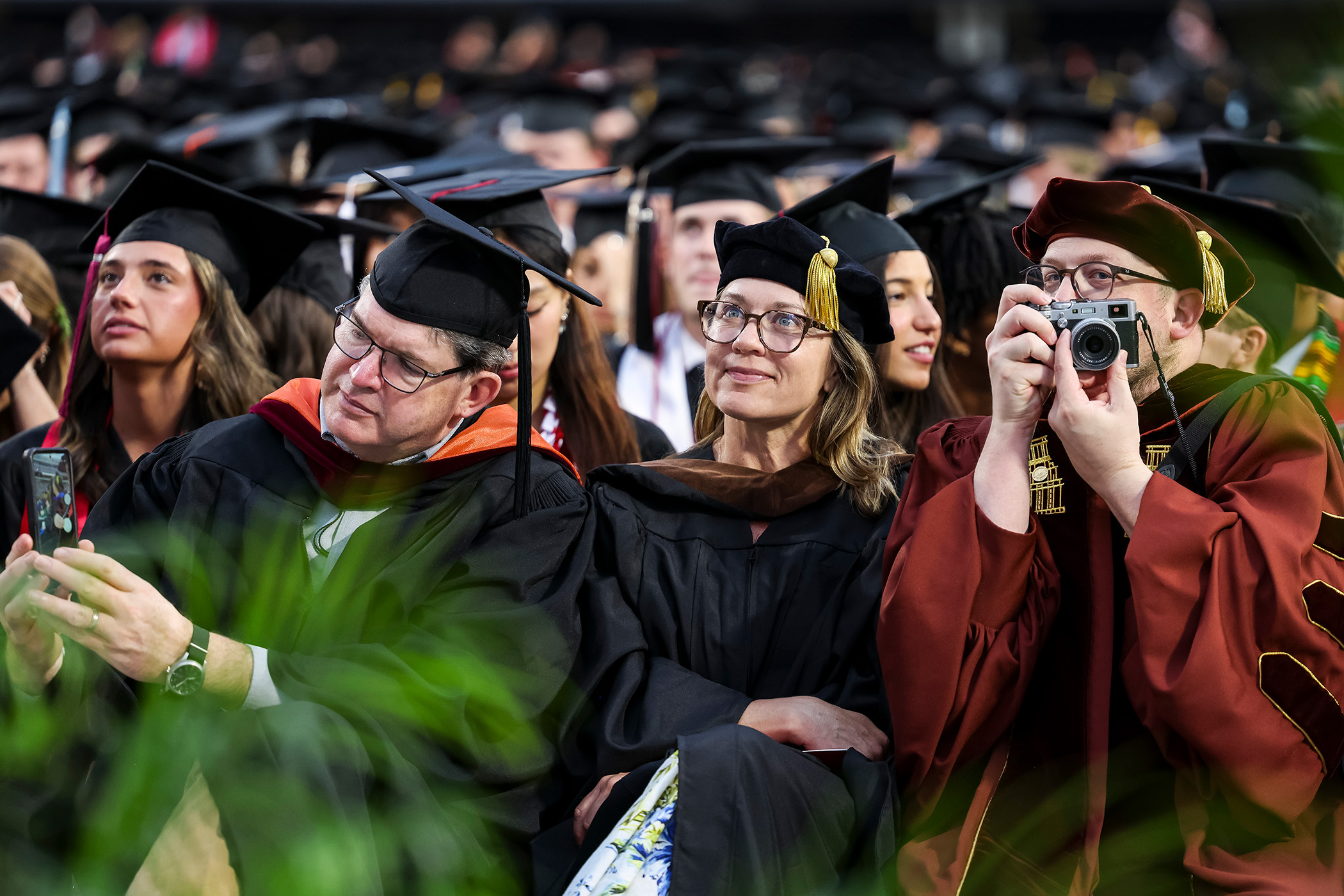










Commencement marks a moment of change for the University of Georgia’s Class of 2026. Graduates not only reflect on what they’ve already accomplished, but also look to the future.
DJ Shockley, highly awarded former UGA and Atlanta Falcons quarterback and Emmy Award-winning sports director for FOX 5, spoke to graduates about navigating change — both expected and unexpected — as the keynote speaker during UGA’s undergraduate Commencement ceremony held May 8.
“Let me congratulate you on what is a tremendous achievement — one that does not come without tons of hard work, dedication and real discipline,” Shockley said.
Shockley spoke to the graduates about the obstacles he’s overcome in his career and how they’ve shaped him. For example, despite coming to UGA as the nation’s second-ranked quarterback out of high school, he didn’t start a football game for the Bulldogs until his senior year.
“Growth happens when you’re uncomfortable,” Shockley said. “Embrace the change ahead.”
Facing those challenges takes both patience and perseverance, according to Shockley. He reminded graduates that they will learn from their mistakes and the tough times they face.
“You never know what situation you’re in, good or bad, that could lead to an opportunity later in life,” Shockley said. “Every stop in your life has a benefit or a lesson you can learn from.”
Shockley also reminded graduates to stay true to themselves and realize their own value.
“Who you are means so much more than you think,” Shockley said. “That first impression, you can never get back, so make sure you’re showing people the true essence of who you are, because that will be how people will remember you.”


Blake Witmer, who received a bachelor’s degree in public relations from the Grady College of Journalism and Mass Communication, served as the undergraduate Commencement student speaker and tried to put her UGA experience into words.
For Witmer, graduation is a time to celebrate change — both what is being left behind and what is yet to come.
“We’ve loved late nights at Snelling, and early mornings at the MLC Jittery Joe’s, and shared kitchens, and shared Google Docs, and shared lives. So, of course, leaving hurts,” Witmer said. “But joy and sorrow aren’t opposites — they’re neighbors. The pain we feel now only runs this deep because the joy once did, too.”
She reminded her fellow graduates that change is nothing new.
“If there is one thing that our years here at the University of Georgia have taught us, it is that one of the only true constants in life will be change. Construction on campus. Bus routes. Class schedules. They all changed. And yet, every time, we adapted. We figured it out. We always do,” Witmer said.
Fellow student Marianna Baccus ushered in that moment of change from the stage with a performance of “Georgia on My Mind” that had graduates linking arms and swaying to the music. Baccus earned her bachelor’s degree in music therapy from the Franklin College of Arts and Sciences’ Hugh Hodgson School of Music during the undergraduate ceremony.
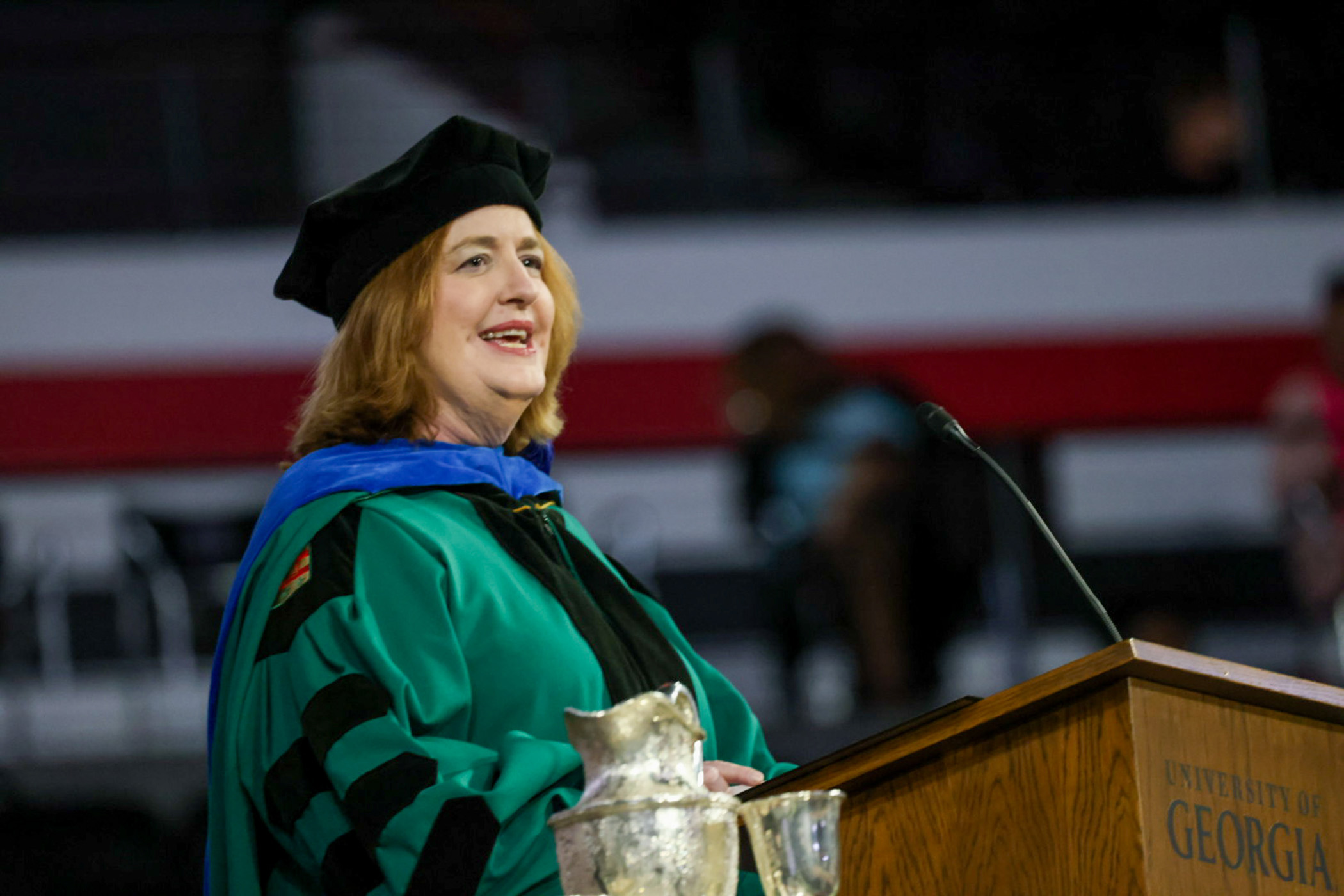
Meg Amstutz, dean of the Morehead Honors College, served as the keynote speaker for the graduate Commencement ceremonies held May 7 and shared how higher education changes perspectives.
“Your curiosity, your excitement in discovery and your capacity for wonder — all these will sustain you as a lifelong learner,” Amstutz said. “You see, higher education is not the end of an academic journey — it is the foundation of future dreams.”
She reminded graduates that their education has the power to change the world.
“As candidates for advanced degrees, you have spent dedicated time in scholarship and research, inquiring into the nature of things. Your inquiry has led to mastery of your subject matter. Your lives will forever be changed by the instruction you have received,” Amstutz said.
By committing to graduate education, she pointed out that they have furthered their understanding of this world.
“In this room with you today are fellow graduates who will change the way you and I see the world — the way we communicate, teach, serve, invest, harvest and govern,” Amstutz said. “Who knows where your own journey will take you and what wonders you will see along the way? Who knows the teammates you will meet as you undertake great work?”



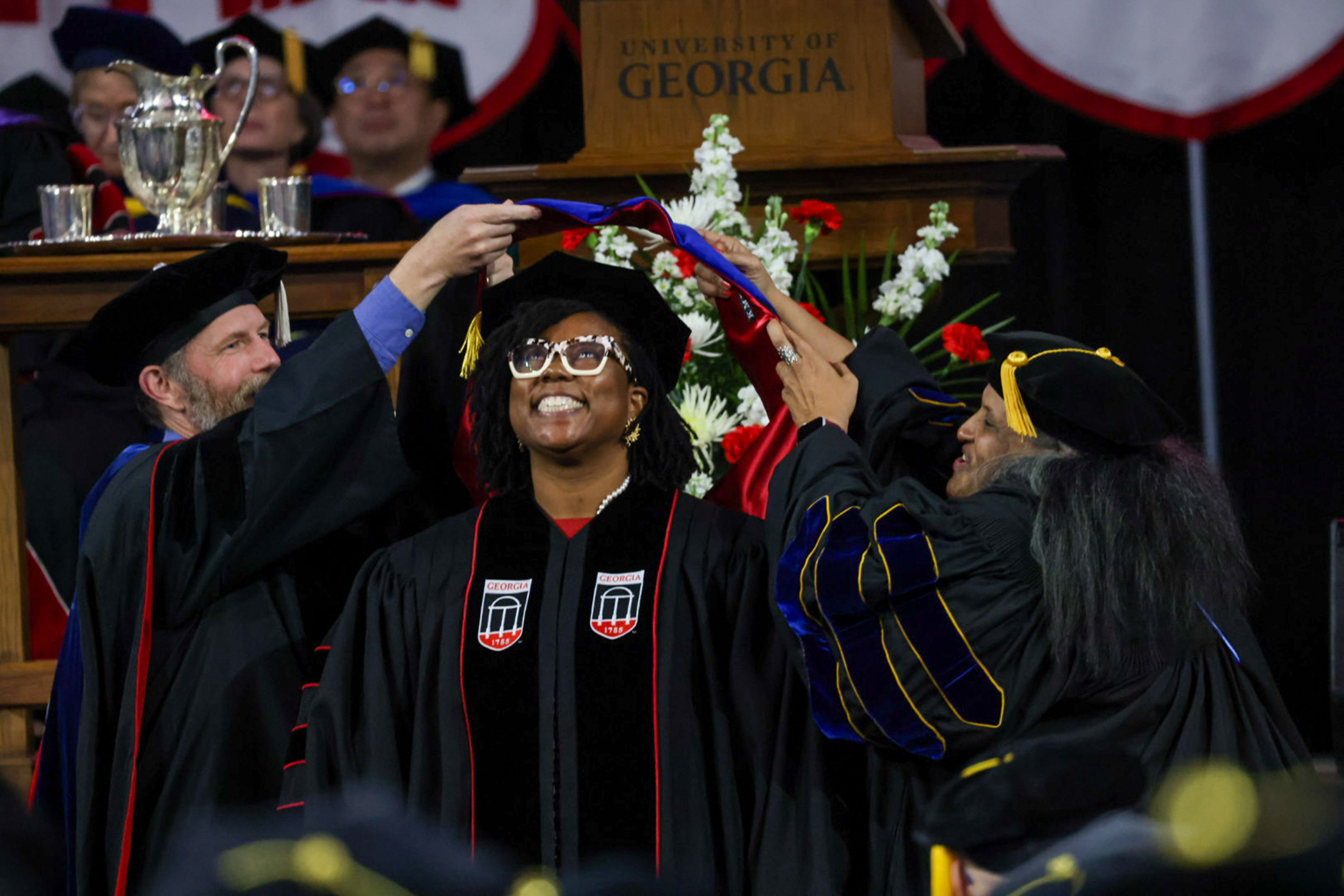
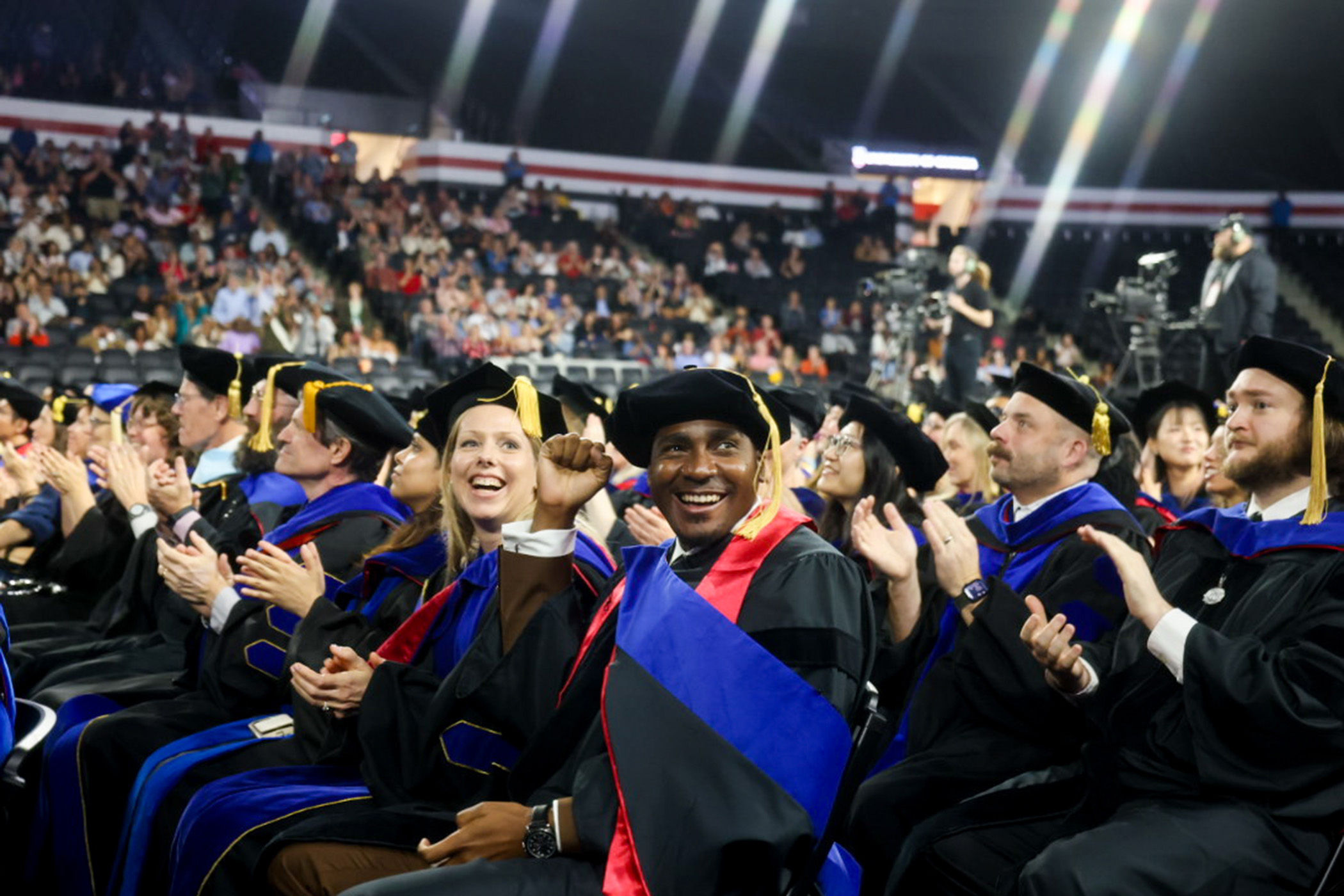
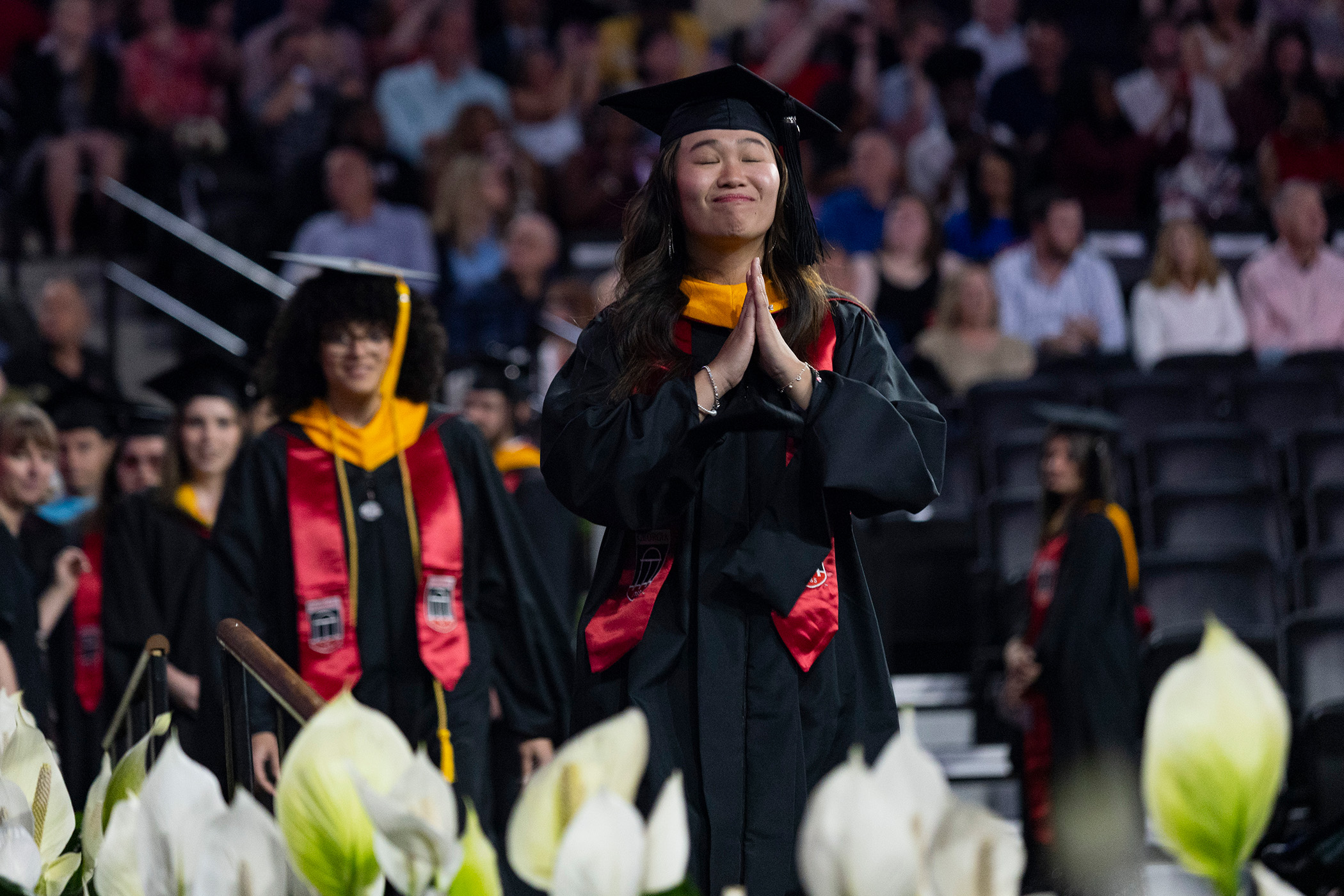

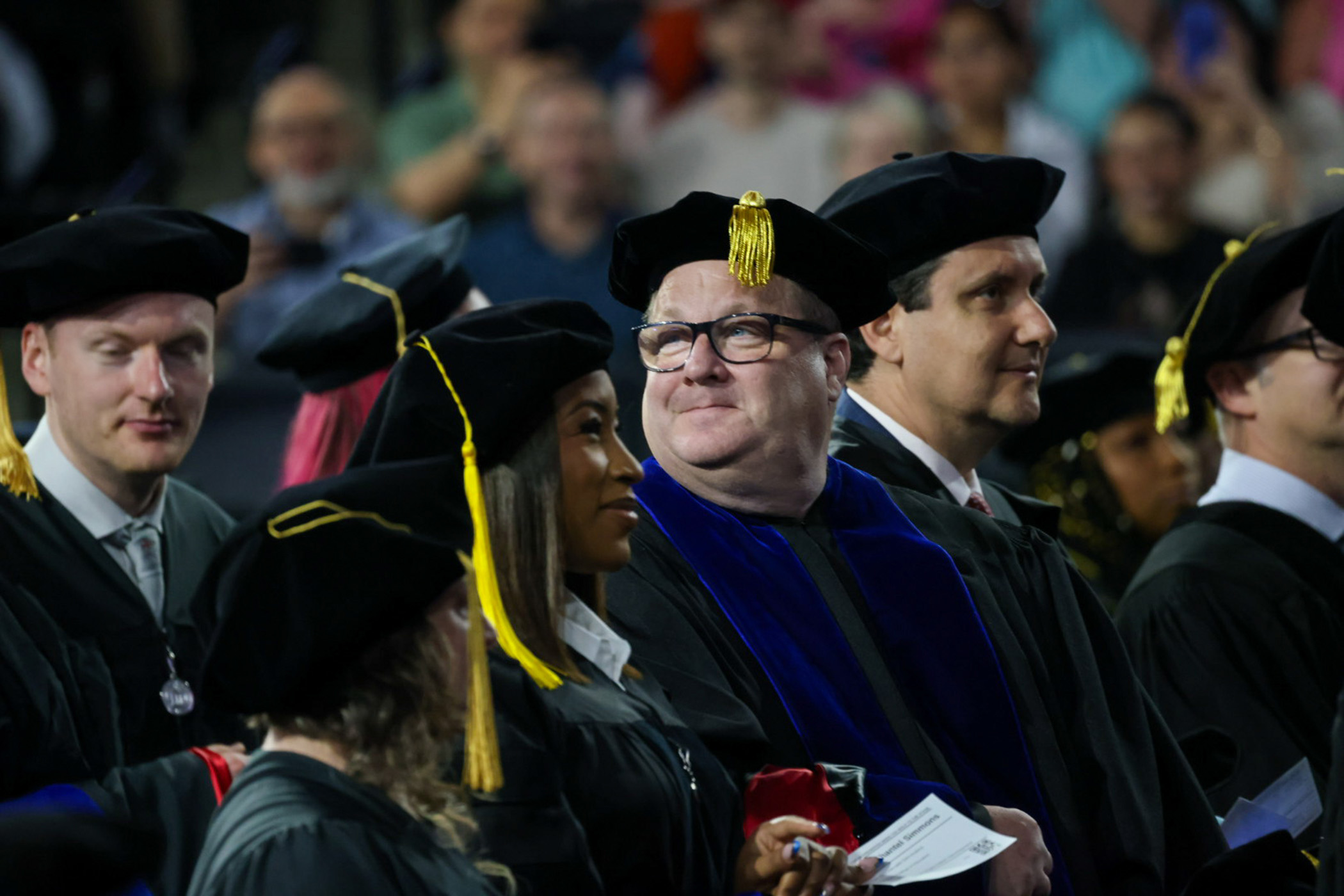


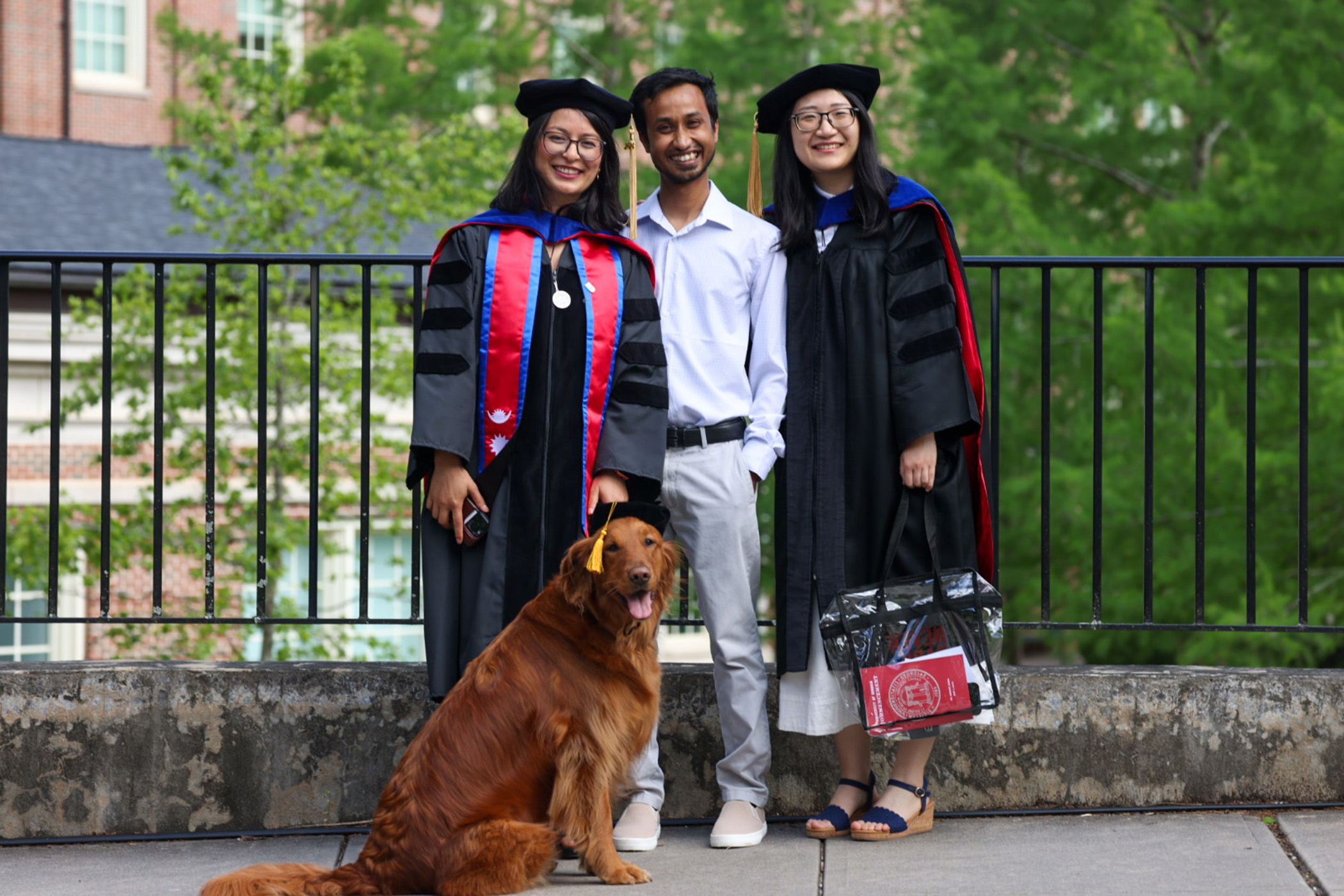

A total of 9,477 students — 6,537 spring undergraduates and 1,055 expected summer undergraduates, along with 1,885 graduate students — met requirements to walk in the university’s spring Commencement ceremonies and had their degrees conferred by UGA President Jere W. Morehead. Of the graduate students, 274 were doctoral candidates, and 1,611 earned their master’s or specialist degrees.
“You go forth today as an ambassador of one of the nation’s most prominent land-grant institutions and the birthplace of public higher education in America. You are a steward of a 241-year tradition of teaching, research and service,” Morehead said. “You are leaving here with the capacity to shape the future of your community, this state, our nation, and, indeed, the whole world. We expect uncommon things from you because you are a graduate of the University of Georgia.”
Additionally, posthumous degrees were awarded to Jared Ashburn (Master of International Policy), William Cooper Gatch (Bachelor of Science in Agriculture in agricultural education), Edwin Webb (Bachelor of Science in electrical and electronics engineering) and George Allen Whittenburg III (Bachelor of Business Administration in accounting).
A total of 171 students were recognized as First Honor Graduates during the undergraduate ceremony for maintaining a 4.0 cumulative GPA in all work completed at UGA as well as all college-level transfer work done prior to or following enrollment at the university.
“Whatever your future holds for you, your time here preparing for life and citizenship gives special meaning to the words in the university’s charter that call the young people of this state ‘the rising hope of our land,’” Morehead said.