

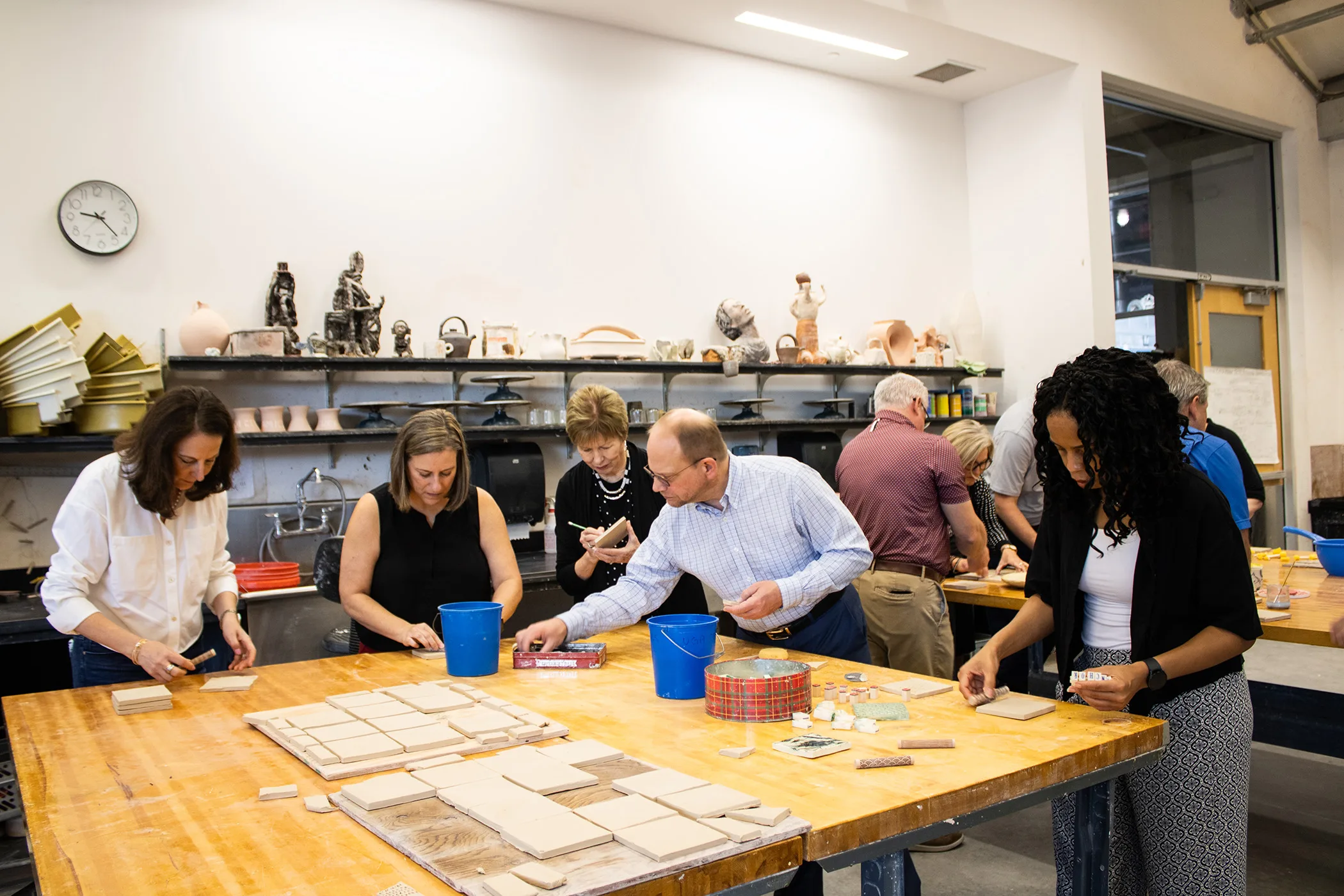
Imagine stepping back from daily routines such as managing spreadsheets and grading papers to immerse yourself in an art gallery or watch a rehearsal for a play. The University of Georgia now offers experiences like these to employees as part of its new Arts@Work program.
Arts@Work integrates UGA’s vibrant arts community with employee well-being by allowing arts units to organize arts-related activities during the workday for UGA employees.
“I loved the idea of giving our team a chance to engage in creative exploration together while taking a break from daily routines,” said Megan L. Mittelstadt, director of the Center for Teaching and Learning and assistant vice president for learning initiatives in the Office of Instruction.
Mittelstadt was among 22 people who participated in the university’s first Arts@Work activity during the Office of Instruction’s annual leadership retreat. The Lamar Dodd School of Art in the Franklin College of Arts and Sciences hosted the activity at its Ceramics Building and invited participants to decorate clay tiles. The session was led by Maria Dondero, an instructor in the art school.
“Working with clay gave everyone something hands-on while creating space for informal conversation and connection,” Mittelstadt said. “Maria made it clear there was no need for prior experience, nor was there pressure to produce something perfect. Scheduling time for creativity, experimentation and reflection was both energizing and genuinely connective for us.”
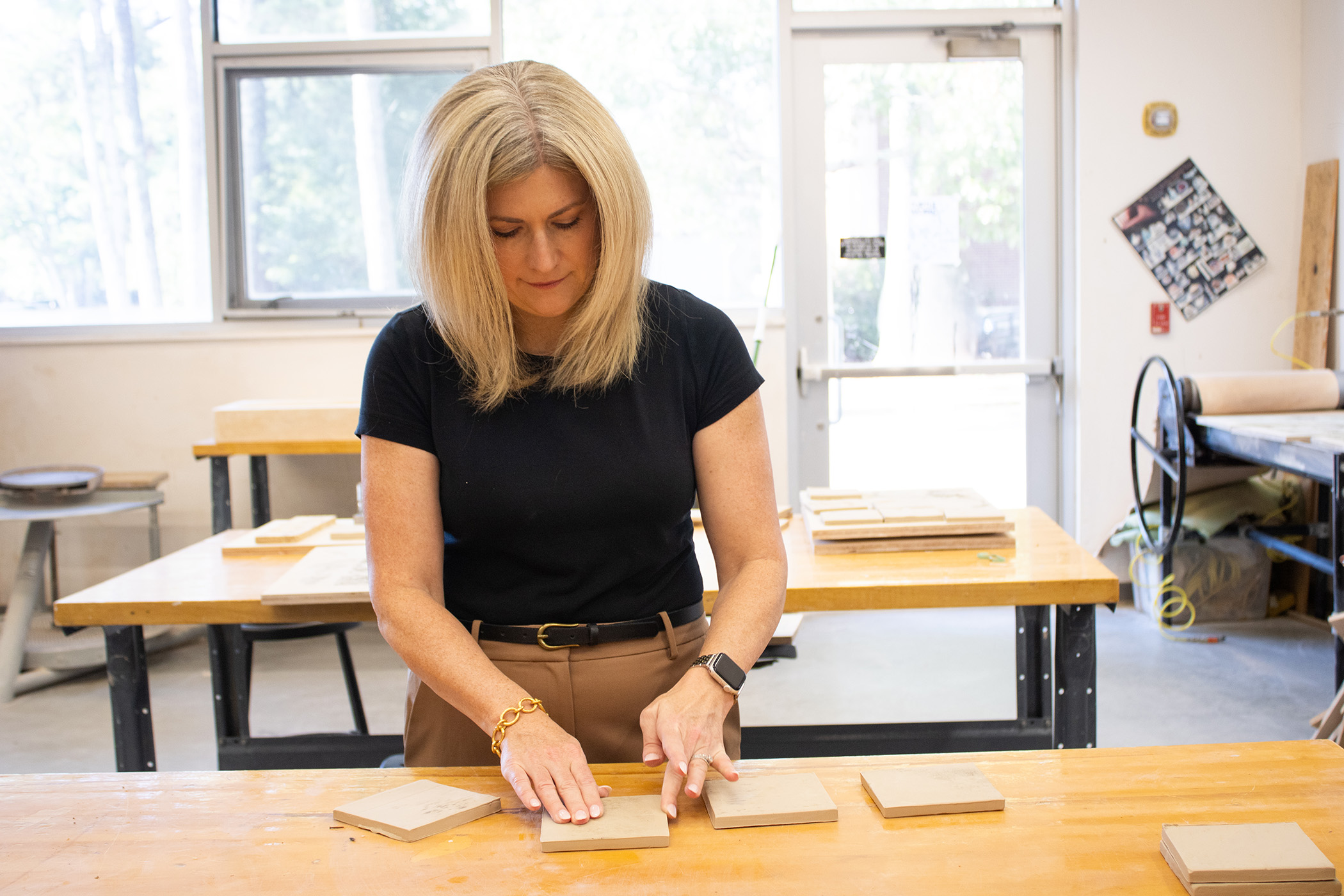
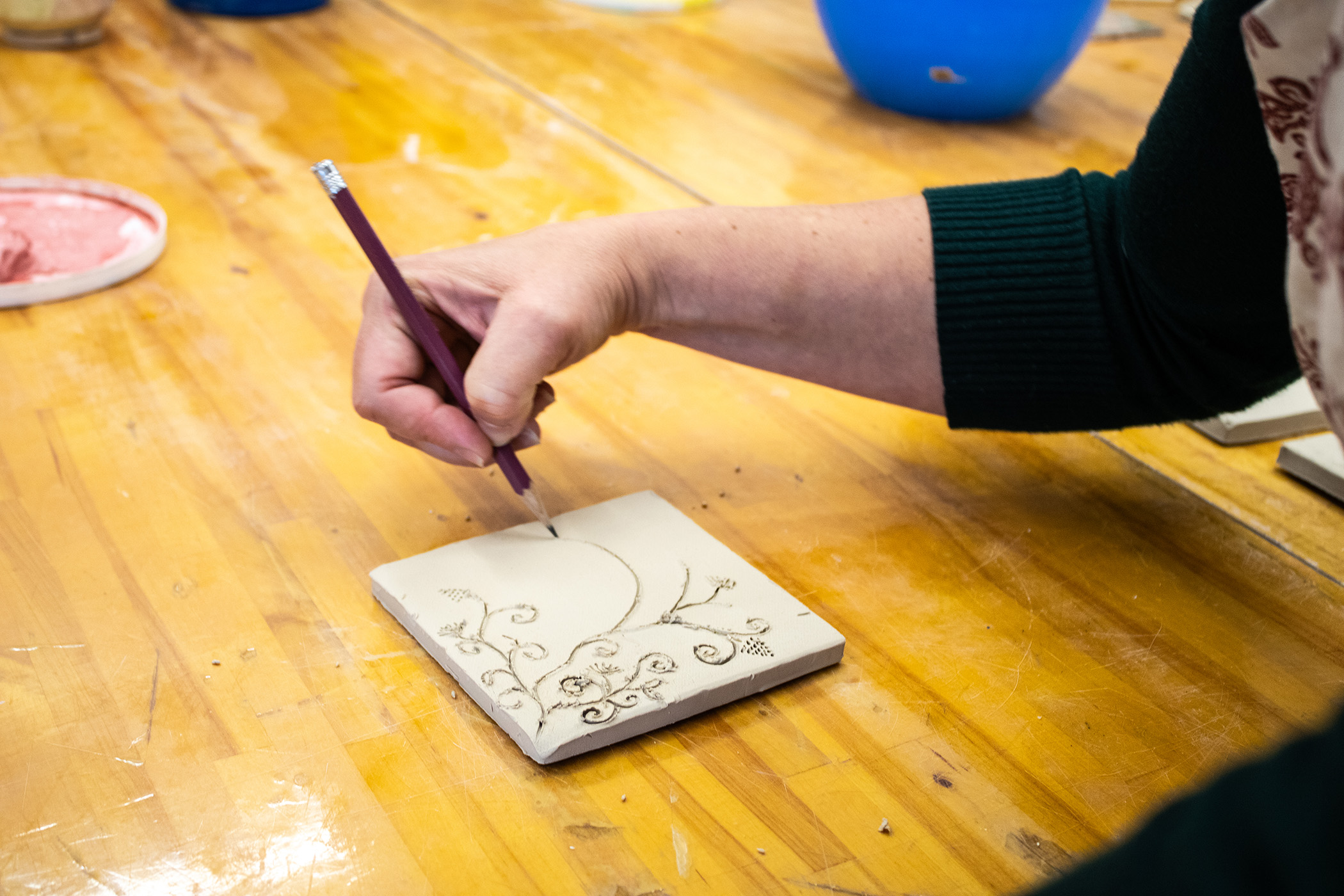
School, college, department and unit leaders can request an Arts@Work activity for employees by visiting arts.uga.edu/artswork-program. Activities may include, but are not limited to, guided tours of the Georgia Museum of Art, dance classes and ceramics decorating.
“Arts@Work is about supporting employee wellness, teambuilding, mindfulness and fun,” said Elizabeth Weeks, vice provost for academic affairs and chair of the university’s Arts Council. “It’s a special opportunity for them to engage with our highly regarded and incredibly vibrant arts units, which they otherwise might not have time to experience.”