

A chance conversation during intermission at a Nutcracker dance recital doesn’t usually lead to a product launch.
But for Athens-based therapist Candace Couch, that moment became the spark that transformed a long-held idea into a working app. And it was thanks to a collaboration with the University of Georgia’s Innovation District.
During intermission at the recital, she struck up a conversation with Chris Rhodes, a family friend who happened to be attending as well.
“We were talking about Shark Tank, and I mentioned that I have this product in mind that I was one day going to create to help therapists,” she said.
Interested to hear more about her idea, Rhodes asked detailed questions. Couch thought her friend was just being polite, but Rhodes, director of UGA’s Innovation District, saw something more.
Couch remembers Rhodes saying, “I help people figure out how to innovate and do these types of things.”
The Innovation District is UGA’s ecosystem built to connect people, programs and ideas to foster entrepreneurship and the commercialization of ideas.
In just over a year and a half, Couch went from an idea to developing GKnow, an iPad app designed to modernize the way therapists create and use genograms — detailed, multi-generational maps that visualize family relationships and patterns.
Traditionally drawn by hand, genograms are essential tools in therapy to help clients visually understand generational trauma and identify cycles of behavior within families that impact personal struggles. GKnow brings them into a digital, shareable and secure format.
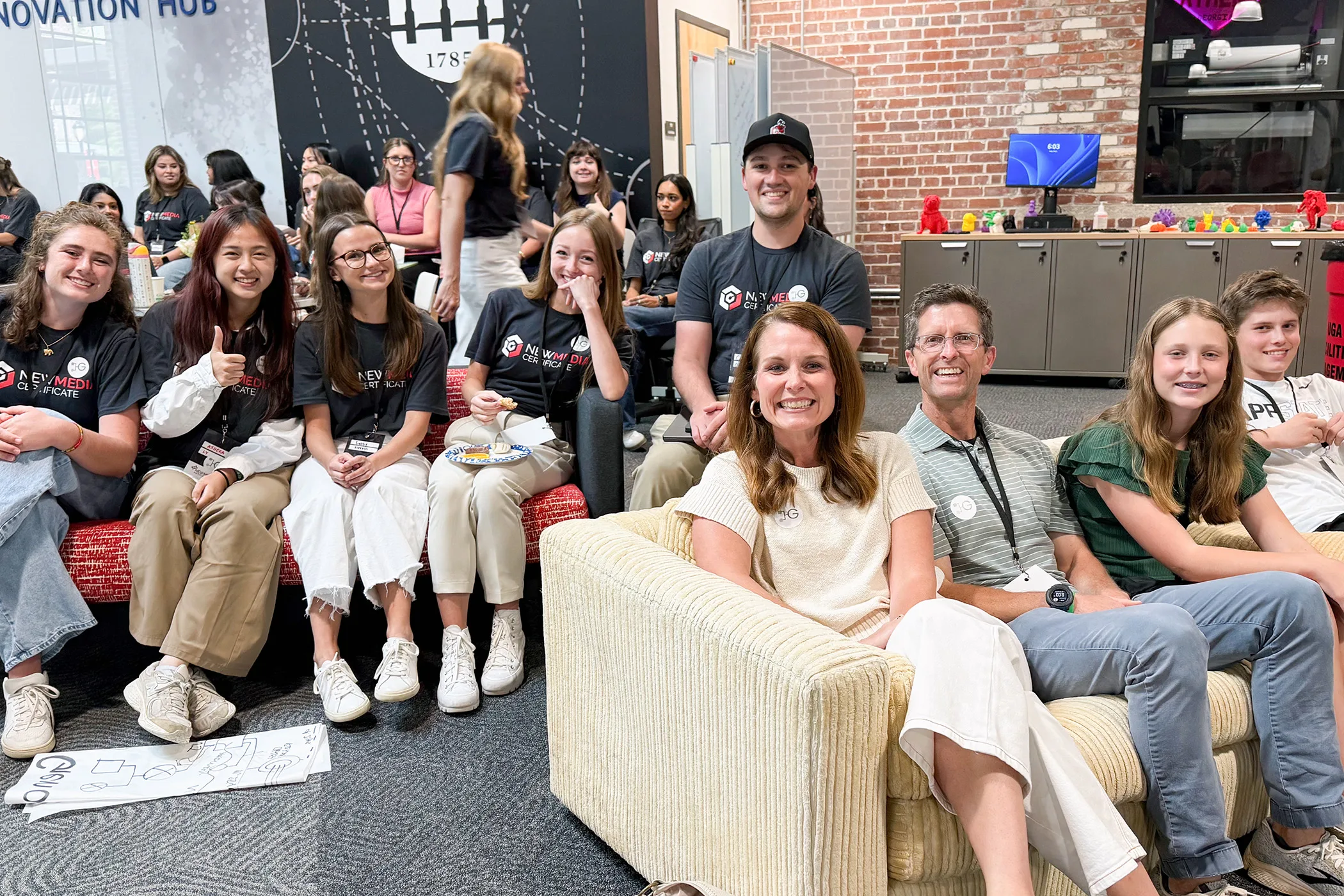
But that leap from concept to product didn’t happen alone. It unfolded within the Innovation District and through a hands-on partnership with UGA’s New Media Institute.
The New Media Institute is an interdisciplinary academic unit with curriculum focused on exploring emerging media technologies and equipping UGA students with skills to build interactive digital products. The NMI had been a member of the Innovation District since its start, but up until this point, that collaboration hadn’t involved students. Rhodes saw potential for deepening the partnership for the benefit of clients and students.
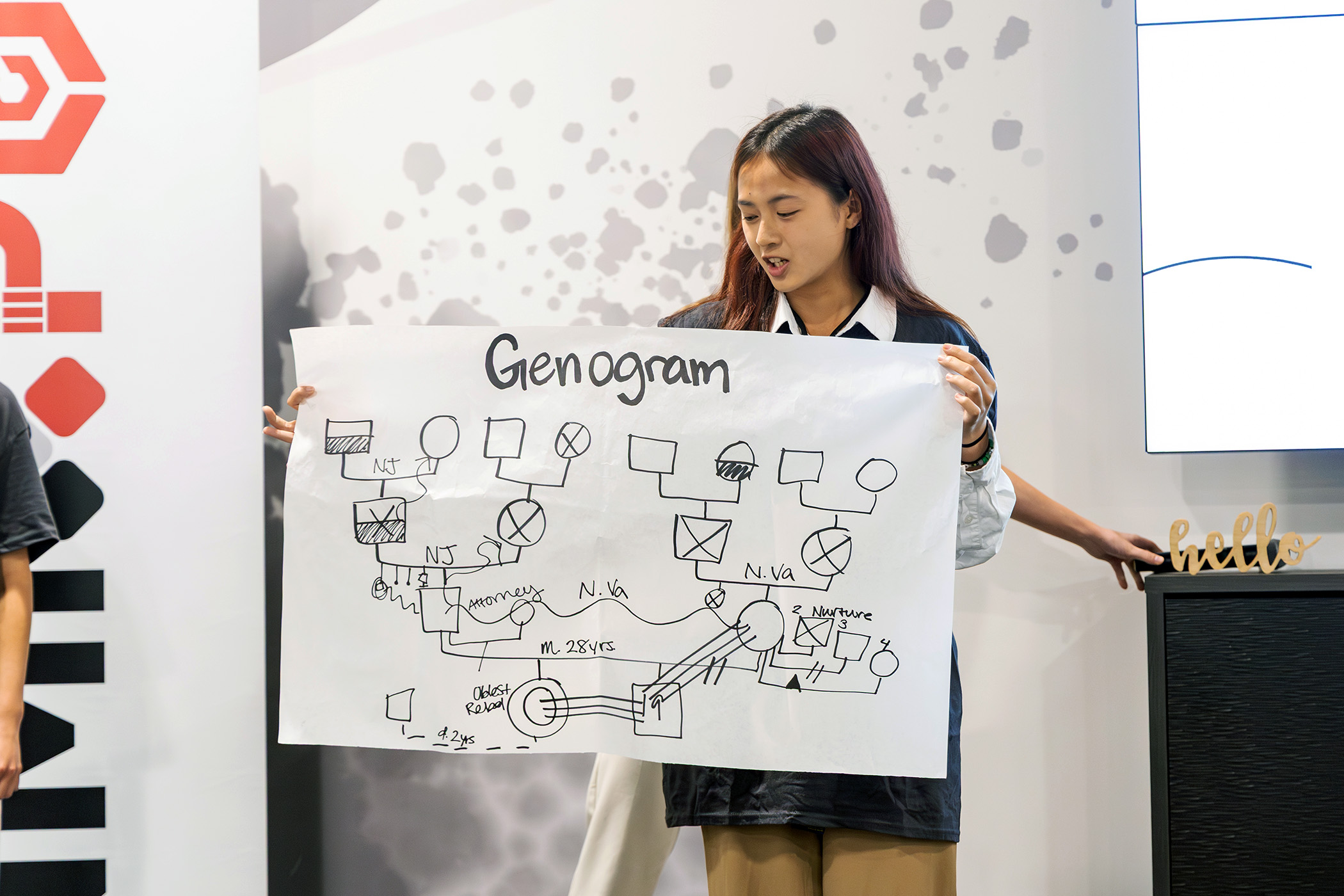
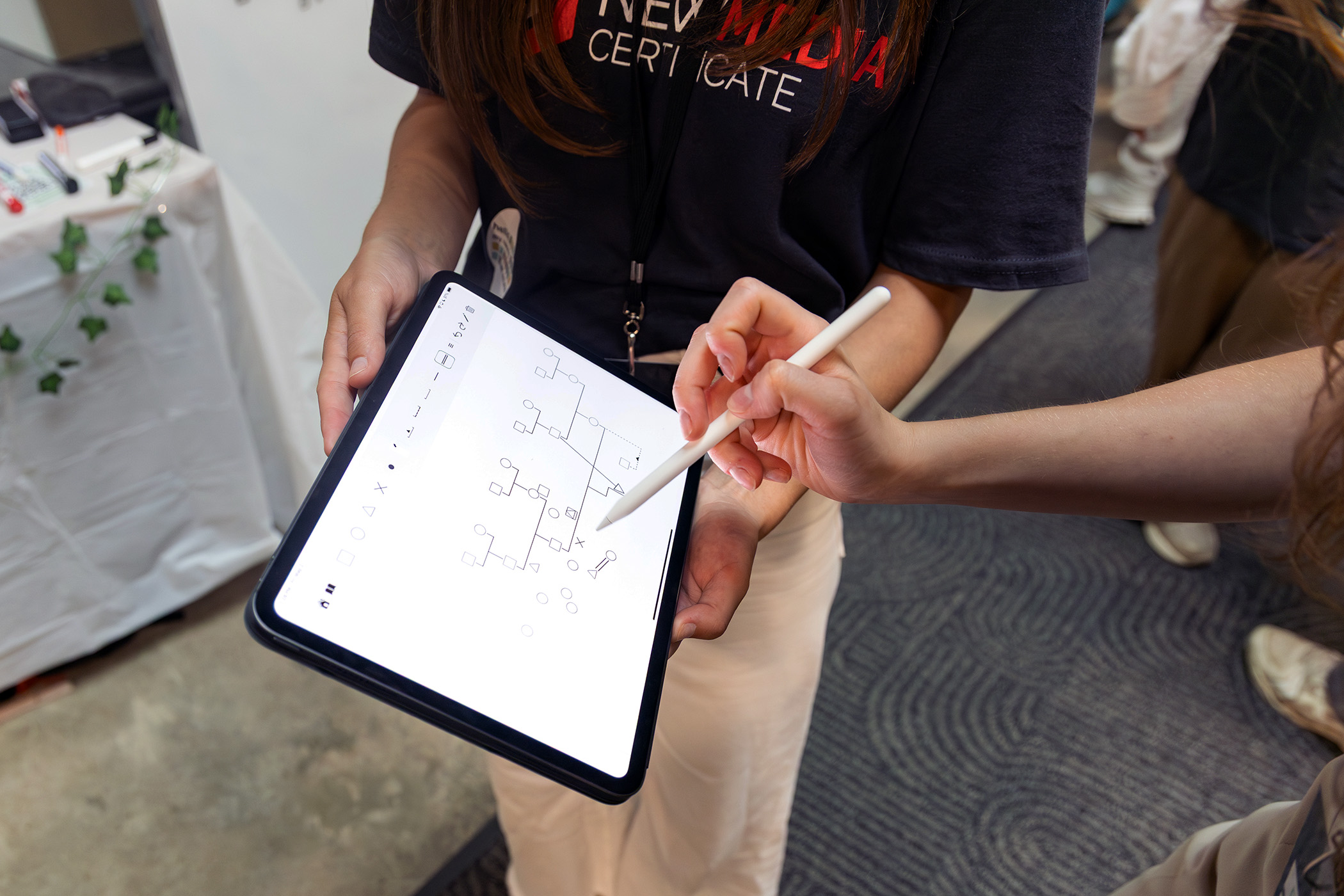
GKnow became one of the first startups to be connected directly to NMI student teams through the Innovation District.
“I thought, ‘What is there to lose? I don’t have a product. I just have an idea,’” Couch said.
Any uncertainty disappeared in the first meeting.
“I walked in ready. I had an entire slide deck to explain genograms — they already knew everything,” she said. “When I saw that level of motivation and professionalism in that first meeting, I was like, ‘Okay.’”
For the students, the collaboration was just as energizing.
“She gave us her idea, and then we were just allowed to experiment and play,” said Zoë Webb, creative director for the first of two GKnow teams that worked with Couch. “That was where we were able to use our skills.”
NMI capstone projects are team-based, beginning with a problem and a challenge that students work to solve through technology. GKnow offered the chance to build something that could have an immediate positive impact.
“It’s not just another app,” Webb said. “We were actually making something that would be useful for therapists.”
Over the course of the fall 2024 semester, GKnow Team 1.0 was tasked with creating a minimum viable product, or MVP, for the GKnow app. They also tackled making big decisions about how to tell the GKnow story through branding and the app’s user interface.
The team of five developed branding that reflected Couch’s calm, growth-oriented approach and designed an interface that simplified complex processes. The design followed the principle of keeping the focus on human connection rather than screens.
The following semester, a second team picked up where the first left off. GKnow Team 2.0 moved from MVP to a testable prototype.
“The last thing we did was upload GKnow 2.0 to Apple’s TestFlight,” said Curt Leonard, the team’s software engineer. The updated version included a customizable genogram builder, secure sharing features and a learning library for clients.

Throughout the process, Couch trusted the students to lead.
“I felt like I could let these students go,” she said. “These people were doing really good work, and that was a great feeling.”
That trust went both ways. “Candace really just wanted to see us succeed and see GKnow succeed,” Leonard said. “Everyone in the class wants to bring the best they can to the table — not just for a grade, but to build something real.”
By the time GKnow reached TestFlight, it had become more than a class project. It was a foundation. When Couch later partnered with a professional developer to finalize the app for beta testing, the impact was apparent.
“He saw it and said, ‘This gives me so much to build on,’” she said. “That’s when I realized how far working with the NMI teams had put me down the road.”
As work with the NMI wrapped, Couch joined the Innovation Gateway’s Innovation Bootcamp program in spring 2025, where she received tailored training in the fundamentals of commercialization, customer discovery and entrepreneurship, as well as one-on-one coaching with an experienced entrepreneur.
Today, GKnow is being tested by therapists and clients, with full commercialization on the horizon.
The story of GKnow is, at its core, about collaboration — between university units, between students and professionals, and between an idea and the people willing to nurture it. It’s proof that innovation isn’t reserved for tech founders or seasoned entrepreneurs.