

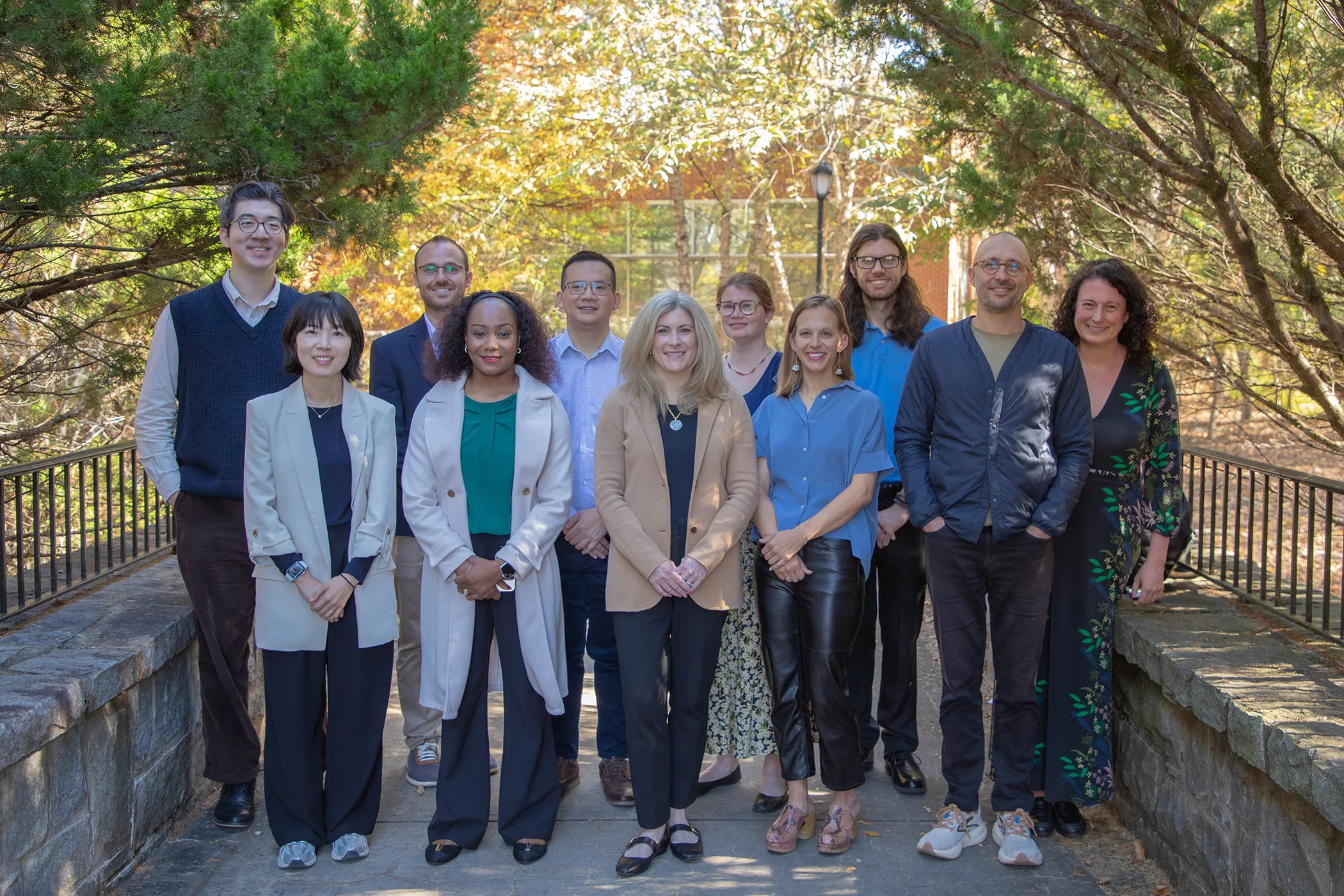
Each year, the University of Georgia’s Center for Teaching and Learning brings together some of the university’s most dedicated educators through three signature fellowship programs: the Lilly Teaching Fellows, Senior Teaching Fellows and Fellows for Transformative Teaching.
These programs unite faculty from across disciplines and career stages to reflect deeply on their teaching, experiment with new ideas and create learning experiences that spark curiosity and connection across campus.
“Each of these fellowship programs creates a space for faculty to learn from one another, explore new approaches to teaching, and deepen their impact on students,” said Meg Mittelstadt, co-director of faculty fellowships and director of the CTL. “It’s inspiring to see the creativity and commitment our Fellows bring to their classrooms and to the UGA community.”
Lilly Teaching Fellows
Designed for early-career faculty, the Lilly Teaching Fellowship is a two-year program supporting assistant professors in their first three years at UGA.
The new class of 2025–2027 Fellows includes:
- Doris Acheme (Communication Studies)
- Bree Bang-Jensen (International Affairs, Health Policy and Management)
- Elizabeth Saari Browne (Art History, Women’s and Gender Studies)
- Braiden Coleman (Accounting)
- Sha-Mira Covington (Textiles, Merchandising, and Interiors)
- Angie Im (Agricultural and Applied Economics)
- Brita Lorentzen (Anthropology)
- Joseph Wei (English)
- Brandon Yik (Chemistry)
- Nicholas Young (Physics)
This fall, Fellows gathered at the State Botanical Garden of Georgia for a retreat that included discussions on generative AI and student engagement and a panel of Lilly Fellows alumni called “Making the Most of Your Time as a Lilly.” The program’s monthly meetings will explore a range of topics, including the transition from assistant to associate professor. Their spring retreat will feature teaching demonstrations, small-group mentoring and collaborative discussions of pedagogical strategies.
In their second year, Fellows design and complete a scholarly teaching project and engage in peer review to further strengthen their teaching practice.
The program is co-directed by Mittelstadt, assistant vice president for instruction, and Sarah Shannon, Meigs Professor of Sociology and director of the Criminal Justice Studies Program, with Tim Samples, professor of legal studies, serving as assistant director. Learn more about the Lilly Teaching Fellows Program.

Senior Teaching Fellows
The Senior Teaching Fellowship celebrates experienced educators from among the tenured faculty ranks. These fellows are associate or full professors who have each been with the university for at least five years and continue to innovate in the classroom.
The 2025–2026 Senior Teaching Fellows are:
- Neil Bendle (Marketing)
- Suzie Birch (Anthropology and Geography)
- Ginny Boss (Counseling and Human Development Services)
- Gaelen Burke (Entomology)
- Darren Hayunga (Real Estate)
- Steve Kogan (Human Development and Family Science)
- Vera Lee-Schoenfeld (Linguistics)
- Jill Stefaniak (Workforce Education and Instructional Technology)
- Eric Zeemering (Public Administration and Policy)
At their fall retreat, Fellows shared teaching demonstrations from their courses, followed by discussion of the student engagement strategies and pedagogical techniques modeled. The program’s monthly meetings will explore student motivation, grading strategies and innovative ways to use eLC and third-party integrations — all while discussing how to balance modern teaching challenges with the enduring values of a liberal arts education.
The program is co-directed by Mittelstadt and Gayle Andrews, Meigs Professor of Educational Theory and Practice. Learn more about the Senior Teaching Fellows Program.
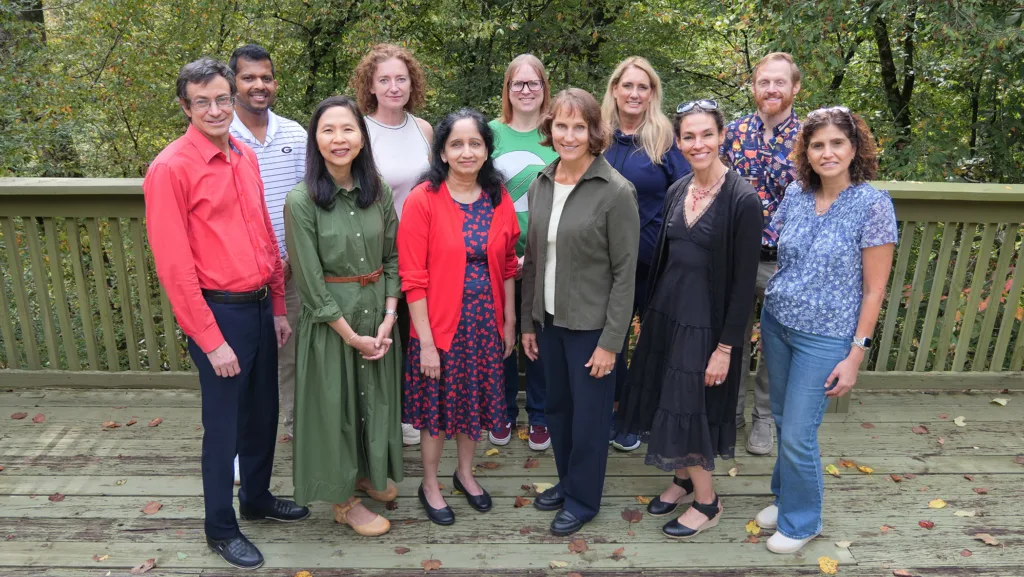
Fellows for Transformative Teaching
The Fellowship for Transformative Teaching celebrates senior, non-tenure-track faculty who have advanced at least one rank and have been at UGA for four or more years. These Fellows are innovators and leaders who are dedicated to both the success of their own students and the enhancement of teaching effectiveness in their home units.
The 2025–2026 Fellows are:
- Tyra Byers (Sustainability)
- Jason O’Donnell (Division of Biological Sciences)
- Jennifer Osbon (Marketing)
- Chitra Pidaparti (Educational Psychology)
- Sayamon Singto (Office for Student Success & Achievement)
- Nada Tamim (Poultry Science)
- Olga Thomason (Germanic and Slavic Studies)
- Lou Tolosa-Casadont (Language and Literary Education)
- Nandana Weliweriya (Physics and Astronomy)
- Mark Werner (Statistics)
This fall’s retreat featured creative teaching exchanges and hands-on exploration of generative AI tools, alongside reflective sessions on professional growth and teaching impact. Throughout the year, Fellows meet monthly to explore topics of interest to the cohort — such as interdisciplinary teaching, reflective learning and student well-being.
Each Fellow also leads an individual project to enhance instruction within their home unit, from using AI for peer review and feedback loops to designing data-informed course outcomes and developing new classes that meet emerging student needs.
The program is facilitated by Ruth Poproski, senior associate director for teaching and learning at the CTL. Learn more about the Fellows for Transformative Teaching Program.
Across all three programs, the newest class of CTL Fellows exemplifies the spirit of innovation, reflection and collaboration that defines great teaching at UGA. Together, they are not just refining their own practice, but they’re also shaping the future of learning at the University of Georgia.